What If You Do Nothing? is a section based on real-world experience. Some details in the article have been adjusted to ensure business confidentiality.
Many businesses, when transitioning to a new industry, often begin with a very attractive opportunity: a growing market, a new business model, or a readily available resource that can create additional value.
Very few businesses realize that each industry has its own logic. They often assume that the industry they’ve already worked in and succeeded in is more difficult than the new industry they’re entering, so what could possibly challenge them?
A production model might be correct. A farm might be beautiful and well-organized. But if a business doesn’t truly understand how the industry operates, the process of product development and market building can become very difficult.
The story in this article comes from an agricultural business that applies a solar power model combined with agricultural production. This is one of the farms highly regarded for its scale and organization – clean, beautiful, and well-structured, with a model of mushroom cultivation combined with green circular tourism.
However, when the business entered the product development and market building phase for reishi mushrooms, several important gaps emerged.
And it was these gaps that prevented the business from progressing faster, even though the production facilities were ready.
A very well-structured farm
The business in this story implements a solar-powered roof farming model – a direction that has been gaining attention in recent years.
The solar roof generates clean energy while creating a space for agricultural production underneath. Within the farm grounds, the business develops various activities:
- Growing edible mushrooms
- Growing reishi mushrooms
- Combining agricultural tourism and a green circular economy model
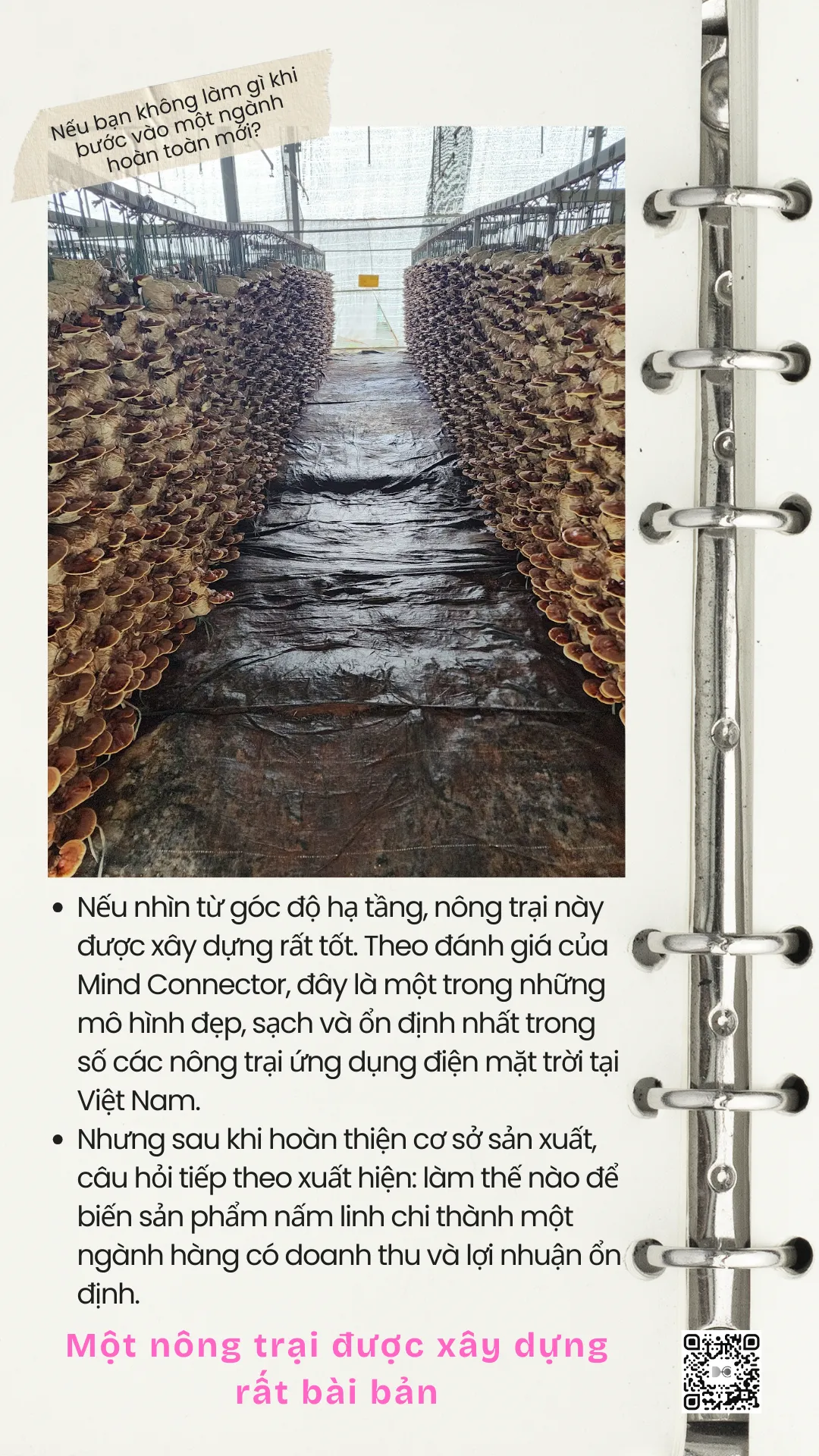
From an infrastructure perspective, this farm is very well-built. According to Mind Connector’s assessment, it is one of the most beautiful, clean, and stable models among solar-powered farms in Vietnam.
But after completing the production facilities, the next question arose: how to turn reishi mushroom production into a profitable and sustainable business?
Market Research Phase
Mind Connector begins partnering with businesses from the market research phase.
In the initial phase, the consulting team focuses on:
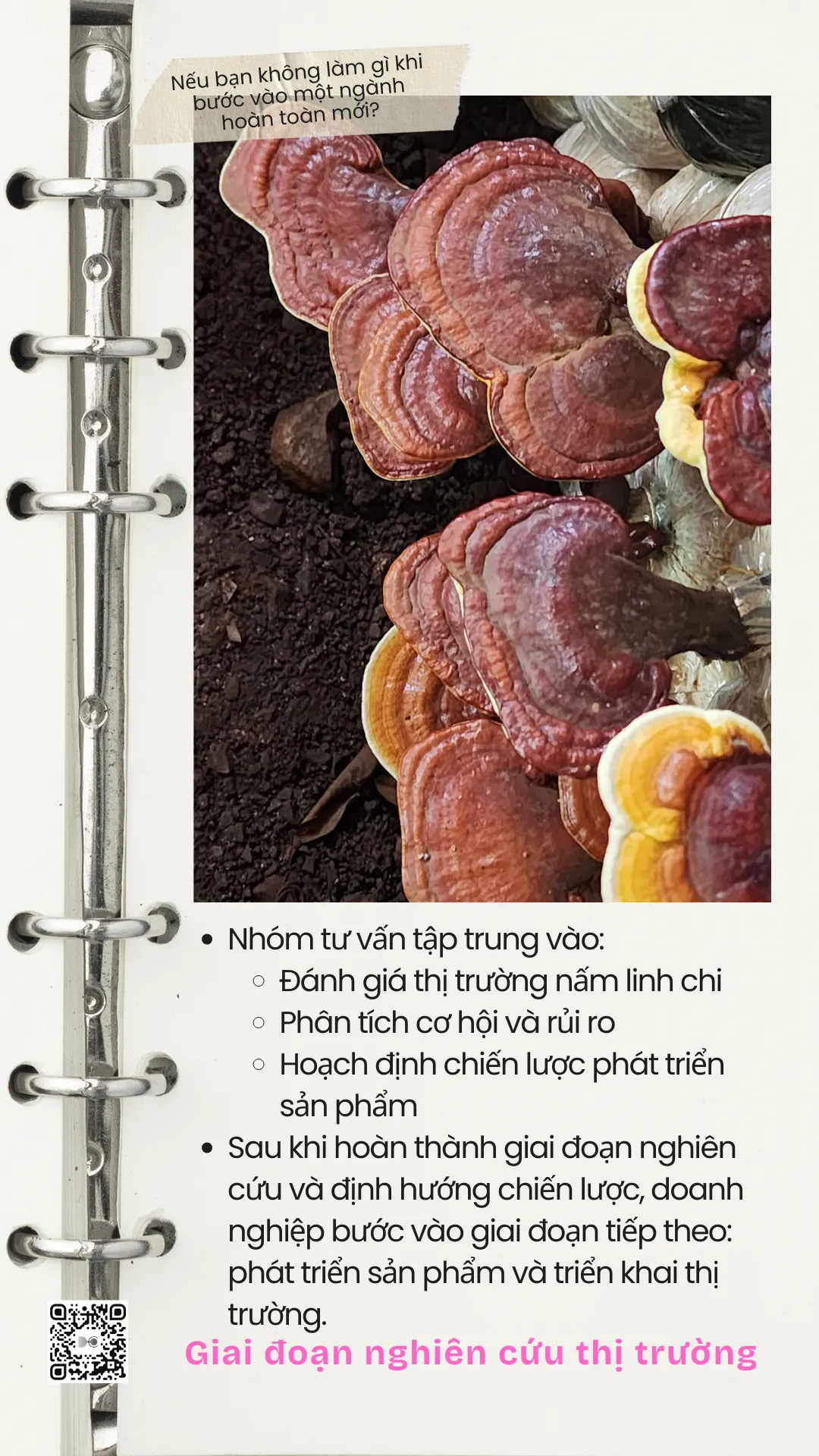
- Market assessment of Ganoderma lucidum (Reishi mushroom)
- Opportunity and risk analysis
- Product development strategy planning
After completing the research and strategic planning phase, businesses move on to the next stage: product development and market deployment.
And it is at this stage that challenges begin to emerge.
When Human Resources Fail to Keep Up with Ambition
One of the biggest problems for businesses lies in their human resources.
To develop a consumer goods industry like reishi mushrooms – especially processed products like reishi tea or coffee – a business needs a team with experience in the FMCG or food sector.
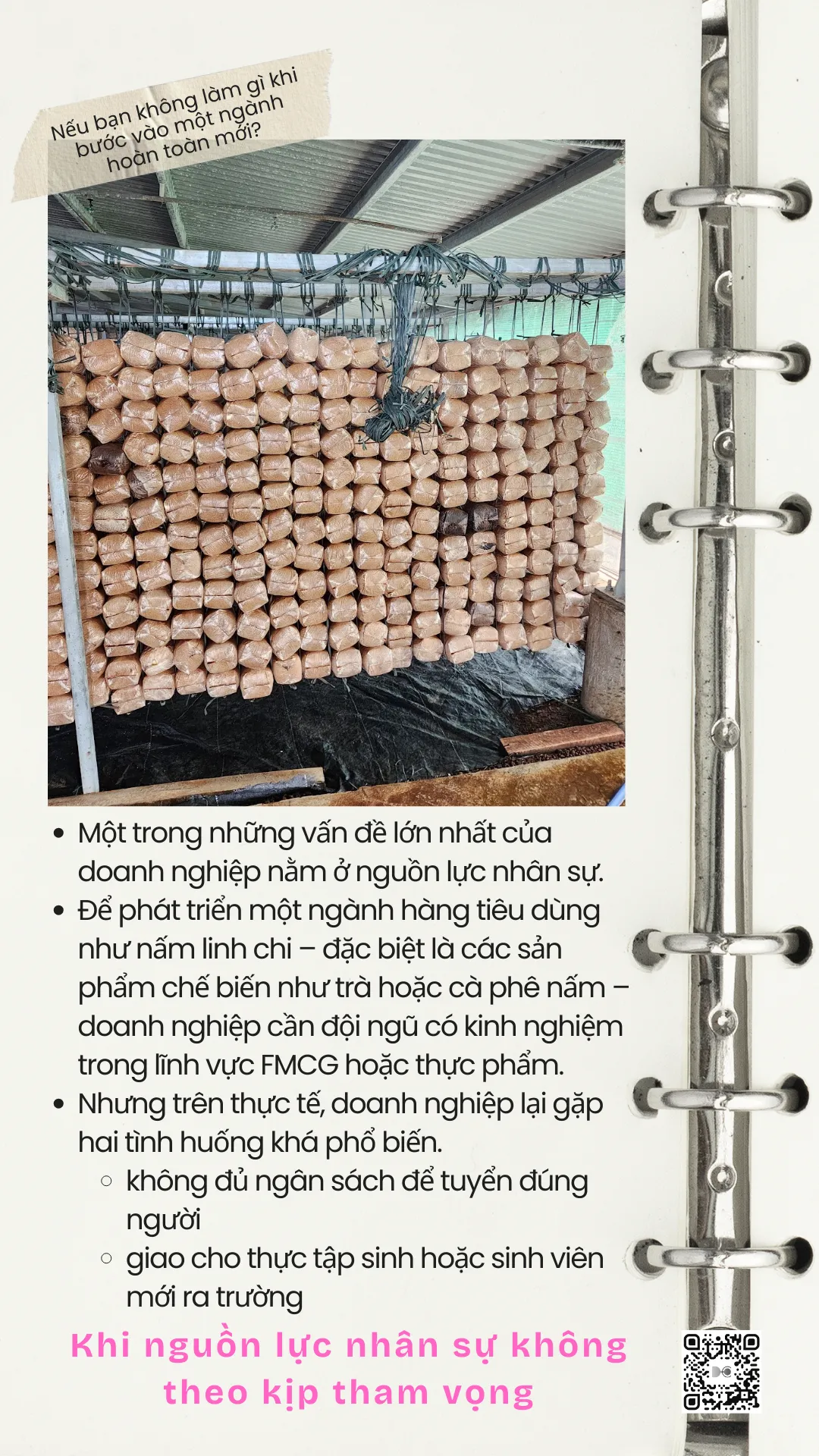
But in reality, businesses encounter two fairly common situations.
- Firstly, businesses lack the budget to recruit the right people with industry experience.
- Secondly, many positions are filled by interns or recent graduates who have energy but lack market development experience.
Without a skilled workforce, many important product and market decisions are often made based on intuition.
This leads to slow and directionless industry development.
When entering a completely different industry:
The business owner comes from the construction industry.
In the construction and infrastructure sector, the investment and operational methods are often quite different from the fast-moving consumer goods industry.
Construction projects typically include:
- Long lifecycle
- Clear financial model
- Specific customers
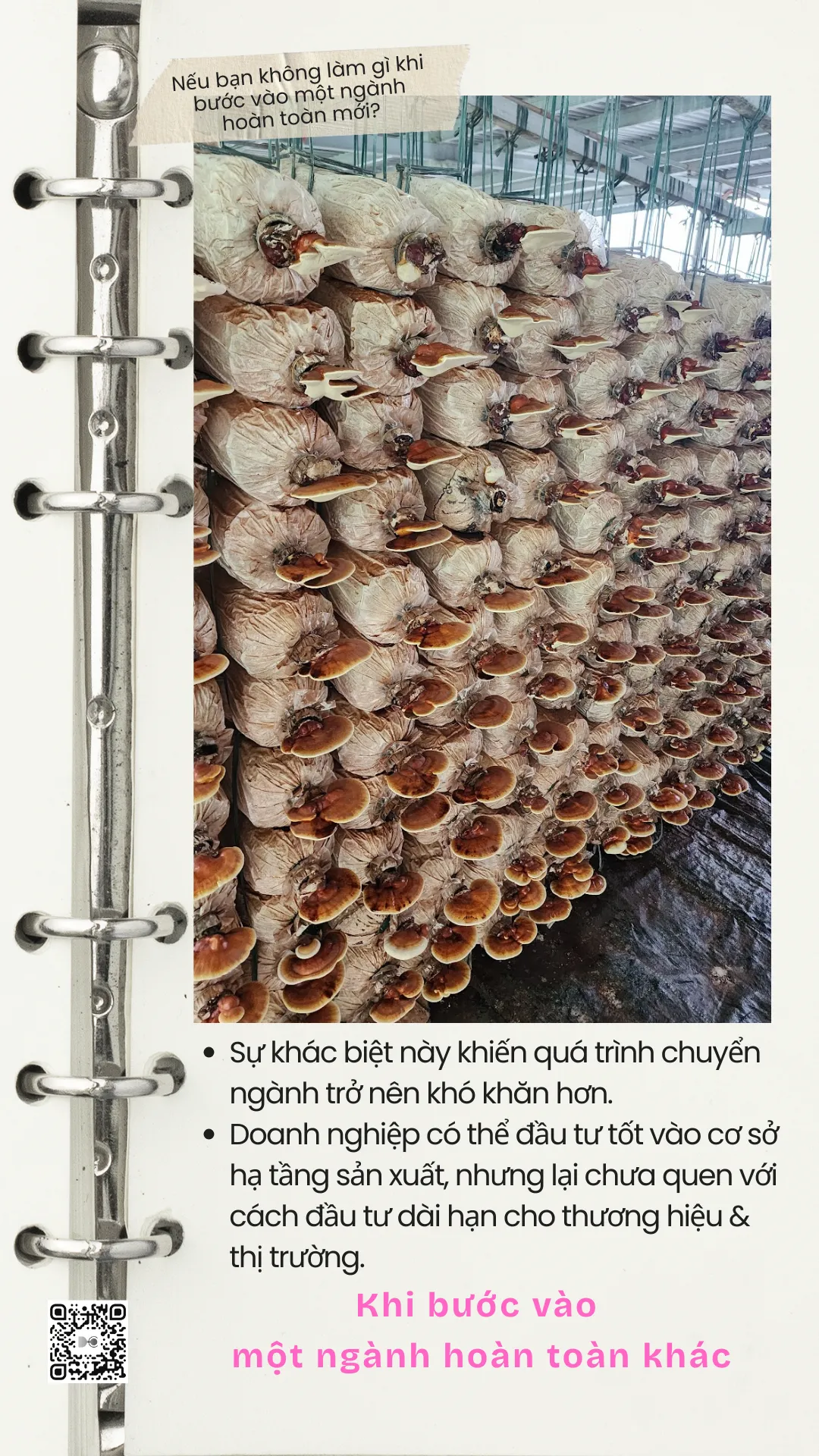
Meanwhile, consumer goods industries like tea or coffee with reishi mushrooms follow a completely different logic:
- Product development
- Brand building
- Distribution channel development
- Long-term marketing investment
This difference makes the transition to a new industry more difficult.
Businesses may invest well in production infrastructure, but are unfamiliar with long-term investment in branding and markets.
When the product portfolio becomes too broad
Another problem begins to emerge when the business develops many different products from reishi mushrooms.
In a short period of time, many product ideas are generated:
- Reishi mushroom tea
- Reishi mushroom coffee
- Cosmetics made from reishi mushrooms
- Dry foods such as rice noodles
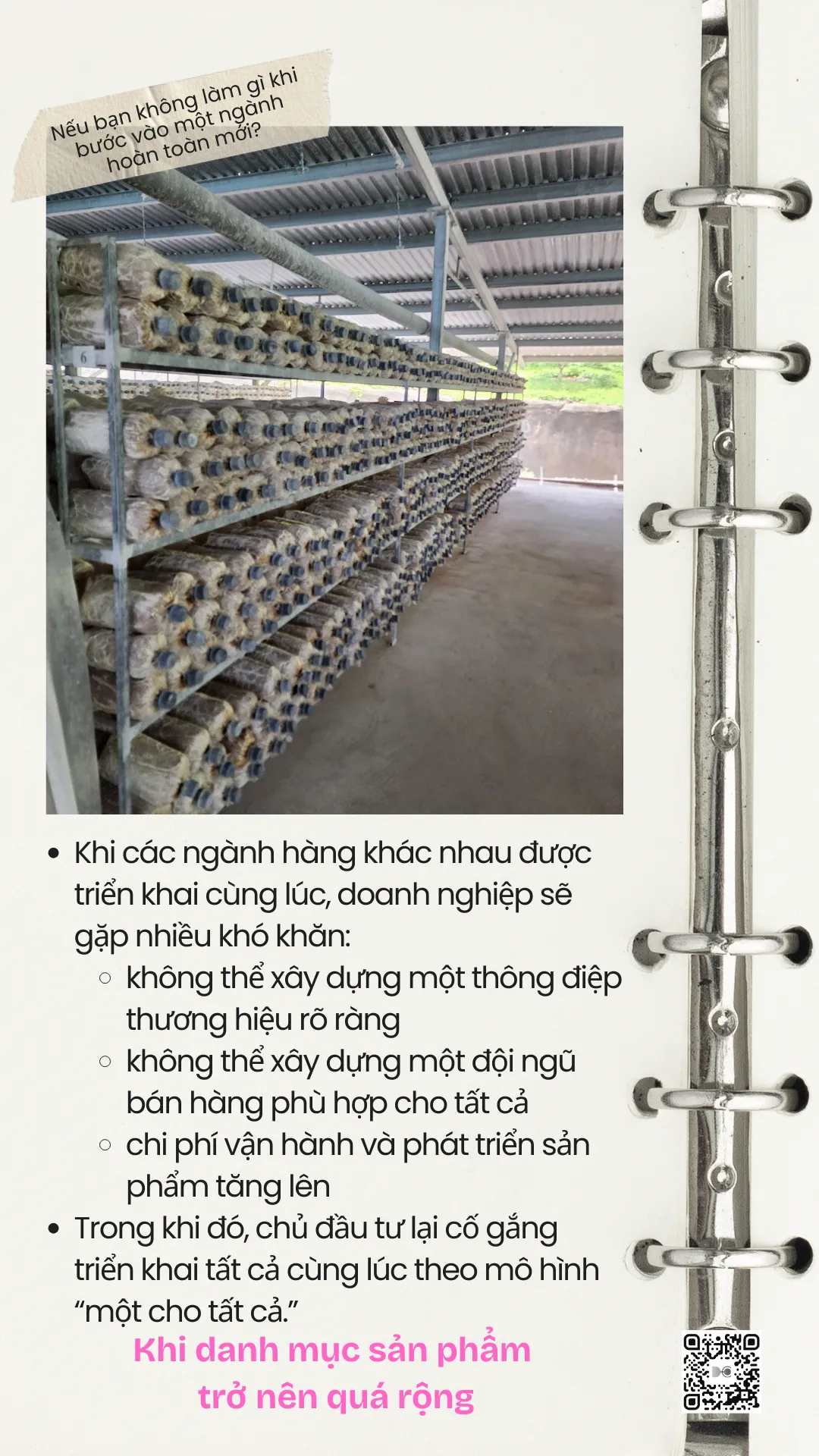
Taken individually, each product has a reason for existing.
But when all of them are placed within the same business, a strategic problem begins to emerge.
Each of these product categories has a completely different market logic.
- Tea and coffee belong to the beverage industry.
- Cosmetics belong to the beauty industry.
- Dry foods belong to the consumer food industry.
When different product lines are launched simultaneously, businesses will face many difficulties:
- Unable to build a clear brand message
- Unable to build a sales team that fits everyone
- Increased operating and product development costs
Meanwhile, the developer is trying to implement everything at once using a “one-for-all” model.
In reality, this approach is very difficult to operate effectively.
Challenges in Product Deployment
Some products are developed through outsourcing to factories located far away.
This increases transportation costs and makes the product’s cost structure less competitive.
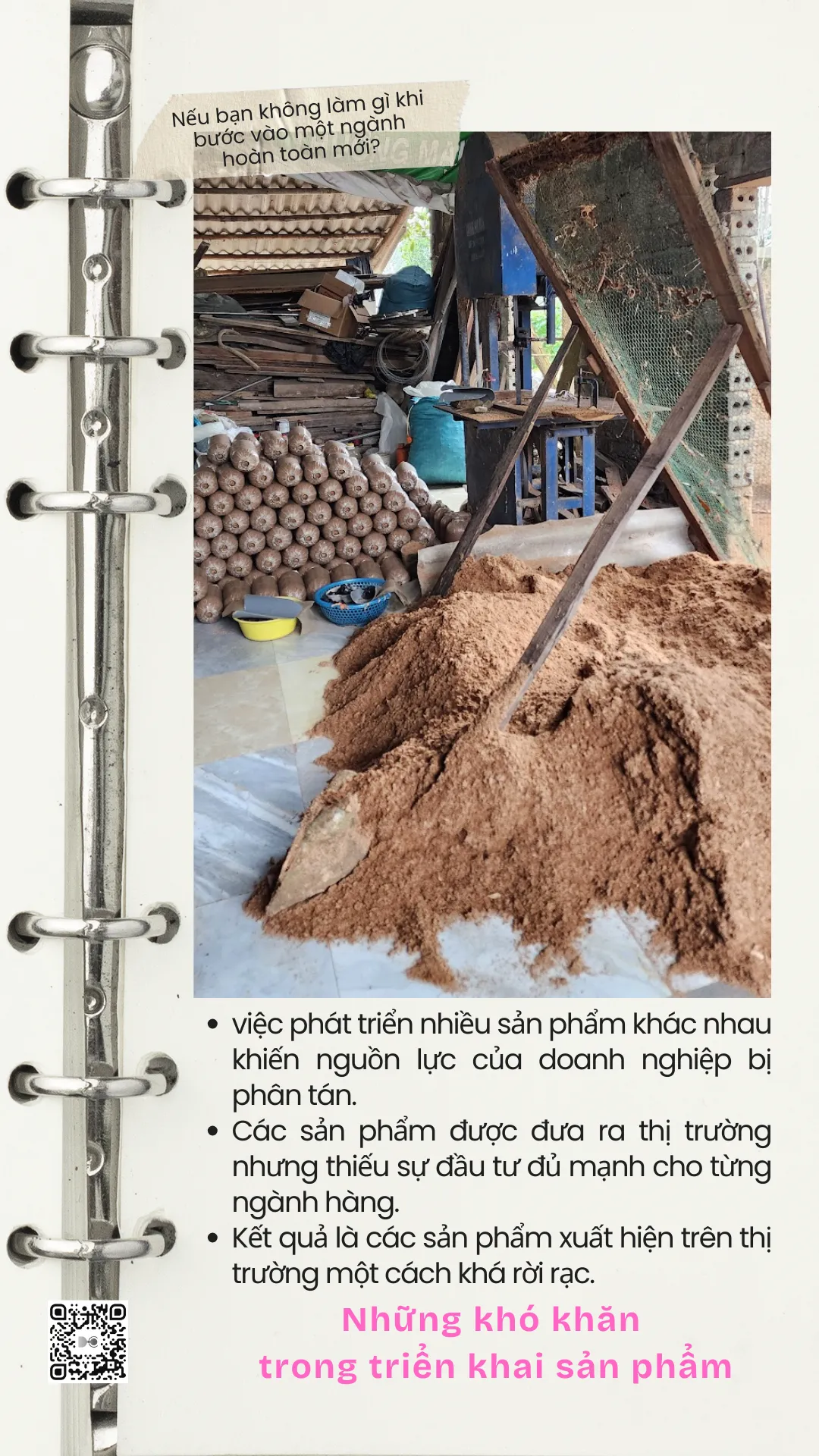
Meanwhile, developing many different products disperses the company’s resources.
Products were launched onto the market, but there was a lack of sufficient investment for each product category.
As a result, the products appearing on the market were quite fragmented.
When the product fails to make an impression
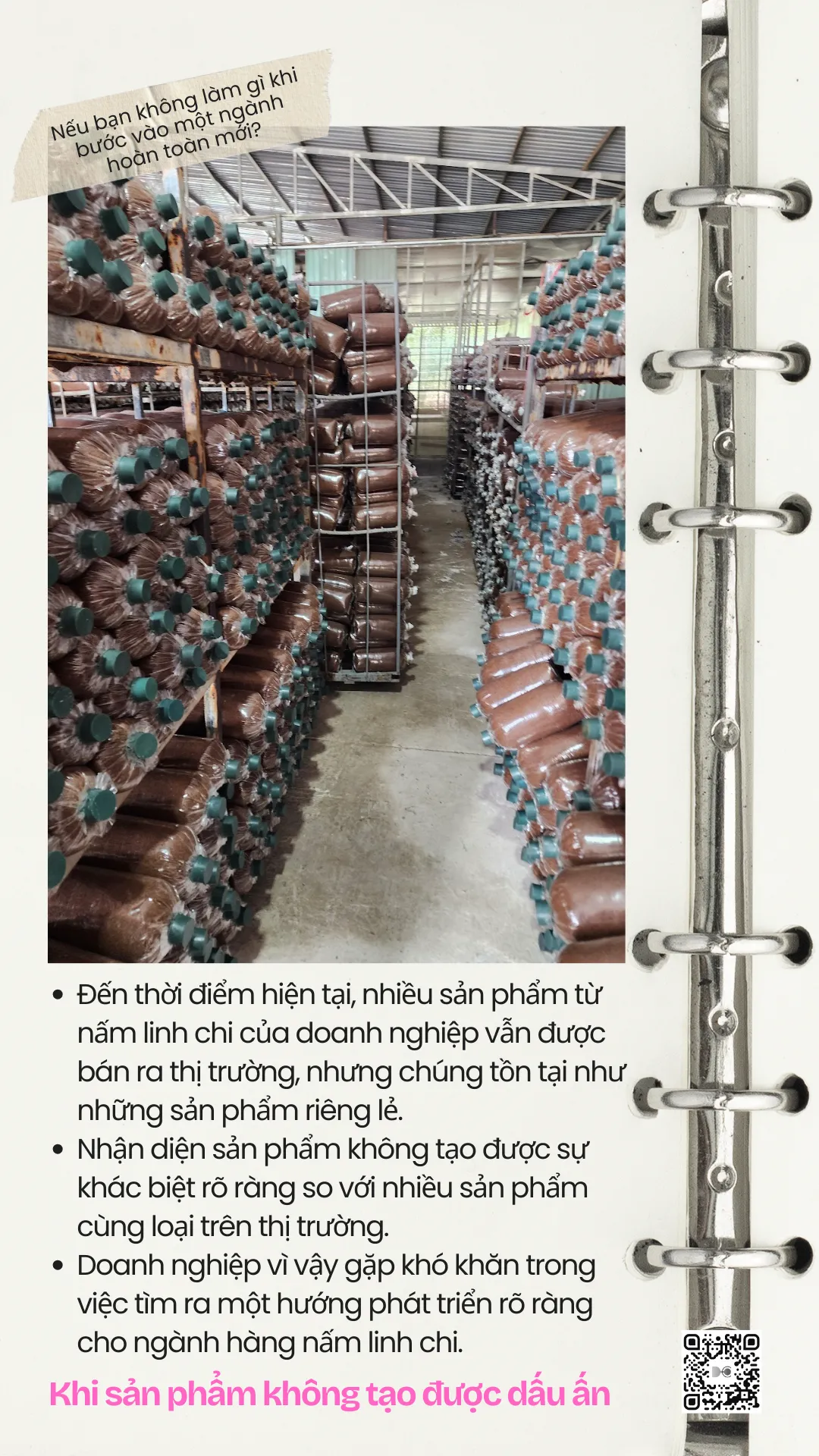
To date, many of the company’s reishi mushroom products are still being sold on the market.
But they exist as standalone products.
The product’s identity fails to create a clear distinction from many similar products on the market.
Therefore, businesses are struggling to find a clear development direction for the reishi mushroom industry.
Revenue has not met expectations.
The brand has not yet made a significant impact.
Even a well-invested farm has not yet fully realized its potential as a strong industry.
Lessons from a Career Transition
This story isn’t a failure.
The business still has a very solid foundation: well-organized farms, quality mushroom products, and a remarkable sustainable farming model.
But in retrospect, there are some important lessons to be learned.
- First, when entering a new industry, businesses need to take the time to thoroughly understand the logic of that industry.
- Second, having an expert on board during the initial stages can help businesses avoid many mistakes in product and market development.
- Third, businesses should not seek advice from too many different sources at once.
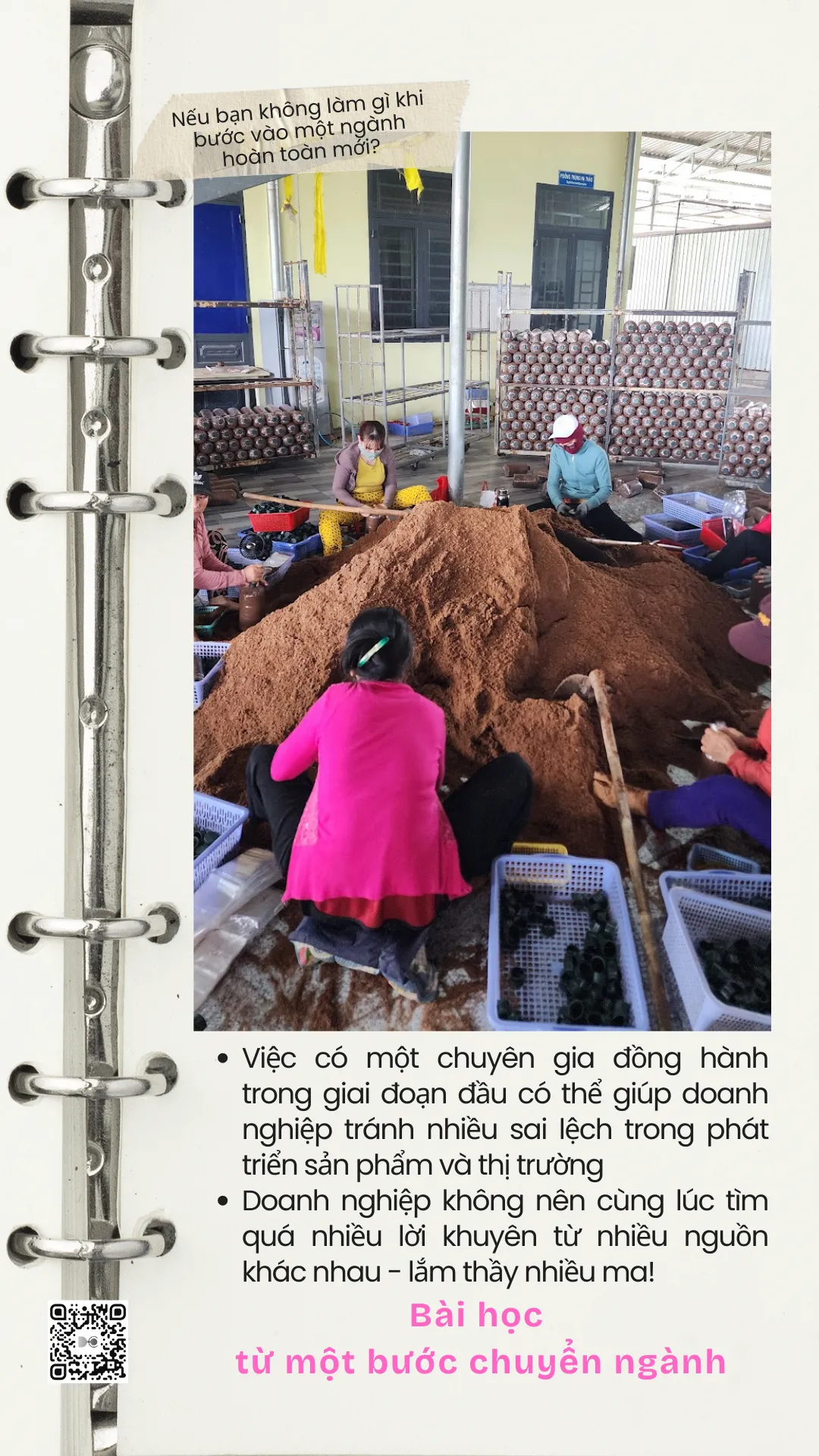
In many cases, this can create a familiar business dilemma: too many cooks spoil the broth.
Therefore, when entering a new industry, sometimes the most important thing isn’t making a lot of products.
But finding the right mentor – and staying focused in a clear direction.