NBKLG | The market doesn’t change with a sudden “table flip.” It shifts very subtly: customers still buy, but they buy through a different channel. They still need your product, but they no longer seek you out in the old way. As online growth increases and consumer behavior shifts to digital platforms, businesses clinging to traditional channels won’t immediately see themselves “losing customers.” But day by day, if you do nothing, you’re losing access. And in business, losing access means losing market share sooner or later.
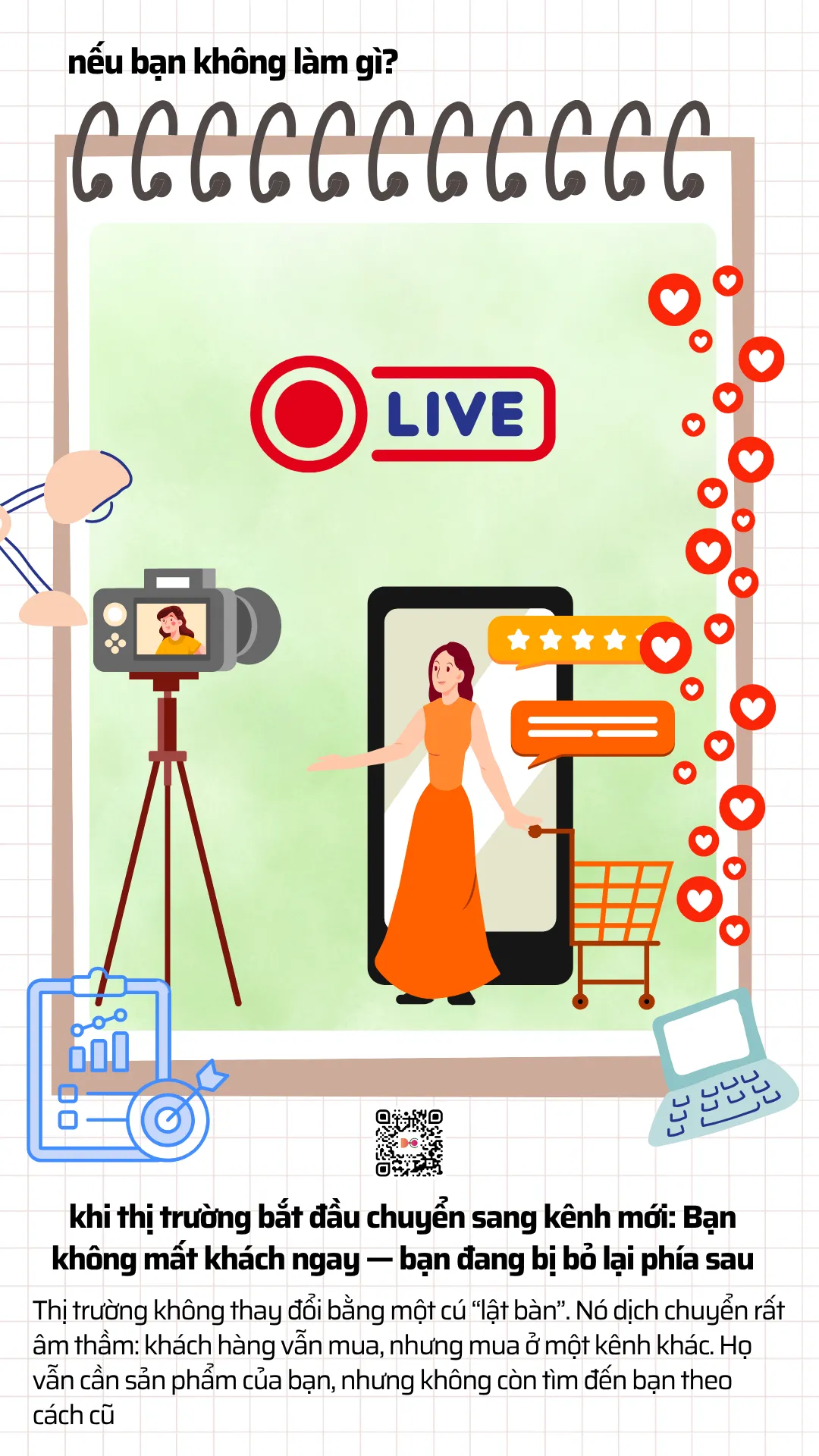
The quiet shift: Customers don’t leave — they just take a different route.
One of the biggest misconceptions businesses have is thinking that if the store still has customers, if the distributors still order goods, then everything is fine. But in reality, consumer behavior doesn’t disappear — it just shifts channels.
Previous customers:
- Visit the store to see the product.
- Ask the staff directly.
- Make your decision at the point of sale.
Visit the store to see the product.
Ask the staff directly.
Make your decision at the point of sale.
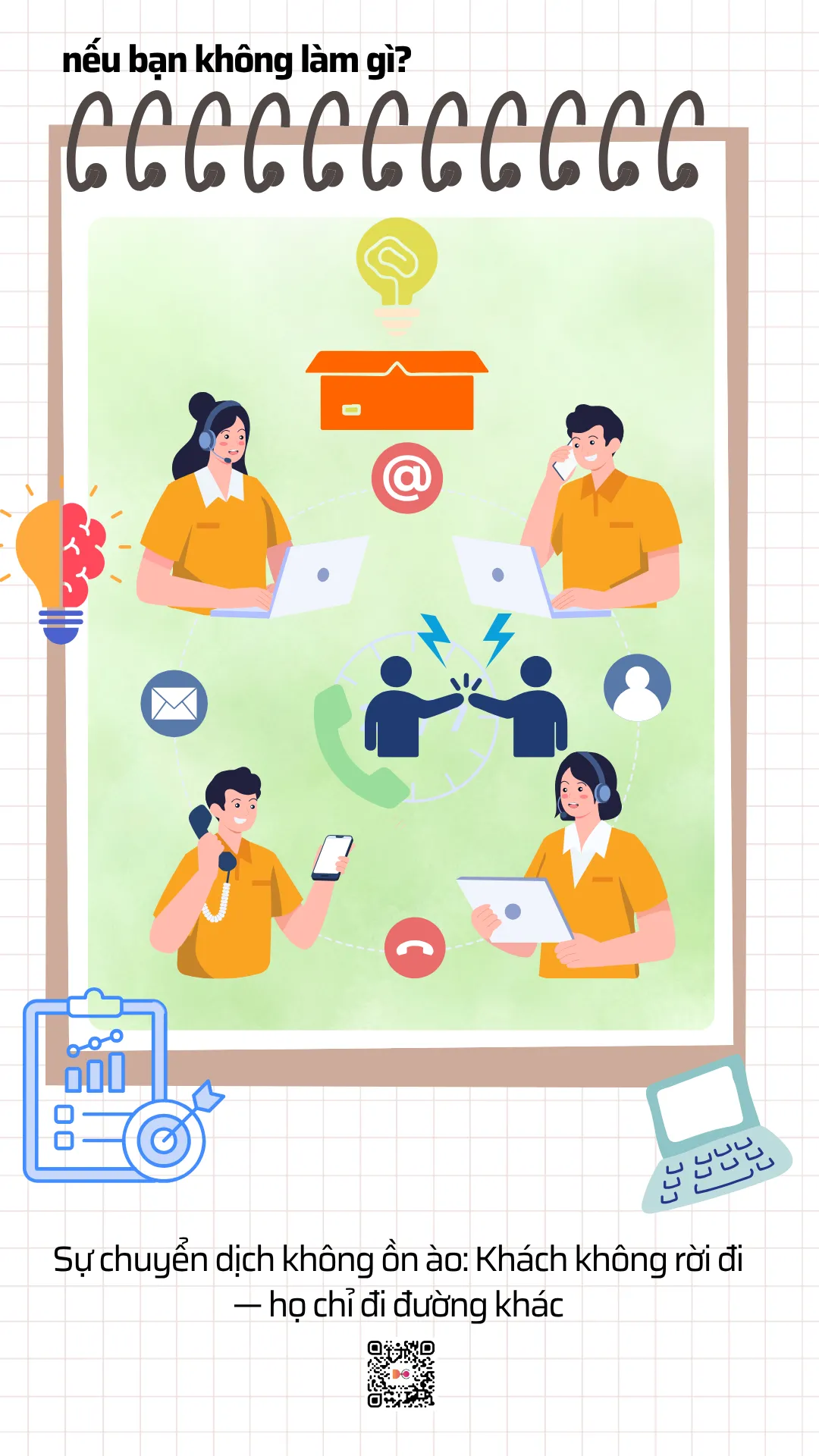
While online growth is booming — businesses remain stagnant
In many industries, especially retail, F&B, and consumer goods, the growth of the online channel is no longer a trend — it’s become the default.
But many businesses still:
- Rely on physical stores
- Invest heavily in in-store displays
- Optimize offline sales staff
- But have almost no strong enough online presence
They think: “Our customers are still used to buying in person.”
That’s true — but only “for now.”
The problem is: customer habits don’t stand still. They change with the environment, with technology, with convenience. And if businesses don’t keep up, they will no longer be part of the customer’s buying journey — even if the product is still there.
Losing a channel means losing the right to choose.
In an omnichannel market, customers aren’t loyal to one channel—they’re loyal to convenience.
Today they might buy in-store.
Tomorrow they might order online.
The day after tomorrow they might buy through an app, social media, or an intermediary platform.
If you’re not present at those touchpoints, you not only lose sales opportunities—you lose the right to be considered by customers.
This is more dangerous than losing customers.
Because:
- As long as you’re being considered, you still have a chance.
- When you don’t show up, you’re out of the game.
Common Mistake: Thinking of “new channels” as just sales channels
Many businesses, when talking about online, immediately think of “opening another sales channel.”
But in reality, online is not just a place for transactions — it’s where decisions are made.
Customers:
- Watch video reviews
- Read comments
- Compare prices
- Search for other people’s experiences
All of this happens before they buy.
If a business only “sells” online without having a proper “present presence,” they will still lose.
Because the customer has already made their decision — they just haven’t chosen you.
Why are businesses slow to switch channels?
There are three main reasons:
1. Inertia of success in the old channel: Businesses that have been successful with a system of stores and dealerships tend to believe that this model is still sufficient.
2. Lack of capacity to operate new channels: Online is not just about posting products. It requires:
- Content
- Order processing
- Customer service
- Data management
And many businesses are not yet ready.
3. Fear of channel conflict: Concerns that selling online will negatively impact existing dealers, stores, or distribution systems. Result: they delay. And the market doesn’t.
What happens if you do nothing?
Initially:
- Revenue doesn’t drop significantly.
- Old customers keep coming back.
But gradually:
- New customers don’t know about you.
- Old customers start buying elsewhere for convenience.
- Competitors take over new channels.
- Marketing costs increase, but effectiveness decreases.
At some point, the business realizes:
- It’s not that they’re selling poorly.
- It’s that they’re no longer visible.
Case Study: When the competitor isn’t better — but more accessible
A domestic consumer goods brand once had a very strong distribution network in traditional stores.
For many years, they didn’t invest in online, believing that: “Our customers still buy from stores.”
Meanwhile, a new competitor emerged:
- Invest heavily in digital content
- Have a strong presence on social media
- Optimize the online shopping experience
The product wasn’t superior. But after 2 years:
- The competitor captured the majority of young customers.
- The old business started losing market share.
Not because the product was inferior. But because…ì họ không còn nằm trong hành trình tìm kiếm của khách hàng mới.
What should businesses do before it’s too late?
This isn’t a question of “should we go online or not?”. It’s a question of whether you’re still present in the customer’s buying journey.
1.Review the customer journey: Where do customers find you? Where do they learn about you? Where do they compare prices? Where do they buy?
If you’re not at these touchpoints, you’re being left behind.
2. Build your presence first, sell later: Don’t start by “opening a sales channel.” Start by:
- Appear
- Be seen
- Be remembered
Channel Synchronization — Inseparable: Online and offline are not two different worlds. They are one seamless journey.
A customer can:
- View online
- Visit the store
- Or vice versa
If the experience is inconsistent, you’ll lose customers midway through their journey.
4. Resolve channel conflicts strategically, not avoid them: Instead of fearing that online sales will affect your agency, do the following:
- Clearly define roles for each channel
- Create differentiated value
- And manage policies effectively
Conclusion: Channels are not just places to sell — they are places to survive.
The market doesn’t wait for businesses to be ready to change. Customers don’t return to the old channel just because you haven’t adapted yet.
If you do nothing when the market starts shifting to a new channel, you’re not “staying put.” You’re falling behind — a little bit each day. At some point, you’ll realize: You’re not losing customers because of a bad product. You’re losing customers because they no longer see you where they are.
In a world where attention is a scarce resource, not being present is the biggest failure. And unfortunately — it doesn’t happen overnight. It happens gradually, until there’s no turning back.