What If You Do Nothing? is a section based on real-world experience. Some details in the article have been adjusted to ensure business confidentiality.
In many manufacturing industries, businesses often spend years accumulating technical capabilities and building a reputation in large projects. When a new market opportunity arises, they have a natural advantage: experience, technology, and a network of relationships.
But sometimes, that advantage isn’t enough to help a business move faster than the market.
Because opportunities depend not only on production capacity, but also on how the business implements its business strategy and branding.
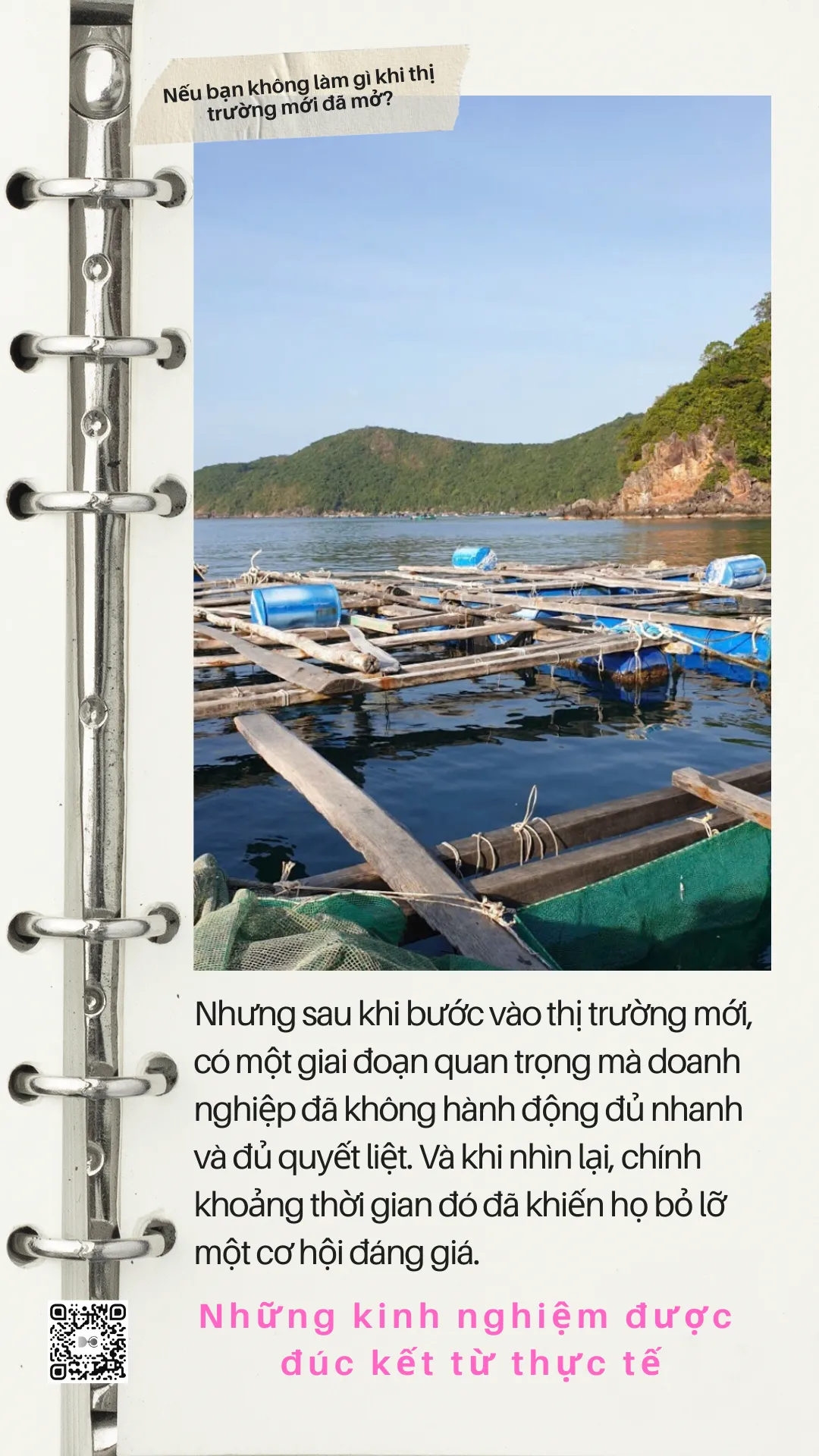
The story in this article comes from a HDPE plastic pipe manufacturing company with annual revenue exceeding 300 billion VND and over a decade of participation in major state-funded projects in the clean water infrastructure sector.
When the sustainable aquaculture market began to develop, the company saw the opportunity very early on.
However, after entering the new market, there was a crucial period where the company did not act quickly or decisively enough. Looking back, that period caused them to miss a valuable opportunity.
When a New Industry Emerges
In recent years, the trend of sustainable aquaculture has begun to receive more attention in Vietnam.
Traditional wooden cage farming models are gradually revealing many limitations: short lifespan, high maintenance costs, and environmental impact.
In this context, HDPE cages and buoys are beginning to be seen as a more sustainable alternative.
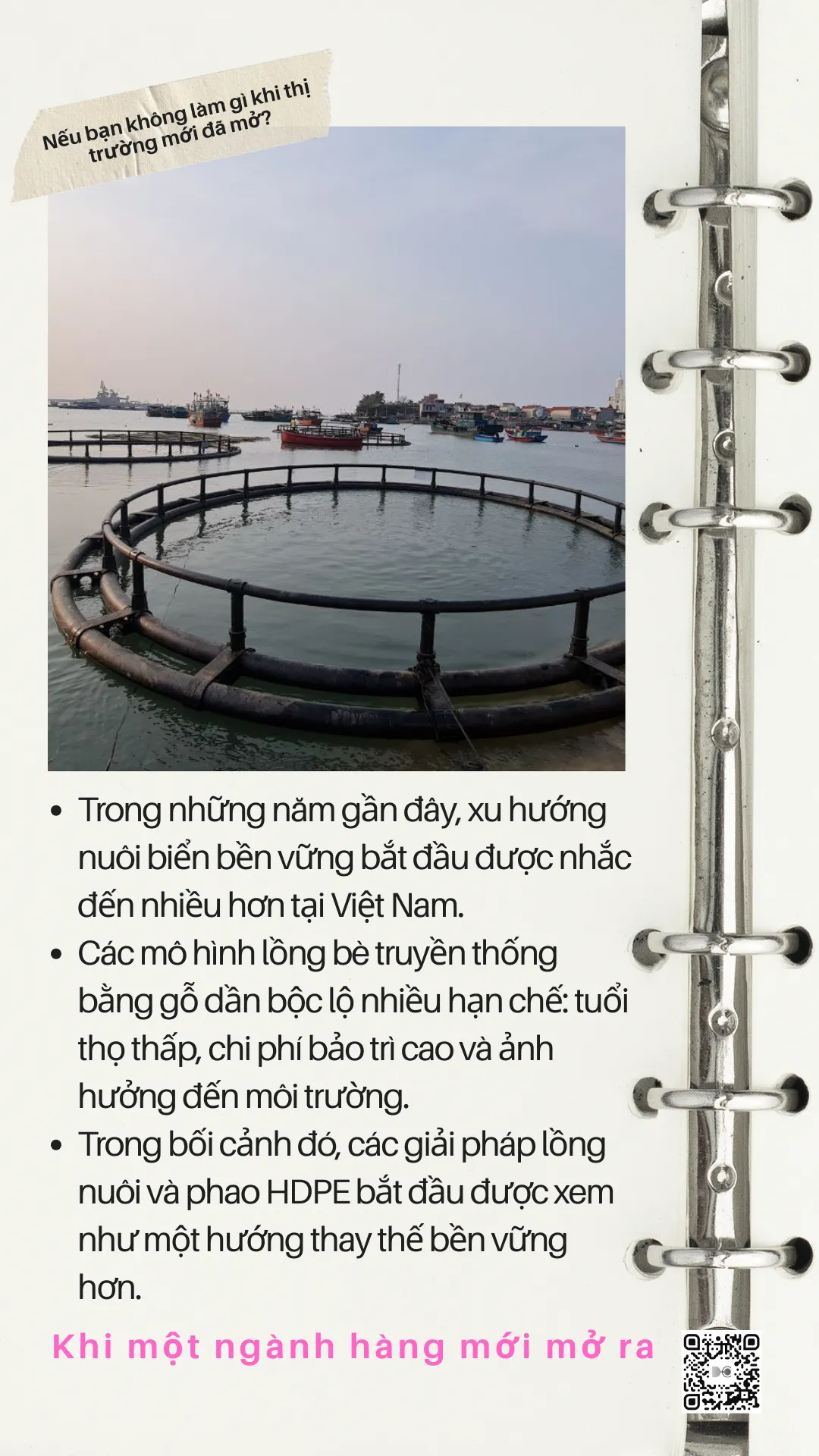
For a company with many years of experience manufacturing HDPE plastic pipes and participating in large infrastructure projects, this is a natural opportunity to expand into a new product line.
The company began developing products for aquaculture such as:
- HDPE cages replace wooden cages
- HDPE buoys for fishermen raising oysters, shrimp, and fish
- Components for marine aquaculture systems
From a technological standpoint, the company has a clear advantage. Production capacity has been built up over many years, and the quality of HDPE material has been proven in major projects.
But entering a new industry isn’t just about the product.
It’s also about the market and the brand.
A Thorough Brand Reconstruction
In 2022, the company began working with Mind Connector to review its development strategy for the new phase.
One of the first things done was to rebuild the brand identity.
The company entered a new phase of development with more product lines, so the old brand identity no longer fully reflected the company’s vision.
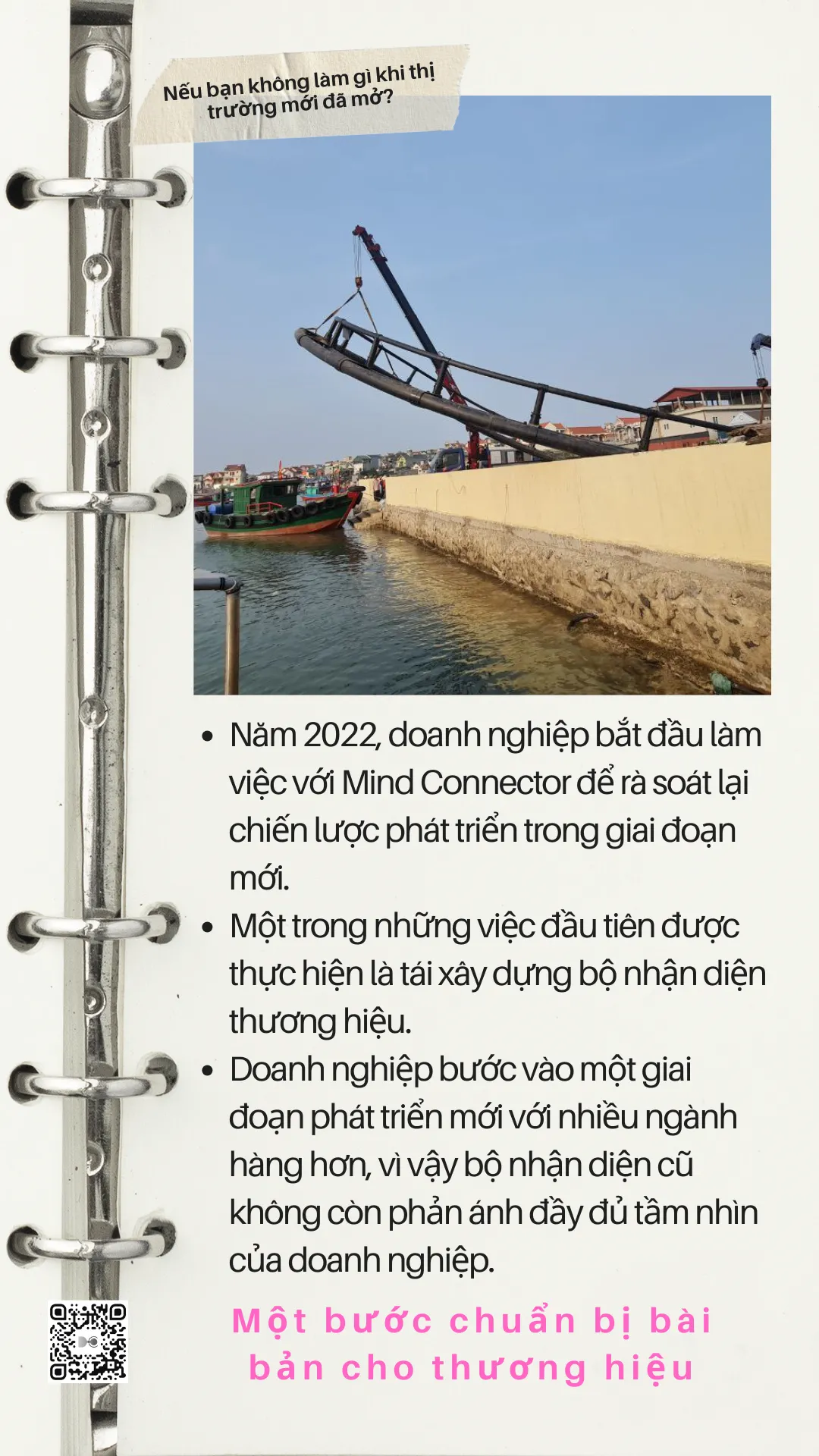
Mind Connector worked with the company to build a new brand identity system, while also restructuring product lines and defining brand strategy.
For the company, this was a significant transition.
The new brand identity was implemented in various communication activities, and the company clearly expressed pride in its new brand image.
Simultaneously, Mind Connector also partnered with businesses in planning business strategies for new product lines – especially products serving marine aquaculture.
At that time, market opportunities were considered quite clear.
Many localities began encouraging the transition from wooden cages to HDPE cages. Sustainable aquaculture models were mentioned more frequently in marine economic development programs.
But it was during this crucial period that businesses began to encounter internal problems.
When Pricing Mechanisms Become Barriers
One of the biggest problems arises in how businesses structure pricing for new product lines.
During implementation, businesses choose a rather cautious approach: all branding costs for the new product line are amortized in the first year.
This means that costs related to:
- Brand building
- Communications
- Market development
All of these factors are directly incorporated into the product’s pricing structure.
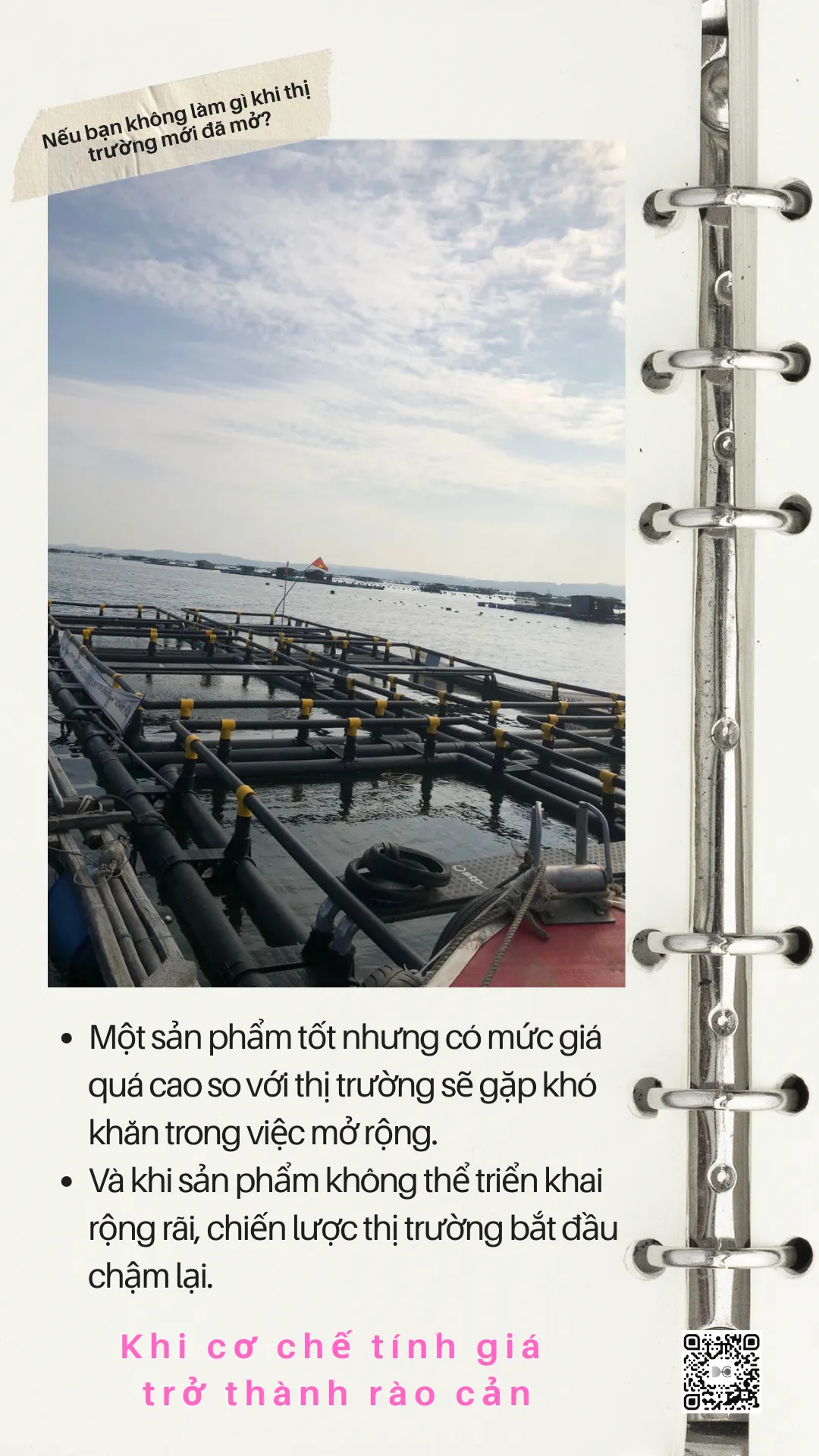
As a result, product prices are significantly inflated, exceeding the affordability of many aquaculture farmers.
Meanwhile, the aquaculture market in Vietnam is still in a transitional phase. Many fishermen remain accustomed to traditional, lower-cost solutions.
A good product with an excessively high price will struggle to expand.
And when a product cannot be widely implemented, the marketing strategy begins to slow down..
When the communication implementation phase is halted midway
Alongside the pricing issue, another crucial factor began to be affected: the execution of the communication strategy.
Due to budget constraints after calculating costs for the new product line, many communication activities could not be implemented as originally planned.
Some activities were stopped.
Some activities were moved to be implemented internally.
In the short term, in-house implementation can save businesses money.
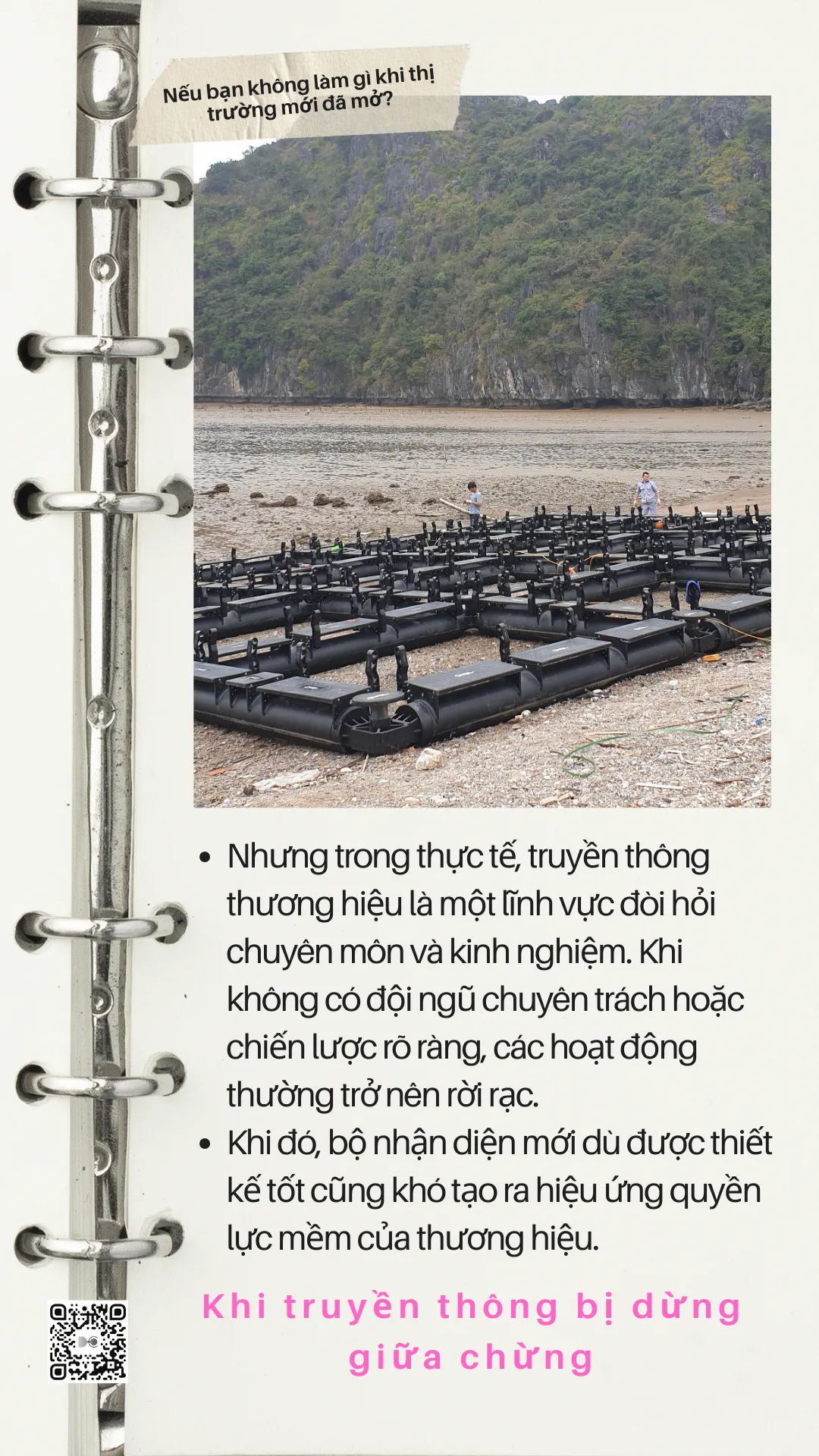
However, in reality, brand communication is a field that requires expertise and experience. Without a dedicated team or a clear strategy, activities often become disjointed.
The brand message is not fully conveyed.
Marketing activities lack continuity.
Long-term brand building thinking is gradually replaced by short-term activities.
In that case, even a well-designed new brand identity will struggle to create the soft power effect of the brand.
When the system becomes cumbersome
Another problem arises during strategy implementation: organizational structure.
Businesses allocate significant resources to indirect departments, while the direct market development team is not strong enough.
This leads to a rather common paradox:
- Much time is devoted to internal processes,
- but the sales and market development forces are understaffed.
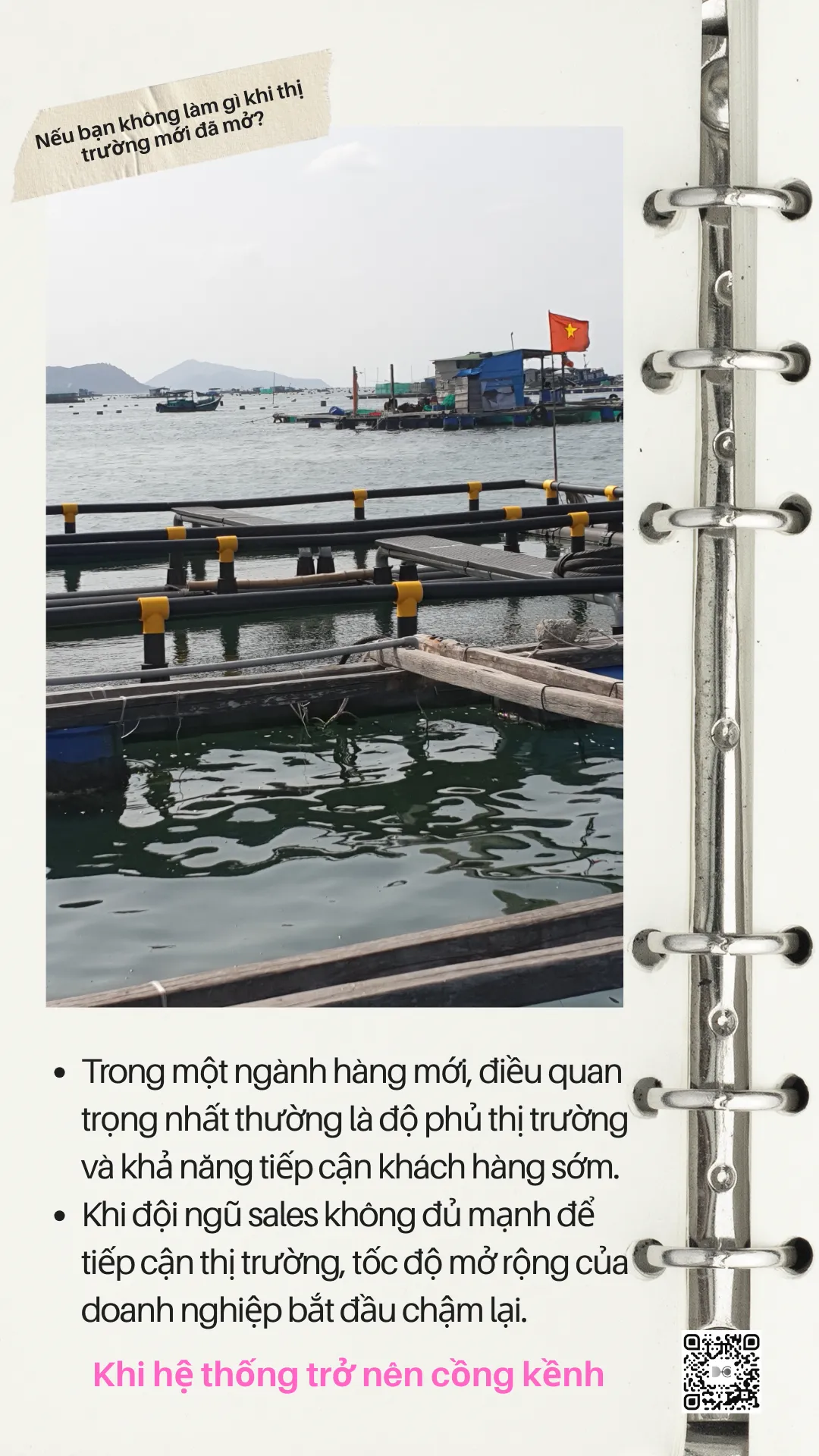
In a new industry, the most important factors are often market coverage and early customer reach.
When the sales team isn’t strong enough to reach the market, the business’s expansion rate begins to slow down.
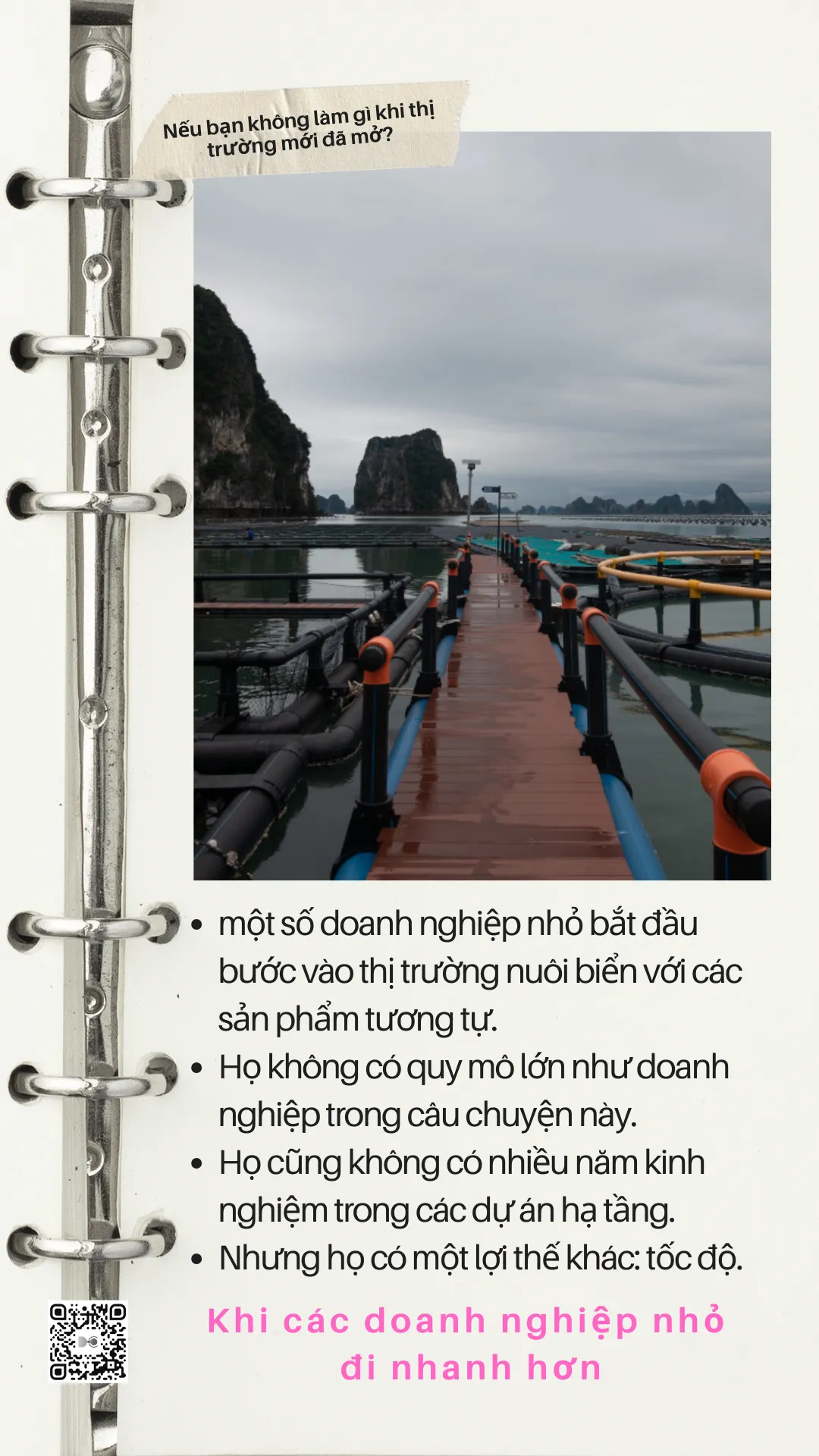
When Small Businesses Move Faster
During that time, several small businesses began entering the aquaculture market with similar products.
They weren’t as large-scale as the business in this story.
Nor did they have years of experience in infrastructure projects.
But they had another advantage: speed.
Small businesses are becoming more prevalent in aquaculture areas. They directly approach fishermen and adapt products to suit their specific needs.
Their market presence is becoming closer to the aquaculture farmers.
Therefore, the rate of transition to new products is faster in many areas with smaller businesses.
Meanwhile, businesses with more than 10 years of experience in the HDPE field are slower in market deployment.
When opportunities are missed
It’s noteworthy that the business in this story didn’t lack competence.
- They have the technology.
- They have the experience.
- They have a new, well-developed brand identity.
But when crucial factors like product pricing, marketing, and deployment systems aren’t synchronized, market opportunities begin to slip away.
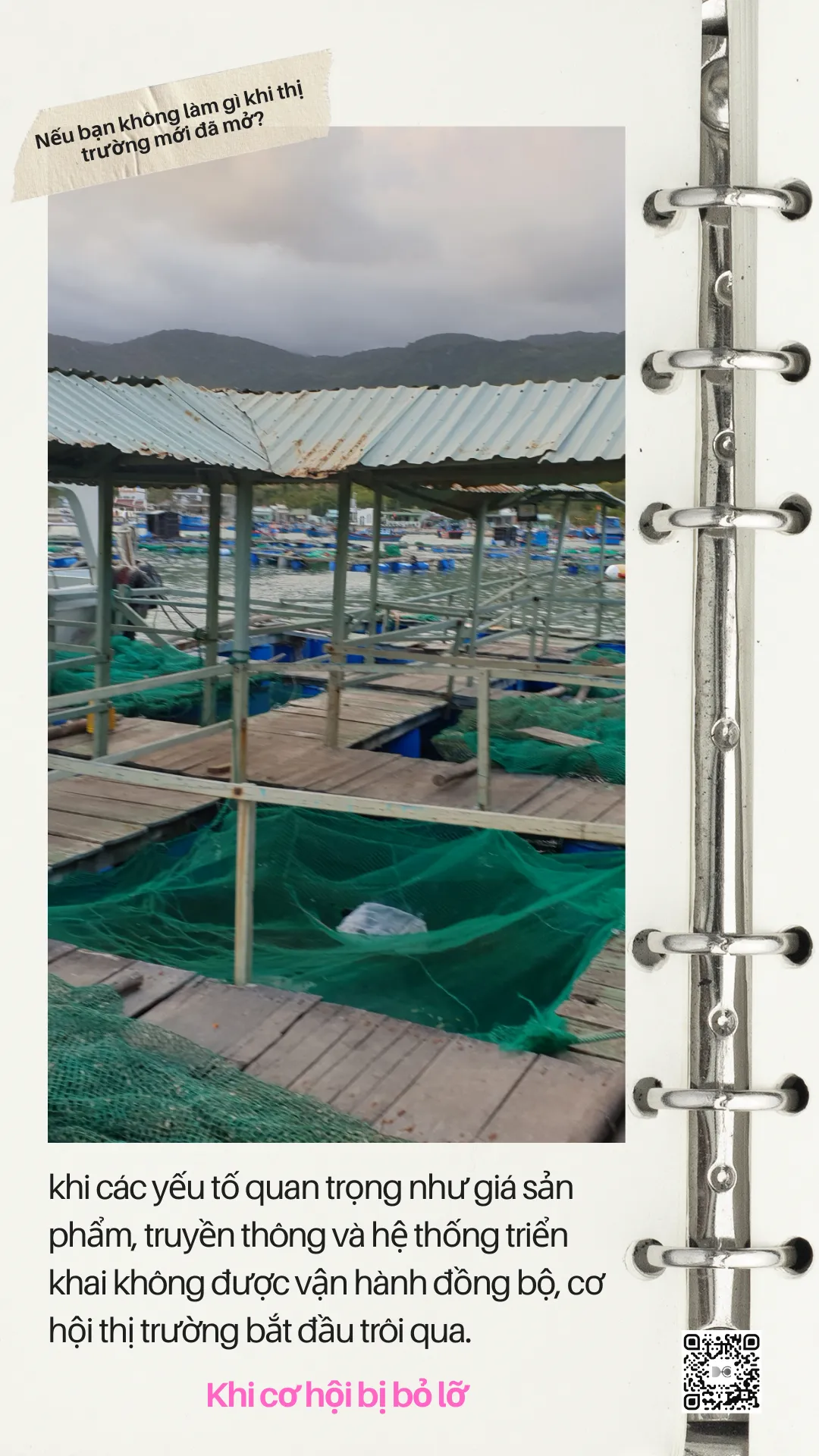
In some areas, the very markets that the pioneering company once entered are now being exploited by smaller businesses.
The brand has not established a strong enough presence.
Brand trust has not been fully built.
A valuable opportunity is therefore not developed to its full potential.
Lessons from an Unfulfilled Opportunity
This story isn’t about failure.
The business is still operating, still producing, and continues to grow in many areas.
But in retrospect, there are some lessons worth considering.
First, when entering a new industry, the financial structure for the market development phase needs to be carefully prepared.
Secondly, brand building is not a short-term expense. It should be viewed as a long-term investment to build market trust.
Thirdly, in new markets, speed of market entry is sometimes just as important as production capacity.
And finally, a good brand identity only truly delivers value when it’s supported by strong marketing and communication activities.
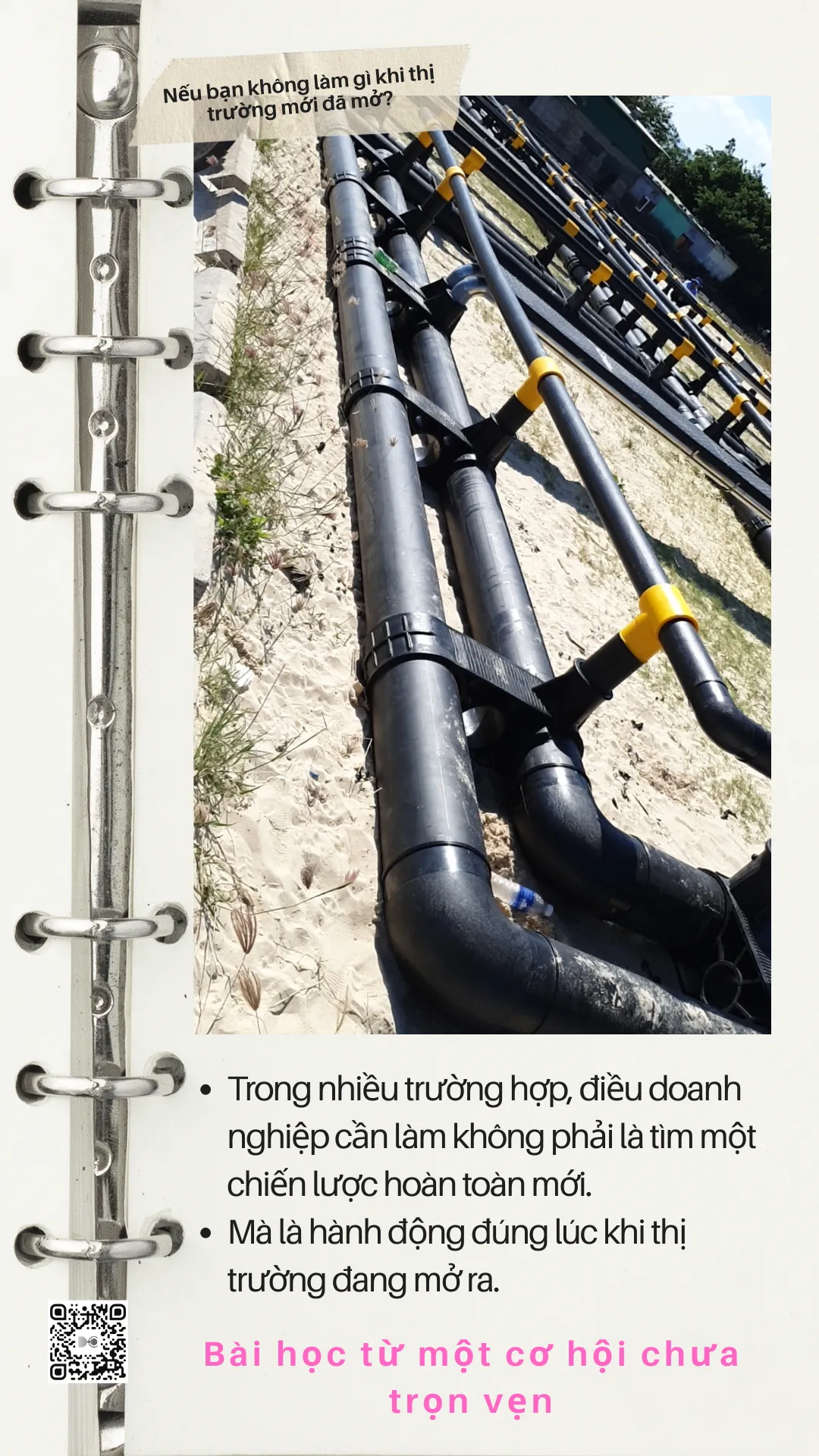
In many cases, what a business needs to do isn’t to find a completely new strategy.
But rather to act at the right time when the market is opening up.