When revenue growth slows, the influx of new customers dwindles, or market competition intensifies, many businesses consider hiring a marketing manager or establishing a marketing department. This is a natural reaction. However, in many instances, marketing is not the primary issue that needs addressing. If the core foundations of the business are not clearly defined, investing in marketing may generate high expectations but yield meager results.
“Perhaps our company is lacking in marketing.”
This is a conclusion many business owners reach when they start to feel that business is no longer as smooth as it used to be.
- Fewer new customers.
- Slow sales growth.
- An increase in competitors.
- Negligible website traffic.
- Low engagement on the fan page.
In such a scenario, the immediate reaction is often to hire more marketing staff or outsource communications to an external agency.
From a certain perspective, this is a perfectly logical response.
After all, marketing is the function linked to brand image, customers, and sales activities. When market conditions toughen, turning to marketing seems almost inevitable.
However, after observing numerous businesses across various scales and industries, a rather interesting reality emerges.
There are companies that invest heavily in marketing, yet see no significant change in results.
It is not because the marketing team is underperforming; rather, they are being tasked with solving a problem that does not actually fall within the realm of marketing.
When a business cannot answer the question, “What exactly are we selling?”
It might sound strange.
How could a business that has been selling products for years not know what it is actually selling?
In reality, many businesses sell products daily without truly identifying the specific value that drives customer choice.
Take a paintbrush manufacturer as an example.
The company might think it is simply selling paintbrushes.
However, a contractor might be buying a tool that minimizes paint waste.
A construction crew might prioritize the speed of project completion.
A distributor might focus on sales potential and customer repeat rates.
It is the same product, yet each customer group perceives a different value.
If a business has not clearly defined whom it serves and what makes it stand out, it becomes very difficult for Marketing to convey the right message.
This is not because the marketing is weak, but because the business lacked a clear direction from the very beginning.

Some businesses do not lack customers, but they lack the right customers.
This is a fairly common scenario.
A business receives a high volume of quote requests.
The sales team is constantly busy.
Revenue is being generated.
Yet, profits are steadily declining.
The root cause is not that marketing is failing to bring in customers.
On the contrary, the business attracts plenty of them.
The problem is that the business is dedicating too many resources to customer segments that do not generate long-term value.
Some customers make only a one-time purchase.
Some constantly demand discounts.
Others place small orders yet require a significant amount of time and attention.
Without clearly defining a target customer segment, the better the marketing performs, the busier the business becomes—often with the wrong things.
Busy with opportunities that are not truly the right fit.

Marketing cannot determine a business’s competitive advantage.
A mechanical engineering firm might invest heavily in promotion.
A packaging company might build a website that looks better than its competitors’.
An electrical equipment manufacturer might maintain a constant presence on social media.
But if a customer asks:
“Why should I choose you over five other companies?”
and the business simply replies, “Because our products are high-quality,” then there is little left for marketing to do.
It is not that the answer is incorrect; rather, it is what almost every business says.
Customers cannot distinguish the difference.
Marketing does not create a competitive advantage.
Marketing merely helps the market see the competitive advantage the business already possesses.
If that advantage is not clearly defined, ramping up communication efforts will not necessarily attract more customers.
Marketing cannot determine a business’s competitive advantage.
A mechanical engineering firm might invest heavily in promotion.
A packaging company might build a website that looks better than its competitors’.
An electrical equipment manufacturer might maintain a constant presence on social media.
But if a customer asks:
“Why should I choose you over five other companies?”
and the business simply replies, “Because our products are high-quality,” then there is little left for marketing to do.
It is not that the answer is incorrect; rather, it is what almost every business says.
Customers cannot distinguish the difference.
Marketing does not create a competitive advantage.
Marketing merely helps the market see the competitive advantage the business already possesses.
If that advantage is not clearly defined, ramping up communication efforts will not necessarily attract more customers.
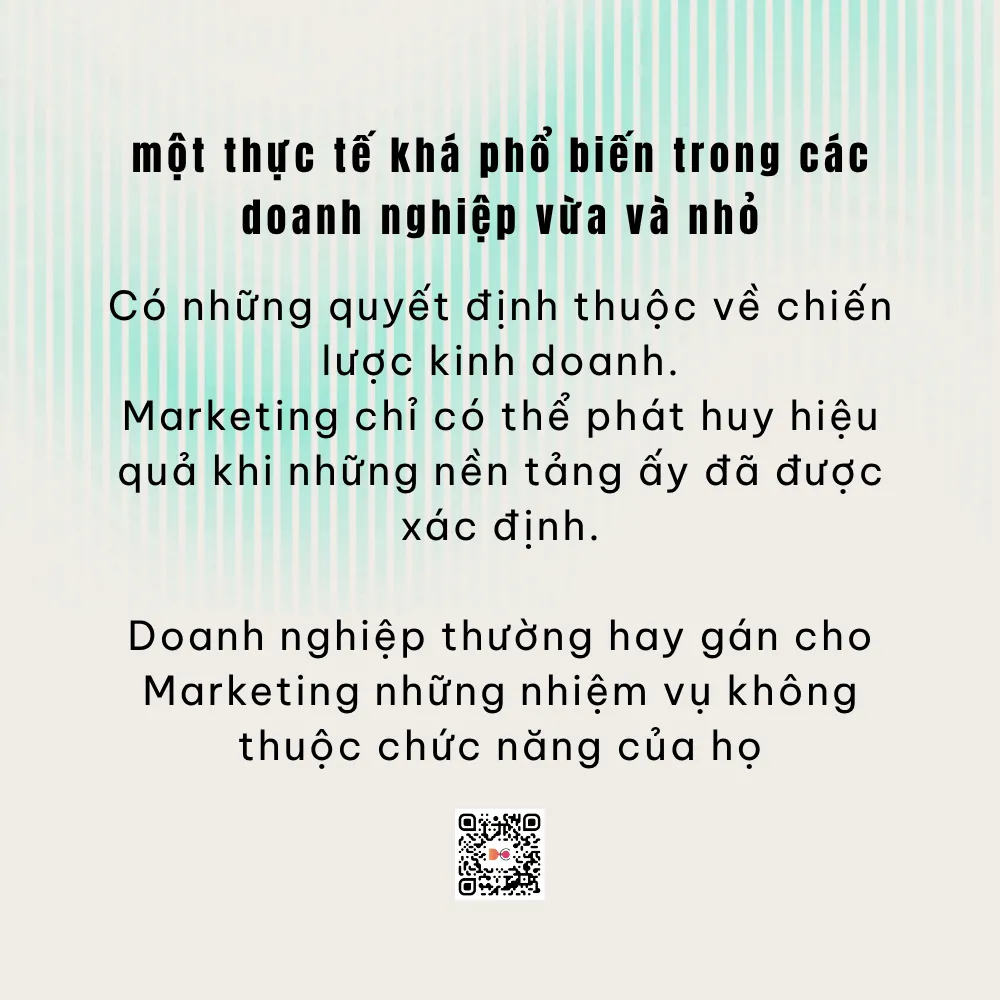
The first thing a business needs is alignment.
There is a seemingly simple question.
If you ask five people within the same company, “How does our company differ from its competitors?”
Would the five answers be the same? In many companies, the answers vary widely.
The sales manager talks about price.
The technical team talks about quality.
The executive team talks about service.
Customer support staff talk about delivery speed.
None of these answers is wrong.
However, if everyone perceives the company differently, it becomes very difficult for the marketing team to craft a unified message.
The market will only remember a business if the business itself knows what it wants to be remembered for.

The first thing a business needs is alignment.
There is a seemingly simple question.
If you ask five people within the same company, “How does our company differ from its competitors?”
Would the five answers be the same? In many companies, the answers vary widely.
The sales manager talks about price.
The technical team talks about quality.
The executive team talks about service.
Customer support staff talk about delivery speed.
None of these answers is wrong.
However, if everyone perceives the company differently, it becomes very difficult for the marketing team to craft a unified message.
The market will only remember a business if the business itself knows what it wants to be reminded for.
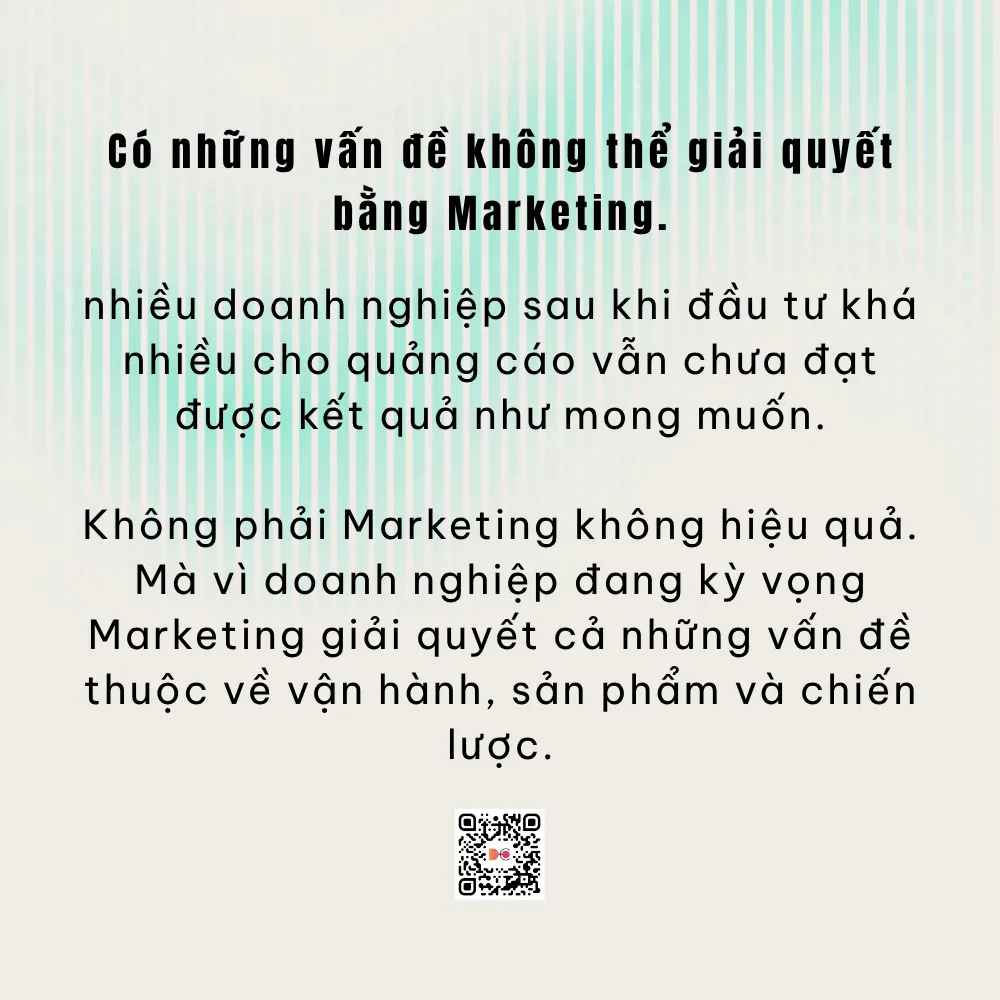
So, when should a business invest heavily in marketing?
There is likely no single, universal moment that applies to every business.
However, marketing delivers the greatest value once a business has answered a few fundamental questions:
Who is the target audience?
Which market segment does the business want to focus on?
What is the greatest competitive advantage?
What message does the business want the market to remember?
Are the sales and marketing teams aligned on the same strategic direction?
Once these foundations are clear, marketing becomes a tool that helps the business expand into the market more rapidly.
Conversely, if these questions remain unanswered, marketing efforts risk generating significant activity with minimal impact.
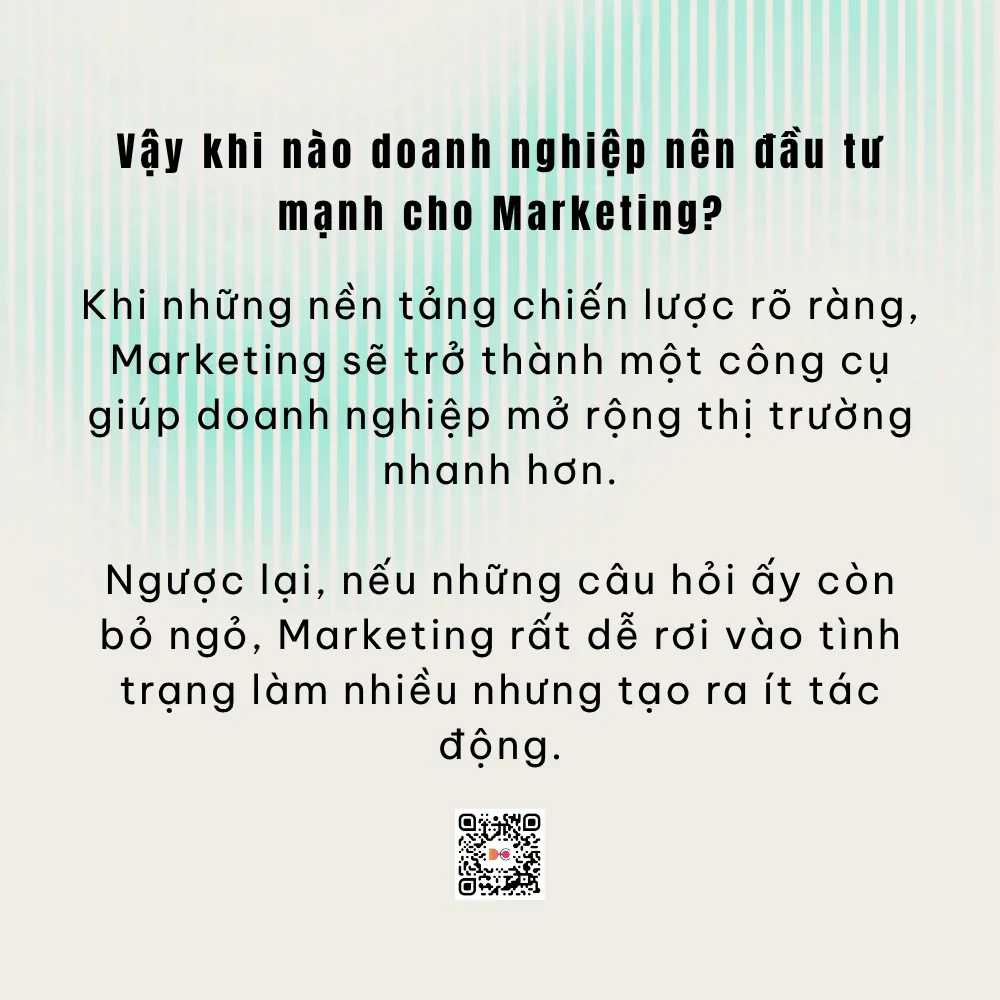
Marketing is not the first department a business needs, but it becomes one of the most critical once the business is ready.
Stating that marketing is not the immediate priority does not mean downplaying its importance.
On the contrary, in an increasingly competitive landscape, few businesses can achieve sustainable growth without investing in market-building activities.
The key lies in positioning marketing correctly—both in terms of timing and function.
Marketing does not replace strategy.
Marketing does not replace sales.
Nor does marketing replace operational capability.
Marketing serves to connect the value a business has created with the market.
To achieve this, a business must first understand how it wants to be perceived by its customers.
Perhaps, before asking, “Does the business need marketing?” it would be more beneficial to answer another question: “Is the business truly clear on what it wants the market to remember it for?”
Once the answer to that question becomes clear, the role of marketing will also become far more defined.