What If You Do Nothing? is a column based on real-life experiences. Some details in the article have been adjusted to ensure the confidentiality of businesses.
In many rural areas of Vietnam, there are businesses and cooperatives built from a very simple desire: to create jobs for local people.

They didn’t start with the ambition of building a big brand. They started by creating a good product, generating stable income for the community, and preserving traditional craft values.
But over time, as their production capacity proved and their products reached a sufficient quality to enter the international market, a new question arose: Could the business move to a larger stage of growth?
The story in this article comes from a cooperative producing household appliances and kitchenware, which has been operating for nearly 10 years and has achieved 5-star OCOP product certification.
They have skilled craftsmen.
They have beautiful products.
They even have OEM orders for demanding markets like Japan and South Korea.
But after many years, the business remains small in scale despite high expectations.
Not because the products are poor. But because the business hasn’t truly taken action to move to a new stage.
A Cooperative Built on a Desire to Create Jobs
The business in this story is organized under a cooperative model.
In nearly 10 years of operation, the cooperative has created jobs for many local households. The household and kitchenware products are handcrafted with meticulous attention to design and quality.
Thanks to their skilled craftsmanship and ability to develop new designs, the cooperative has received OEM orders from several foreign partners.

Markets like Japan and South Korea are known for their stringent quality standards. Being able to participate in the OEM supply chain for these markets demonstrates that the cooperative’s products have met a reliable standard.
From a production perspective, this is a very good foundation.
However, when looking at the scale of revenue and brand development, the business remains relatively small.
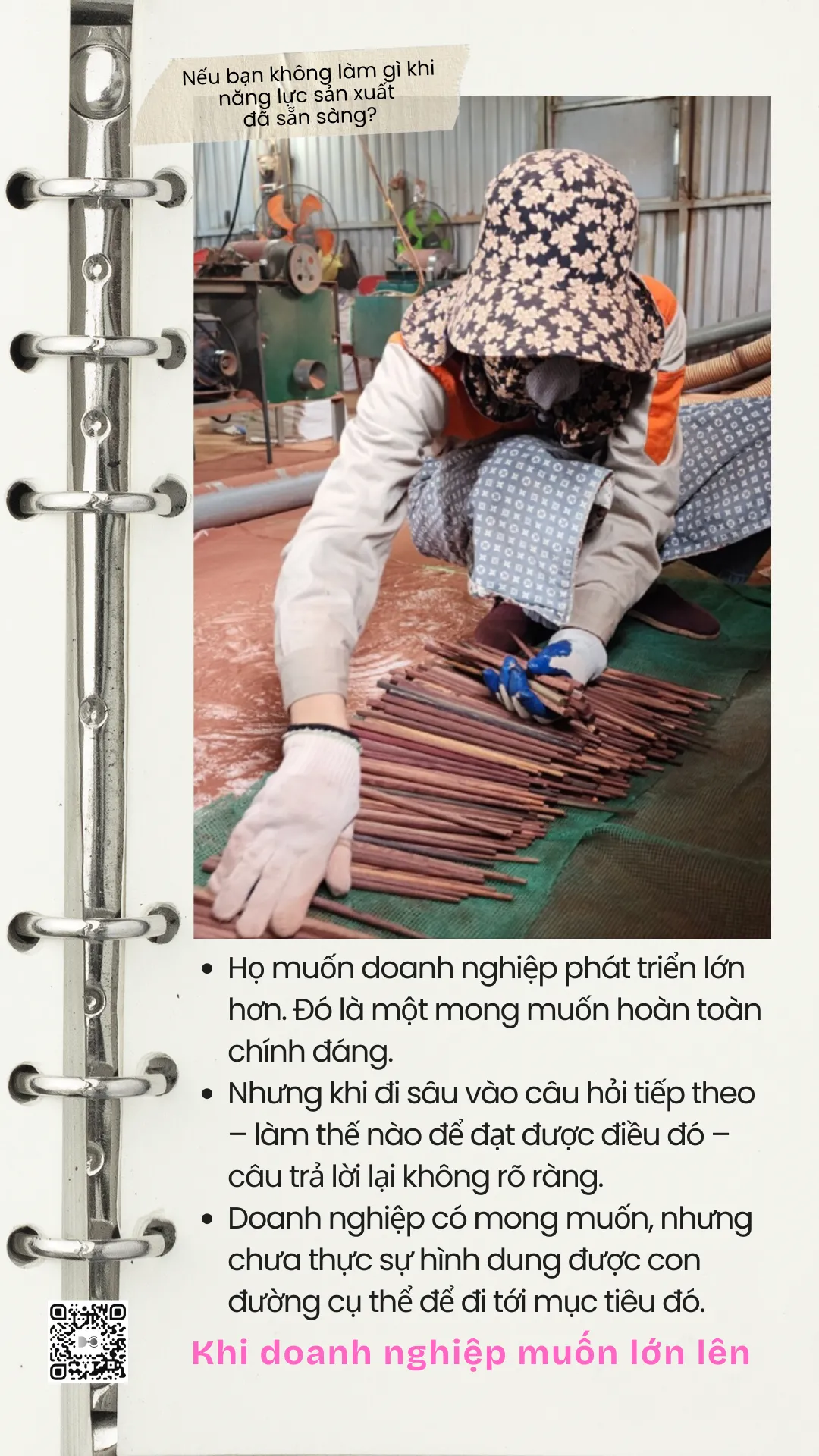
When businesses want to grow
During our collaboration with Mind Connector, cooperative leaders repeatedly shared a very clear desire:
- They want their business to grow bigger.
- They want to expand production.
- They want their own brand.
- They want their products to have a wider market presence.
That’s a perfectly legitimate desire.
But when it comes to the next question – how to achieve it – the answer isn’t clear.
The business has the desire, but hasn’t really envisioned a concrete path to reach that goal.
A gap in financial resources
One of the biggest obstacles businesses face is financial resources.
To build a household appliance brand in the market, businesses need to invest in many factors:
- Product design
- Brand building
- Distribution channel development
- Marketing and communication
These activities require significant capital and a long-term investment plan.
However, the cooperative lacks sufficient capital to implement these steps. Without capital and without seeking new sources, the business’s expansion potential becomes severely limited.

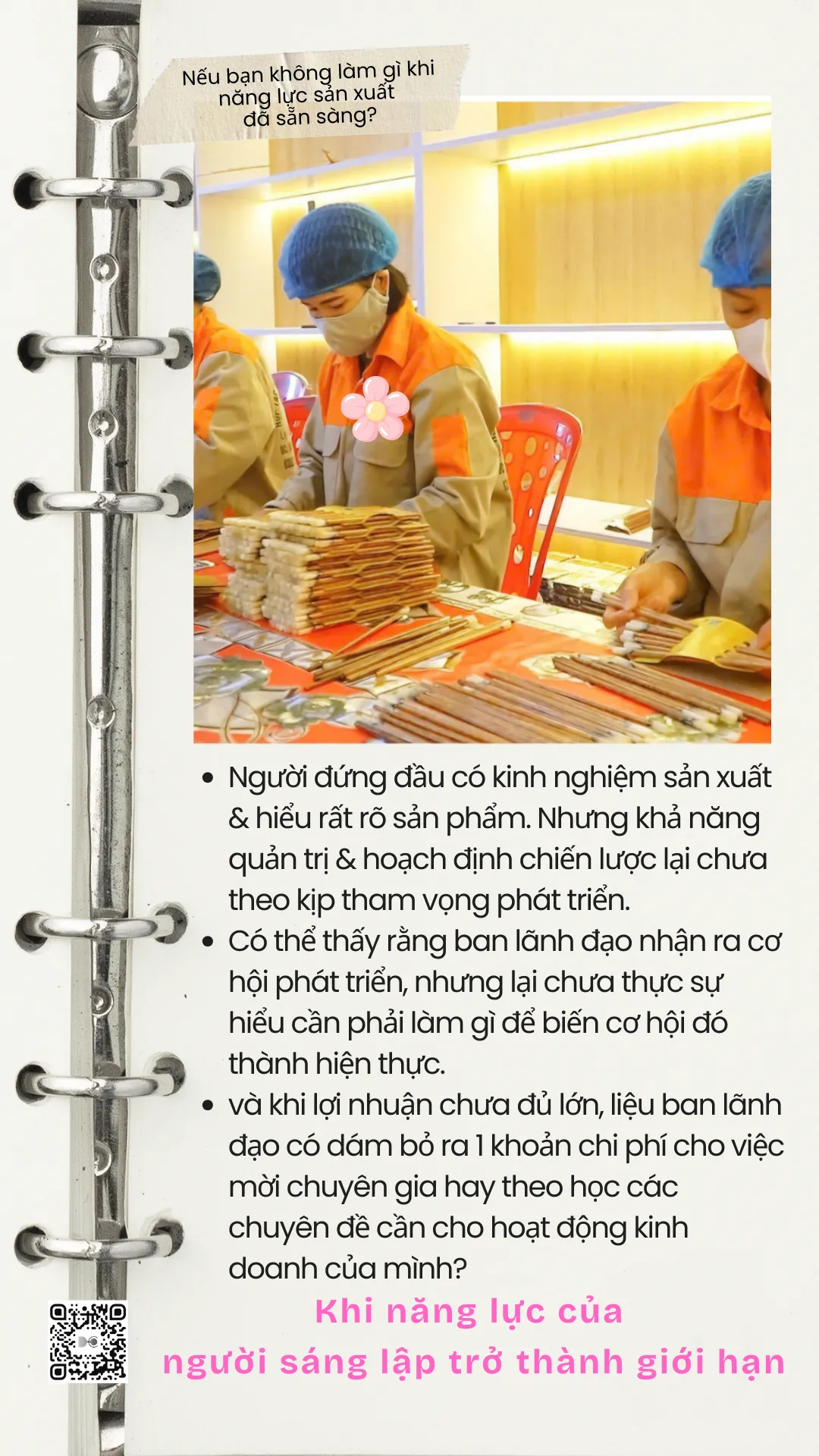
When a business grows to a stage where it needs to expand its management approach,
Another factor influencing business growth lies in the founder themselves.
The head of the cooperative may have production experience and a thorough understanding of the product. However, their management and strategic planning capabilities may not keep pace with the company’s growth ambitions.
In many discussions, it’s evident that cooperative leaders recognize development opportunities but don’t fully understand what needs to be done to realize them. And when profits aren’t substantial enough, will the leadership dare to invest in hiring experts or attending training courses necessary for their business operations?
When the path isn’t clear, the most common choice is often to remain largely unchanged from the old ways of doing things.
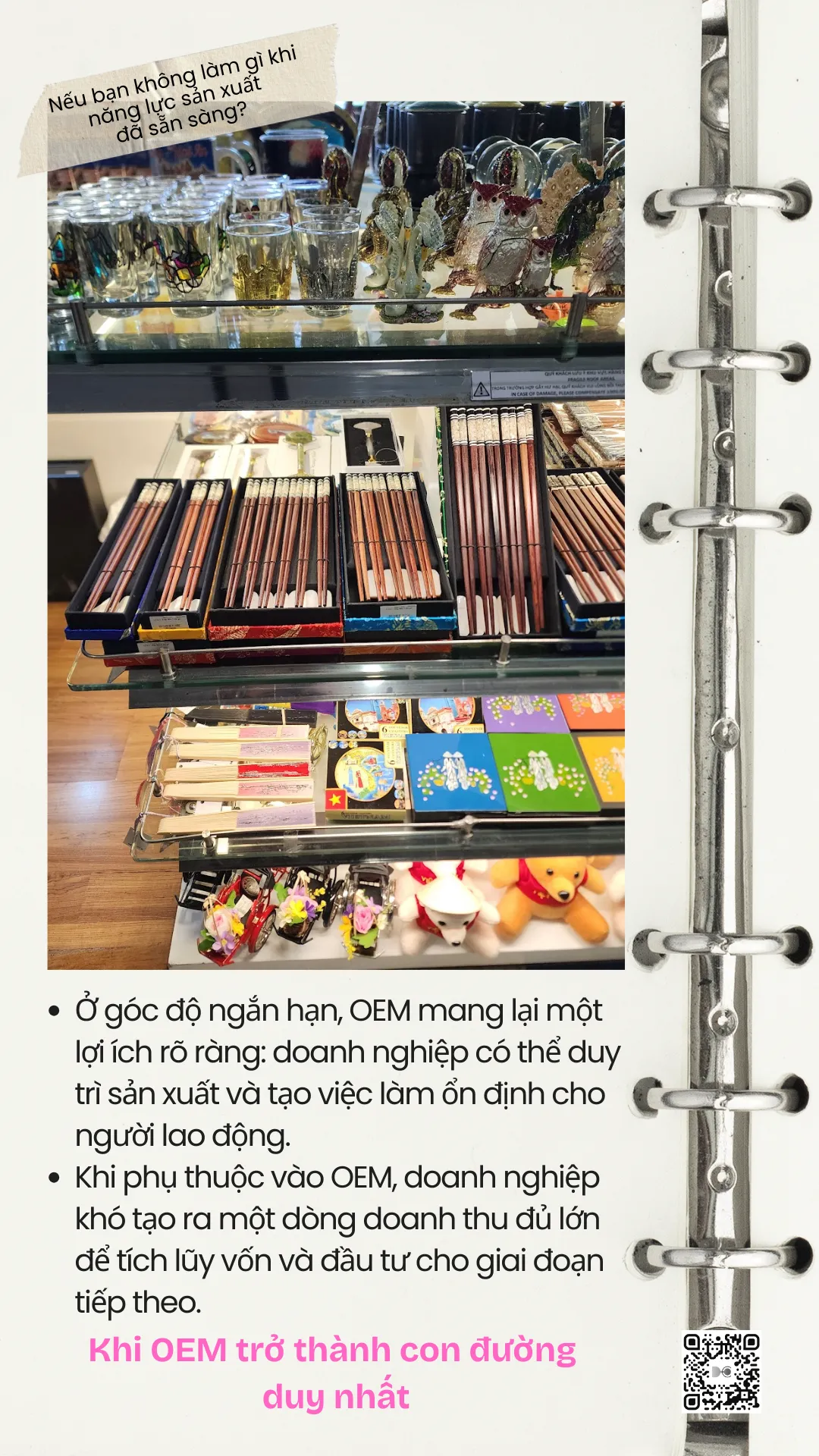
When OEM becomes the only option
Without the capital to invest in brand building, businesses continue to rely on OEM orders.
In the short term, OEM offers a clear benefit: businesses can maintain production and provide stable employment for workers.
OEM also has its advantages and disadvantages:
- The business enjoys stable orders but relies on referrals.
- Orders are sometimes small and inconsistent.
- Profit margins are low.
- The business has failed to build its own brand.
When businesses rely on OEMs, it becomes difficult to generate a sufficiently large revenue stream to accumulate capital and invest in the next phase.
When Dreams Don’t Come with Action
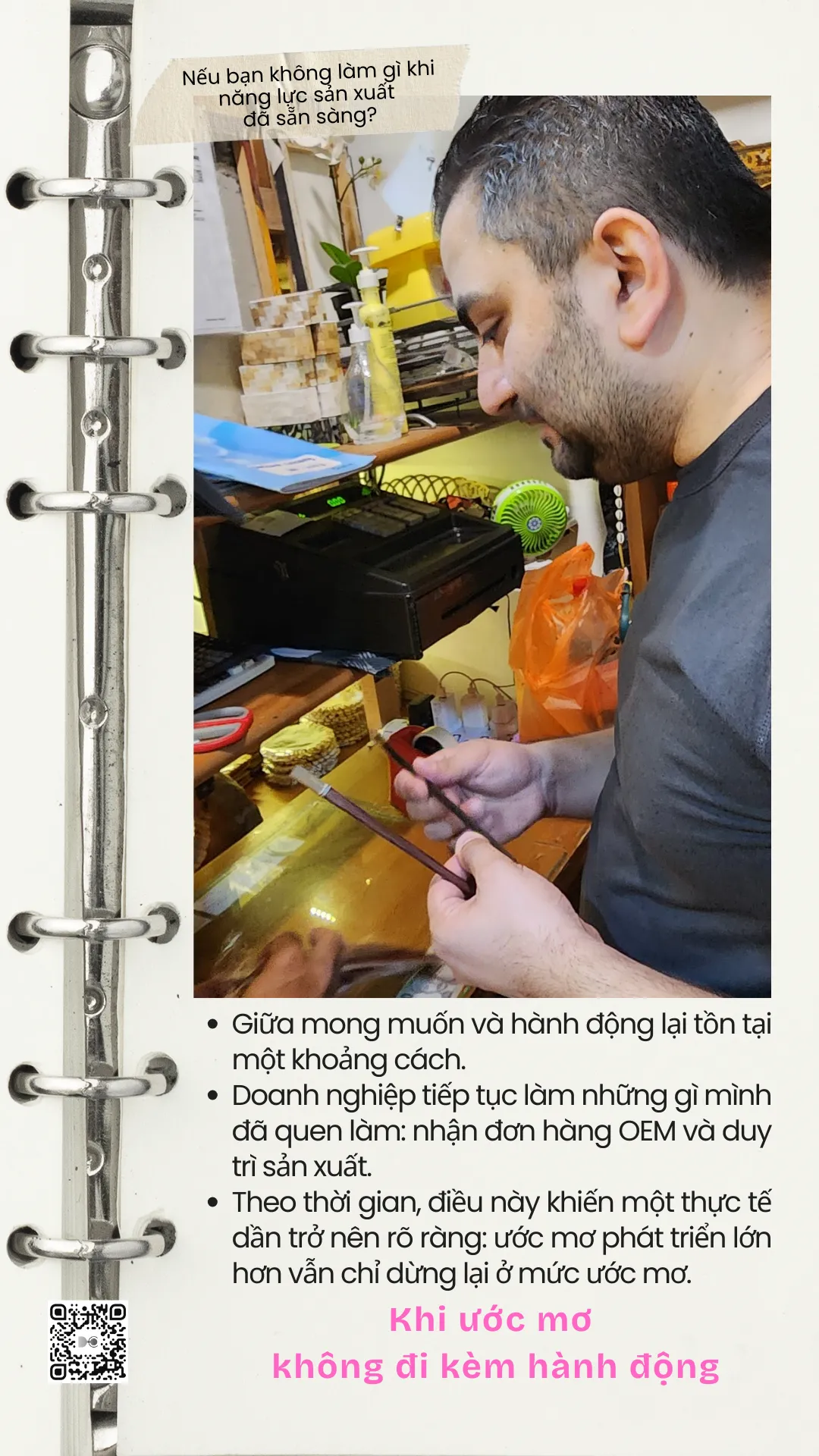
In many conversations with Mind Connector, cooperative leaders consistently mentioned their desire for greater growth.
But a gap existed between desire and action.
There was no fundraising plan.
There was no clear branding strategy.
There was no major shift in the business model.
The business continued doing what it was used to: accepting OEM orders and maintaining production.
Over time, this has made one reality increasingly clear: the dream of greater growth remains just a dream.
When resources are insufficient for a leap forward
What is admirable in this story is the spirit of the founders.
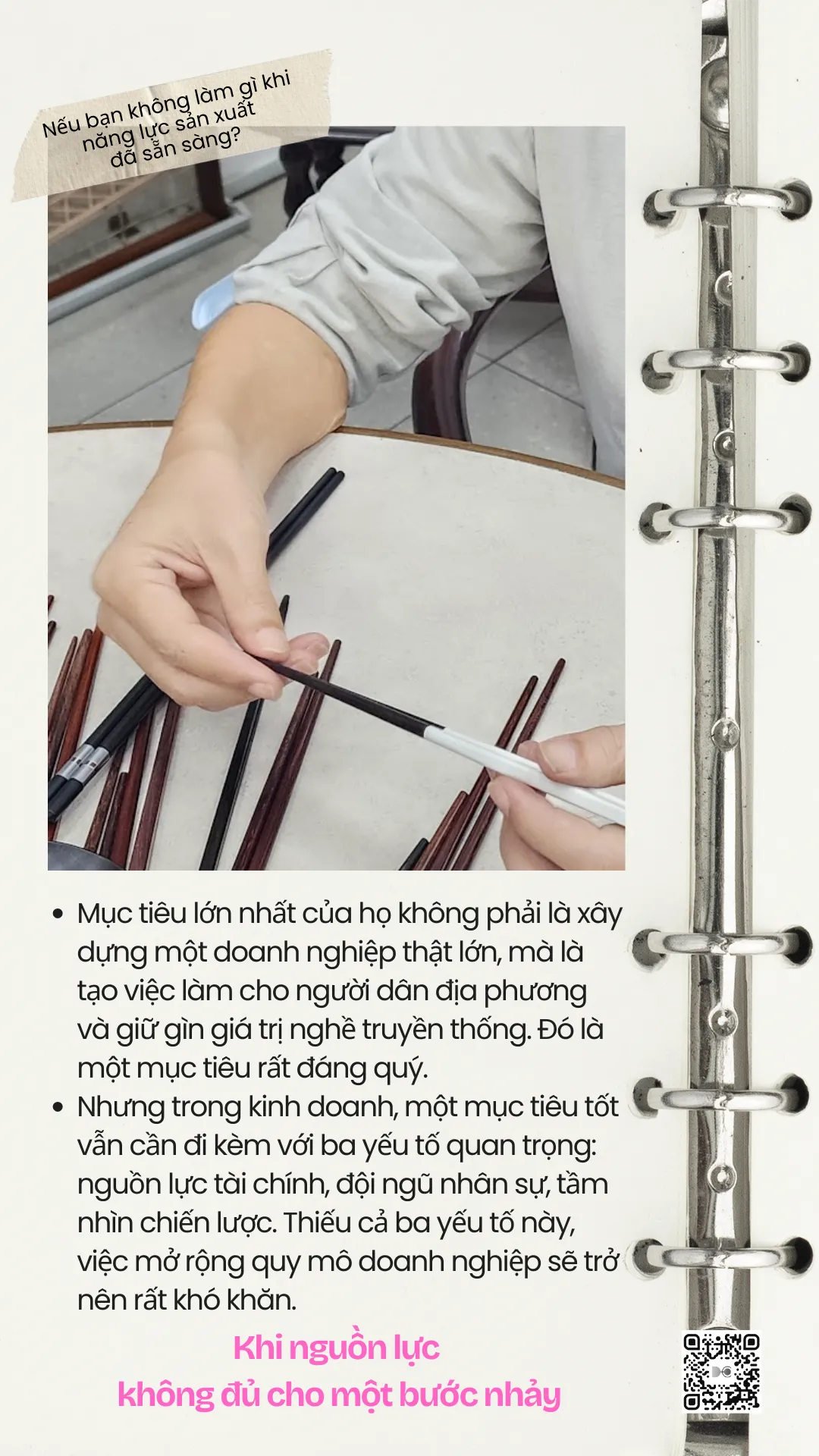
Their greatest goal was not to build a huge business, but to create jobs for local people and preserve the value of traditional crafts.
That is a very commendable goal.
But in business, a good goal still needs to be accompanied by three important elements:
- Financial resources
- Personnel team
- Strategic vision
Without all three of these elements, scaling up the business becomes very difficult.
Lessons from an Unfulfilled Dream
This story isn’t about failure.
The cooperative is still operating, still creating jobs for people, and still producing quality products.
But when viewed from the perspective of business development, there are some lessons worth considering.
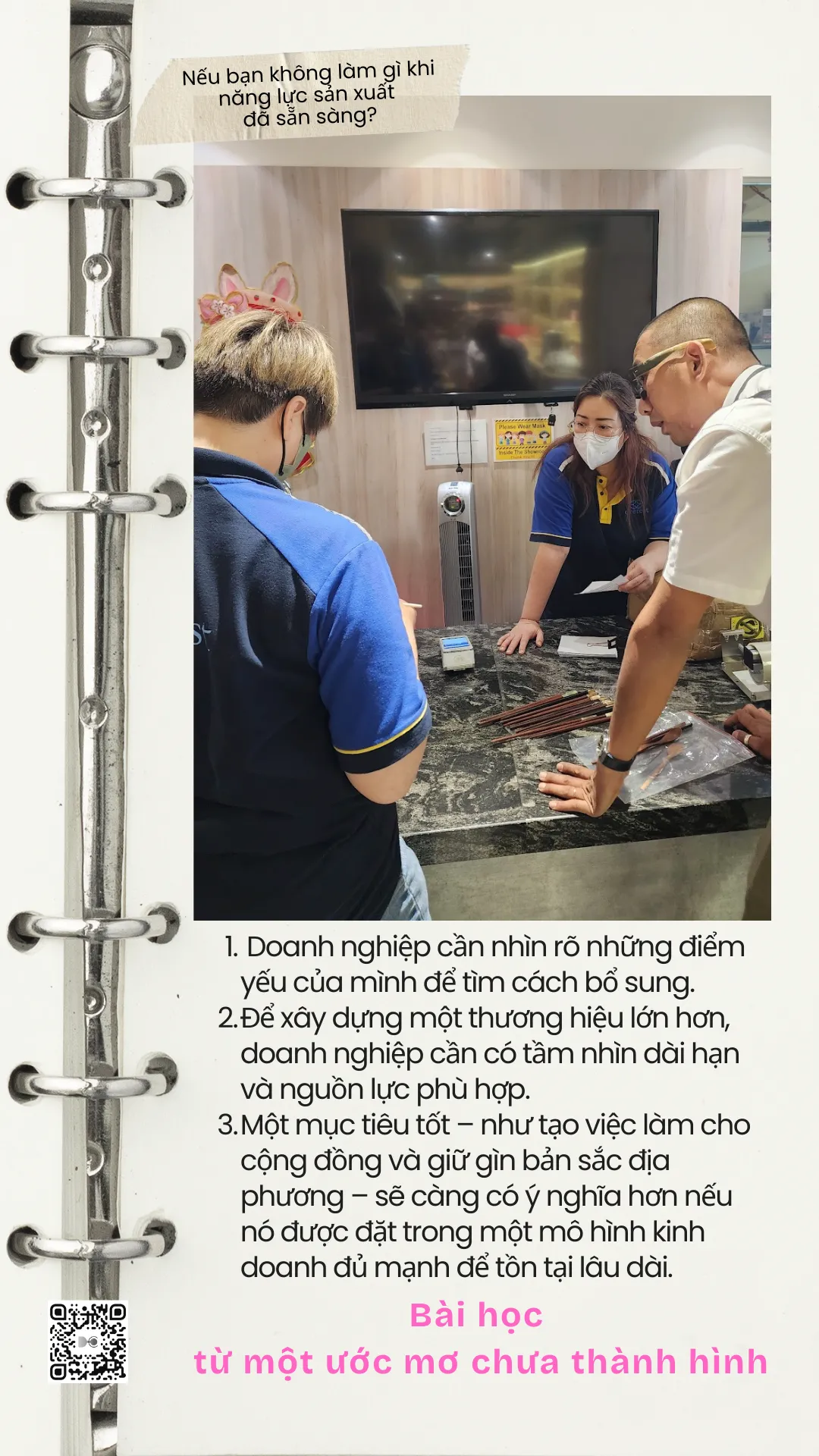
- First, businesses need to clearly identify their weaknesses in order to find ways to improve them.
- Second, to build a larger brand, businesses need a long-term vision and appropriate resources. In many cases, finding the right investor can help a business enter a new phase of development.
- And finally, a good goal – such as creating jobs for the community and preserving local identity – will be even more meaningful if it is placed within a business model strong enough to survive in the long term.
Because in business, sometimes the hardest thing isn’t having a dream.
But turning that dream into an achievable plan.