What If You Do Nothing? is a series based on real-world experience. Some details in this article have been adjusted to ensure business confidentiality.
In business, not every opportunity presents itself as a major decision. Often, it’s just a small signal indicating that it’s time for a business to move to a new phase.
A brand message might become too familiar. A new idea might emerge to expand the user ecosystem. A direction could help the business take another step forward in a changing market.

But for many businesses, such times often come with a familiar choice: waiting a little longer.
The story in this article comes from a company in the electric vehicle, motorcycle, and bicycle industry in Vietnam, with annual revenue exceeding 100 billion VND and nearly 10 years of operation in the market. The company didn’t face a crisis, nor did it make any major product mistakes.
But looking back, there were two crucial moments where the company chose to do nothing, and that caused a valuable opportunity to slip away in silence.
A Brand Message That Was Right in the Early Stages
In its early years, the business built its brand around a fairly clear positioning: an electric vehicle suitable for every member of the family.
In the early stages of the electric vehicle market, this positioning was perfectly logical.
The product was designed to serve a variety of customer groups: students, parents, and the elderly. The brand message was therefore inclusive, allowing the business to easily reach a broad customer base.
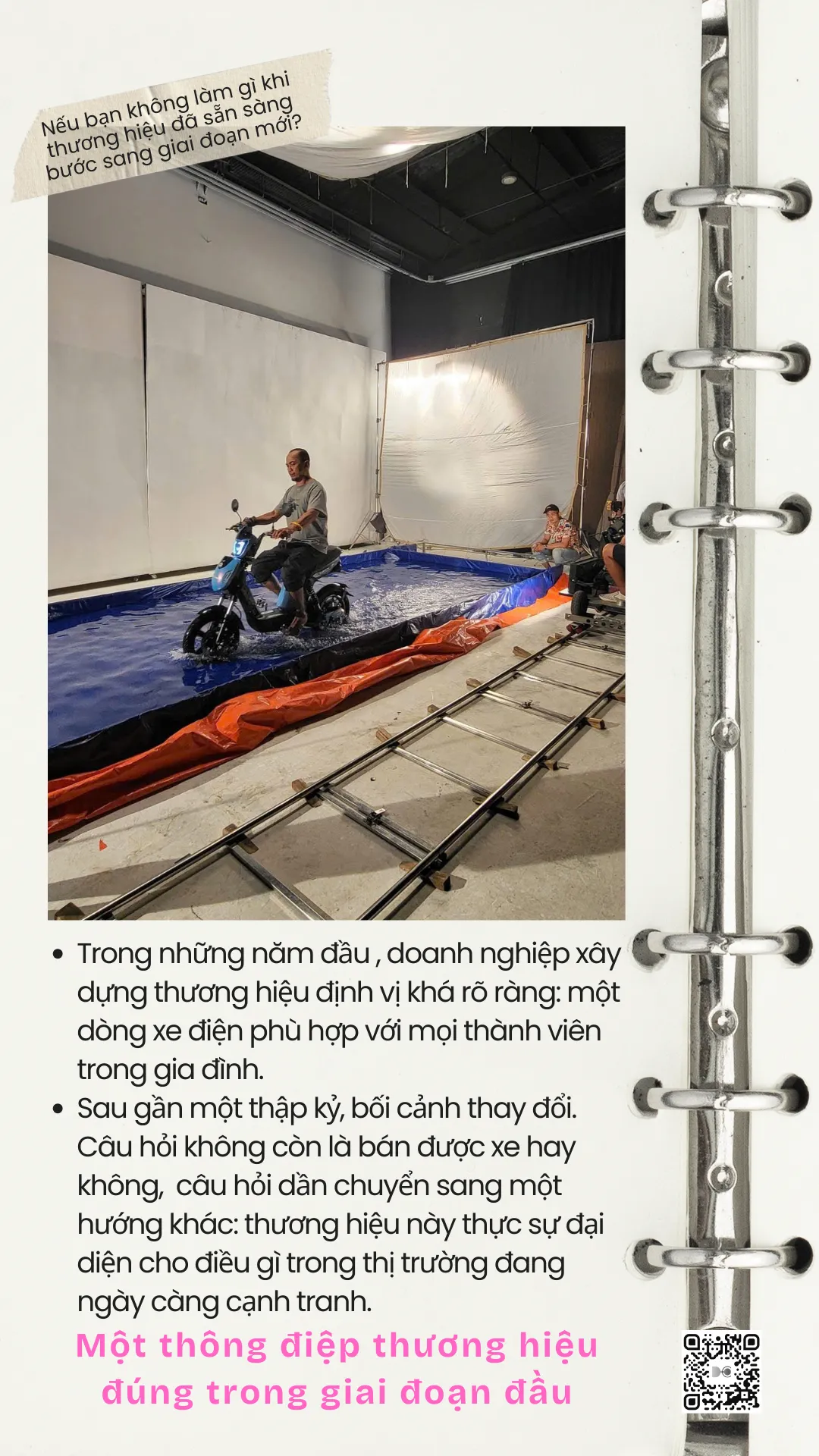
For many of the first few years, this strategy worked quite effectively. The company built a stable distribution system, maintained sales, and gradually established a firm position in the burgeoning electric vehicle market.
But after nearly a decade, the landscape began to change.
The question was no longer simply whether or not to sell cars.
The question gradually shifted in a different direction: what did this brand truly represent in an increasingly competitive market?
When Brand Positioning Becomes Too Safe
After more than 7 years of operation, the business began working with Mind Connector to review its brand strategy.
At that point, a rather obvious problem began to emerge.
The positioning “suitable for the whole family,” while correct, was too broad.
An overly broad message might keep the brand safe, but it also makes it difficult to create a clear and distinct impression in the customer’s mind.
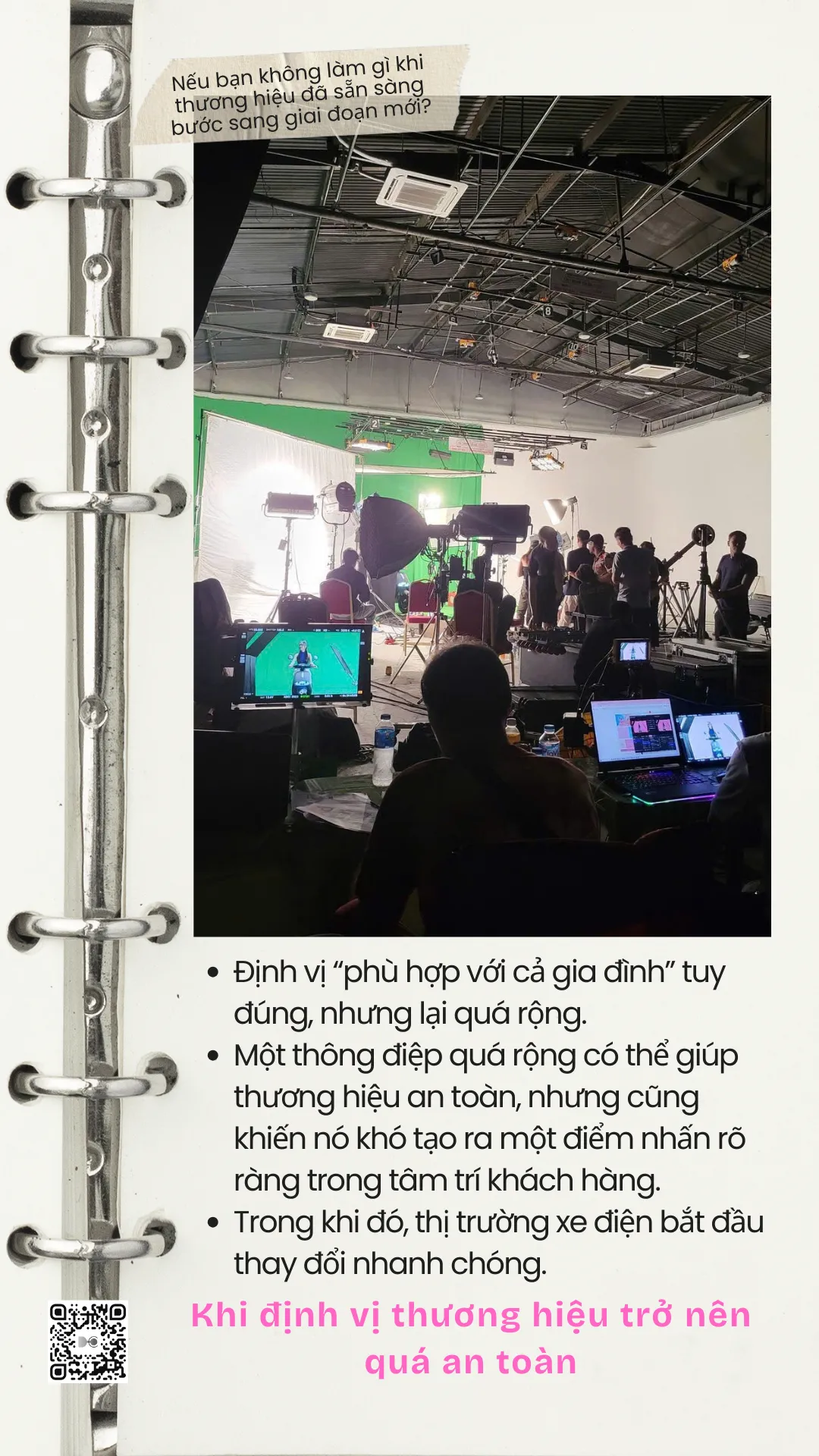
Meanwhile, the electric vehicle market is beginning to change rapidly.
Some brands are focusing heavily on technology.
Some brands are building a youthful and modern image.
Some brands are starting to talk more about the ecosystem and user experience.
Against this backdrop, Mind Connector suggests that businesses shift to a new positioning direction.
Instead of simply describing the product, the brand message can shift to emphasizing the user experience and the ability to connect within the brand’s ecosystem.
In other words, instead of just selling a car, the brand can build an image as a place where users are always welcome on their journey.
A decision was agreed upon, but not fully implemented.
At the time of discussion, the business agreed to this direction change. Initial communication ideas were also developed to support the brand positioning shift.
However, as the implementation phase began, the business started to reconsider.
The reason is quite familiar to many growing businesses: cost.
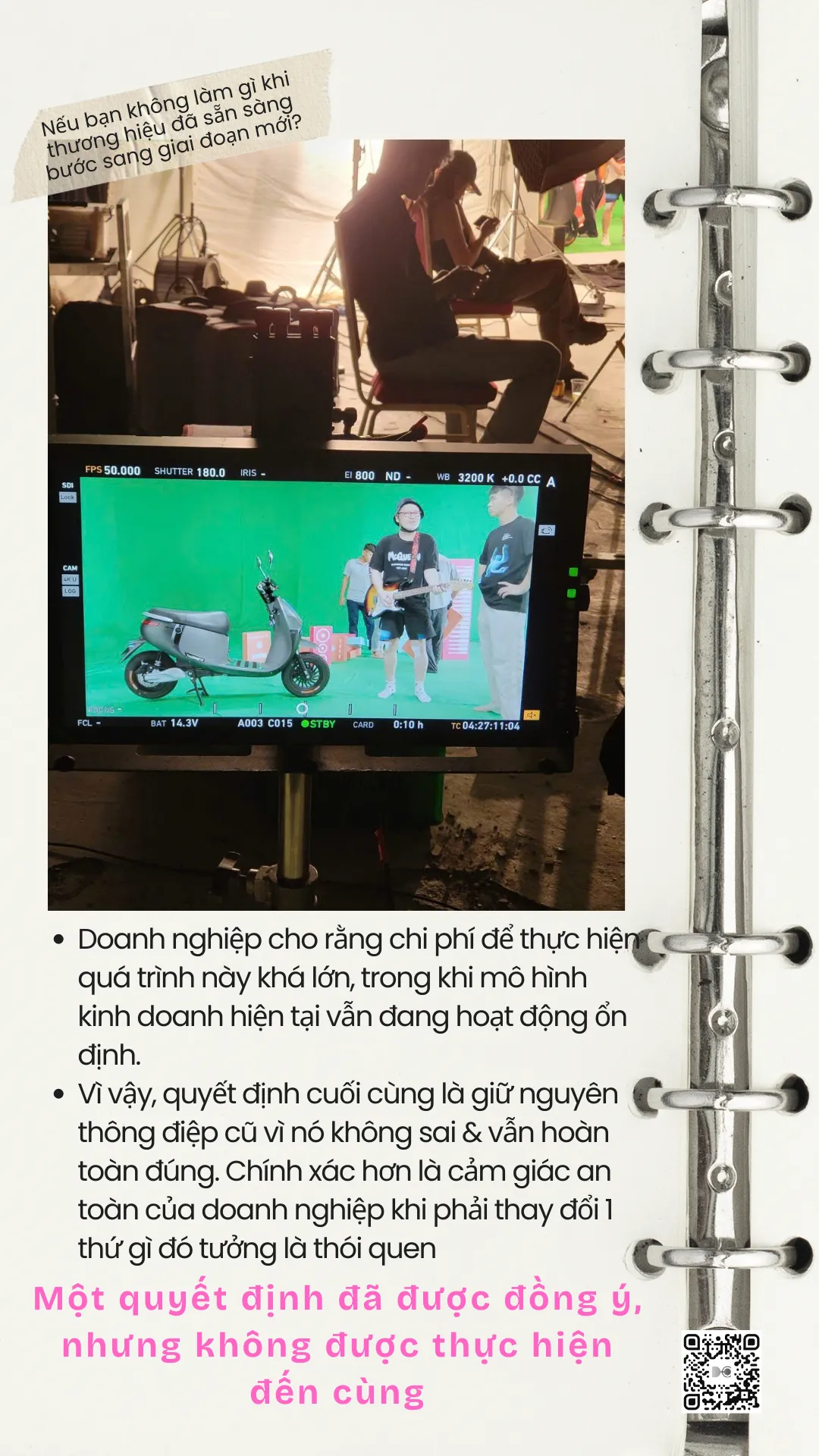
Changing a brand’s positioning isn’t just about changing a slogan. It requires a series of accompanying activities:
- Brand communication
- Marketing campaigns
- User engagement activities
The company argued that the cost of implementing this process was quite high, while the current business model was still functioning stably.
Therefore, the final decision was to keep the old message because it wasn’t wrong and was still perfectly correct. More precisely, it was the company’s sense of security in changing something that was considered a habit.
In the short term, this wasn’t a wrong choice. The company continued to sell products, maintain marketing activities, and launch new car models.
But that also meant the brand remained in a safe position, making it difficult to create differentiation.
Another opportunity also emerged.
During that same period, Mind Connector also proposed a different approach: building an application for electric vehicle users.
This idea wasn’t just about supporting car sales.
The application could serve as a platform to:
- Connecting users with brands
- Tracking products and warranties
- Finding charging stations
- Building a community of electric vehicle users
- And many more development goals when businesses own this application.
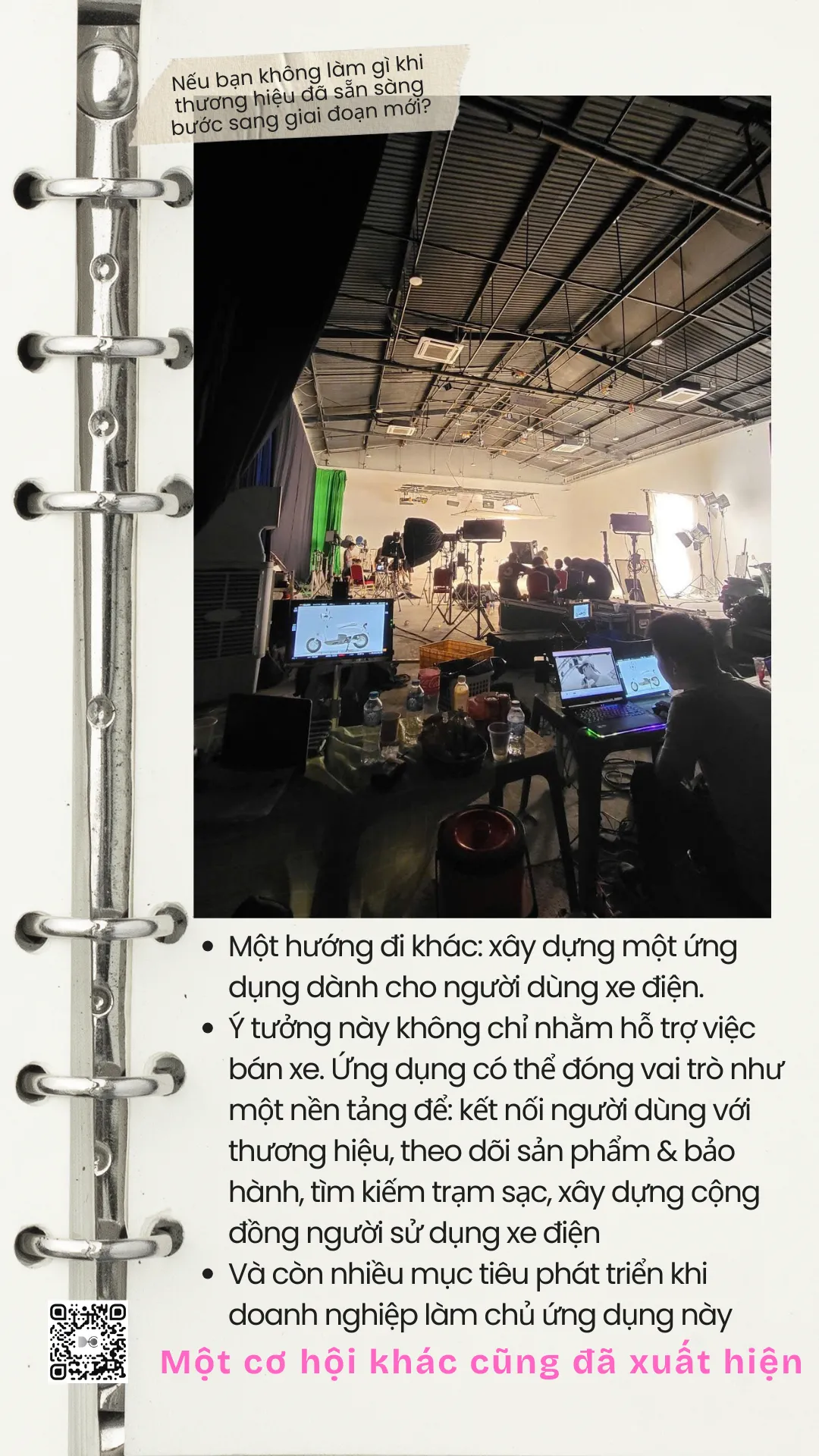
More importantly, if implemented early, this application could become part of the electric vehicle ecosystem as the market begins to develop strongly.
By 2024, the company agreed to this proposal and had even begun building initial UX designs and UI evaluations.
But after evaluating operating costs and user acquisition costs, the project was halted.
The reason given was quite practical: the cost of acquiring a user for the application was deemed too high.
Two years later, the market was no longer the same.
By 2026, the company returned to the idea of building an app.
But by then, the market landscape had changed.
Many major electric vehicle brands had developed their own apps.
Charging station and service ecosystems began to form.
Users had become accustomed to using car manufacturers’ apps and integrating everything into a single app.
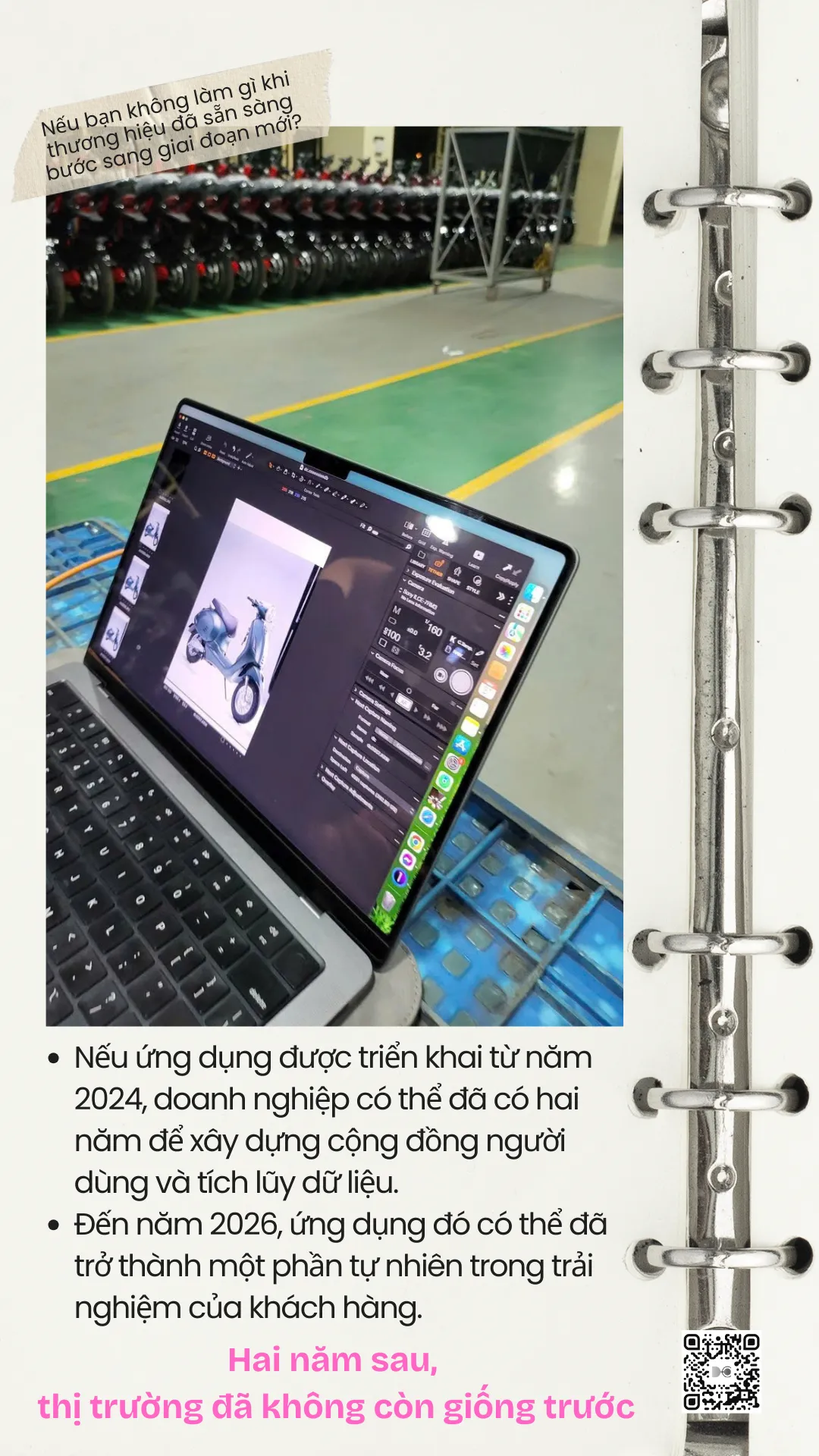
At this point, launching an app is no longer a pioneering move.
It’s become a necessary step – but no longer offers an early advantage.
If the app is launched in 2024, the business may have had two years to build a user community and accumulate data.
By 2026, that app may have become a natural part of the customer experience.
When “doing nothing” doesn’t create a crisis
The remarkable thing about this story is that the business didn’t experience a crisis.
The business continued selling cars.
The business continued launching new products.
Business operations continued.
But when viewed from a long-term brand strategy perspective, two opportunities can be seen:
- An opportunity to refresh brand positioning
- An opportunity to build a user ecosystem
At both times, the business chose to wait longer.
And when they returned two years later, the market was no longer in the same position.

Lessons from a Delayed Decision
This story isn’t meant to judge right or wrong.
In 2024, the cost and resource considerations of a business are perfectly understandable.
But in retrospect, a few thought-provoking lessons can be drawn.
First, a brand positioning might be right in the initial stages, but it’s not always suitable for the next stage of a business.
Secondly, in rapidly developing industries like electric vehicles, timing is sometimes just as important as the idea itself.
Thirdly, foundational steps such as building a user community or ecosystem often take a long time to yield value.
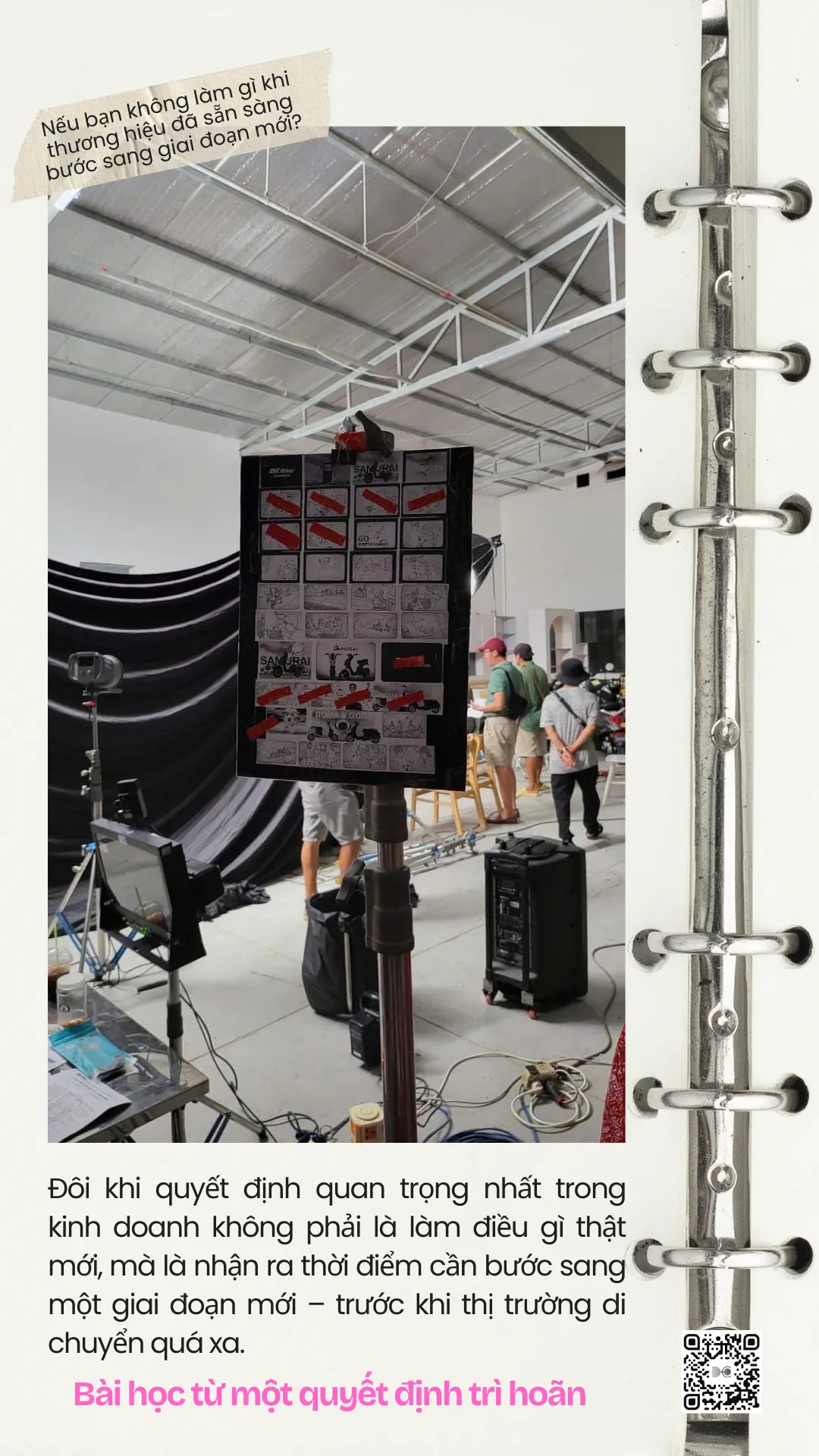
Therefore, sometimes the most important decision in business isn’t about doing something completely new.
It’s about recognizing when to move to a new phase – before the market moves too far ahead.