Throughout their work, Mind’s experts have witnessed many moments that are all too familiar to many business owners.
Everyone has spoken. The opinions have been shared. The analysis is complete. Even those you trust the most have nodded in agreement, or at least haven’t objected. The meeting is over, everyone goes their separate ways.
Only you remain.
And the decision still sits there.
No one is forcing you. No one is pushing you. But no one can sign it for you either.
When Decisions Are No Longer Right or Wrong
In the early stages of a business, decisions are often quite simple. To do or not to do. To open or not to open. To try or not to try. If it’s wrong, correct it; if it stumbles, get back up. At that point, decisions are more instinctive and less burdensome. Because at the beginning, everything is small, everything is sometimes within your grasp.
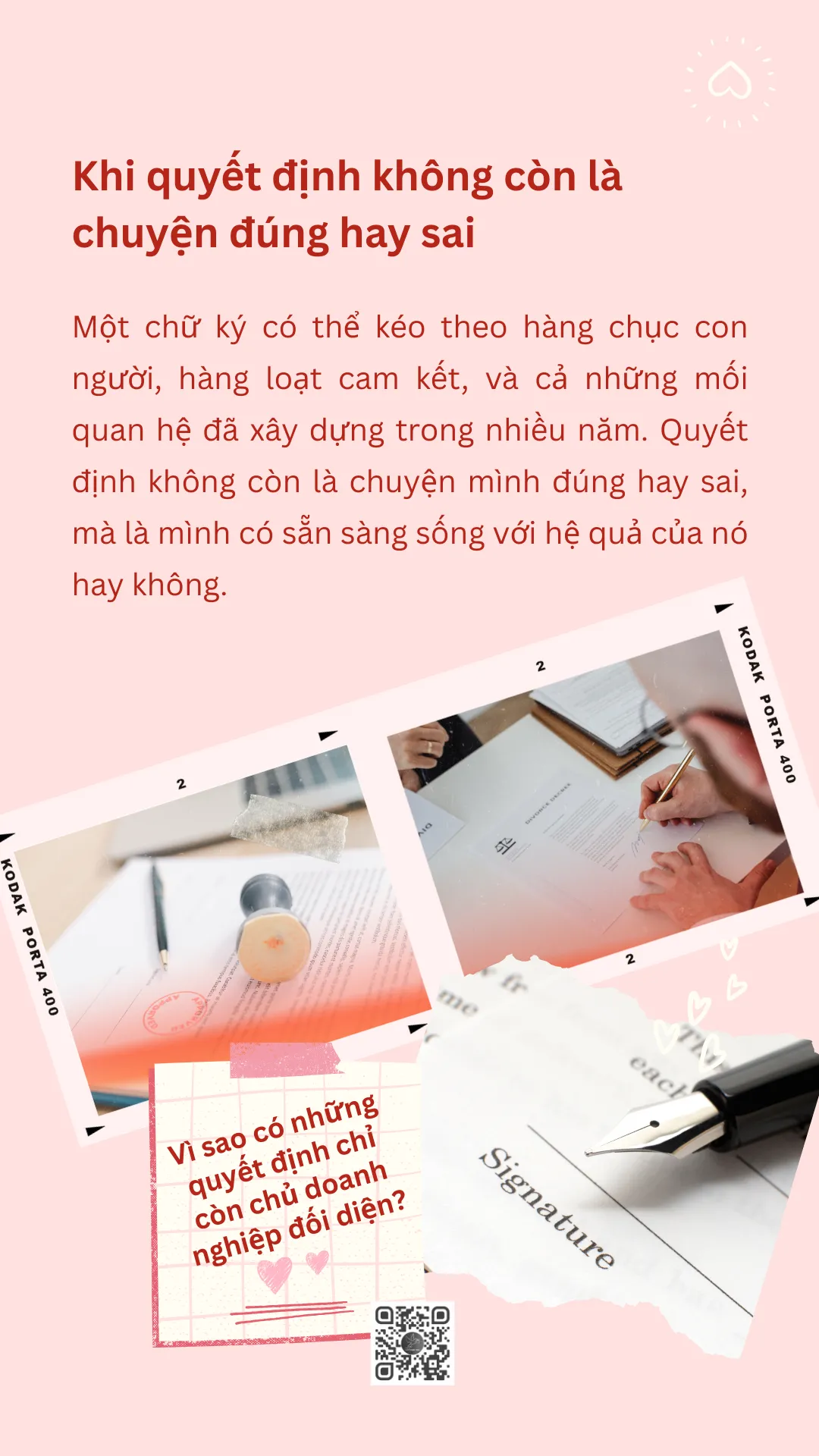
But at some point, decisions are no longer just “let’s see what happens.” A single signature can involve dozens of people, numerous commitments, and relationships built over many years. Decisions are no longer about whether you are right or wrong, but about whether you are ready to live with the consequences.
And that’s when the feeling of hesitation begins to appear, even though everything seems logical on paper.
Business owners often lack information, but rather peace of mind.
Few business owners enter a major decision in a state of “knowing nothing.” On the contrary, they usually know a great deal. They know where the market is going. They know what their competitors are doing. They know their team’s strengths and weaknesses. They even know the potential risks.
But knowing doesn’t mean being at ease. And even more frightening is knowing what you can’t know. However, paradoxically, the more you think, the harder it is to decide, to act.
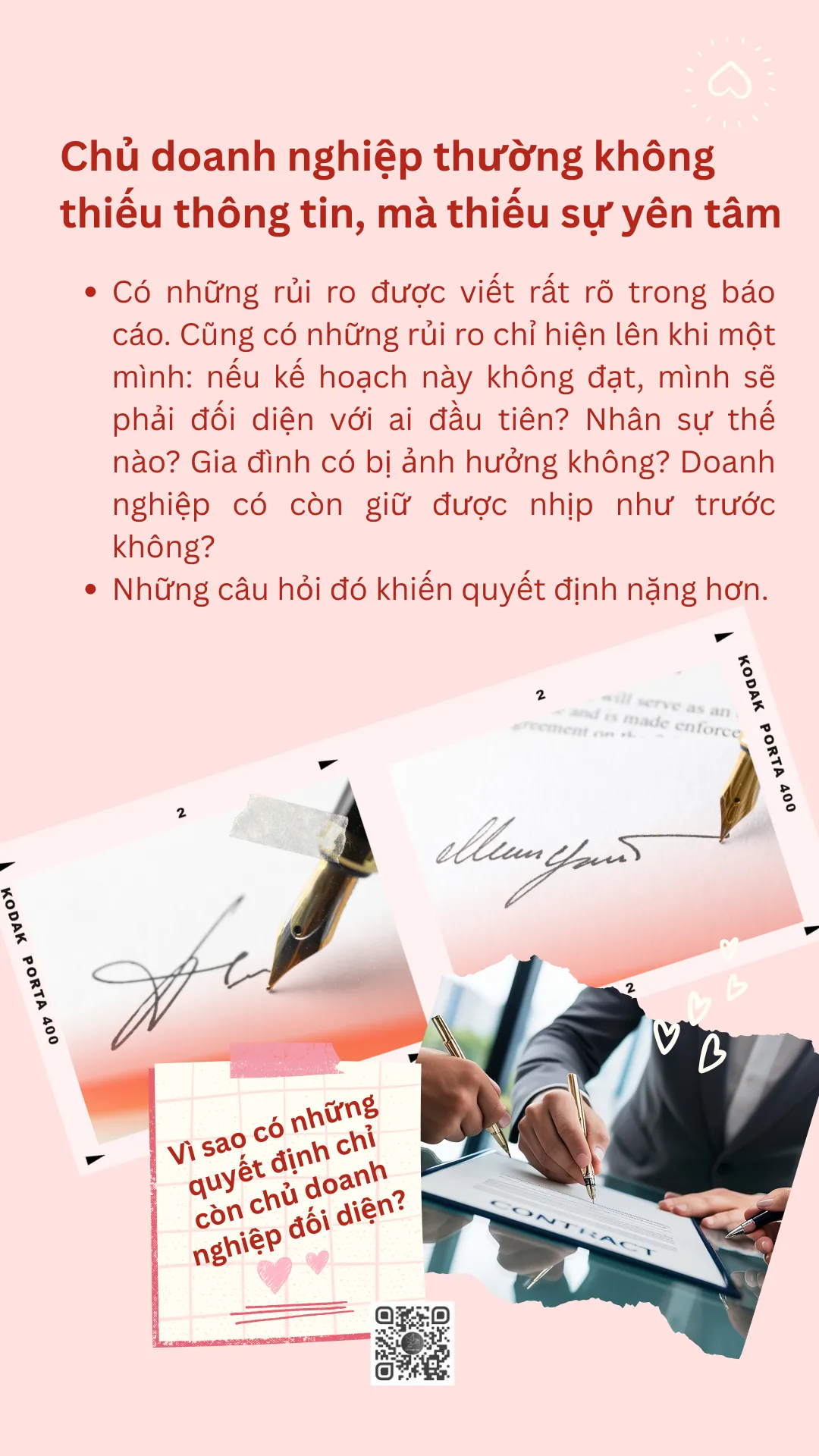
Some risks are clearly stated in the report. But there are also risks that only become apparent when you sit alone, thinking about things no one else has written down: if this plan fails, who will you face first? How will your employees perceive you? Will your family be affected? Will the business be able to maintain its previous pace?
These questions don’t make the decision wrong. But they make the decision heavier.
The feeling of loneliness doesn’t come from a lack of people, but from having no one to shoulder the burden for you.
Many people think that being a boss means having the power to make decisions, and therefore feeling more relaxed. In reality, the opposite is often true. The greater the power, the more pronounced the feeling of loneliness in decision-making.
There may be many opinions at play, but ultimately, only one person is responsible. When things go well, success is shared. When things go wrong, attention is focused on one direction.
Business owners understand this very well, which is why they sometimes slow down. Not because they lack decisiveness, but because they are considering more than others see.

There are things that aren’t convenient to say, but you still have to answer them yourself.
In many meetings, business owners talk about strategy, growth, and goals. But there are questions that aren’t convenient to ask in front of the group.
For example: Do I still have enough energy for this phase? If I have to push myself for a few more years, can I handle it? If things don’t go as expected, am I prepared to take responsibility without blaming anyone?
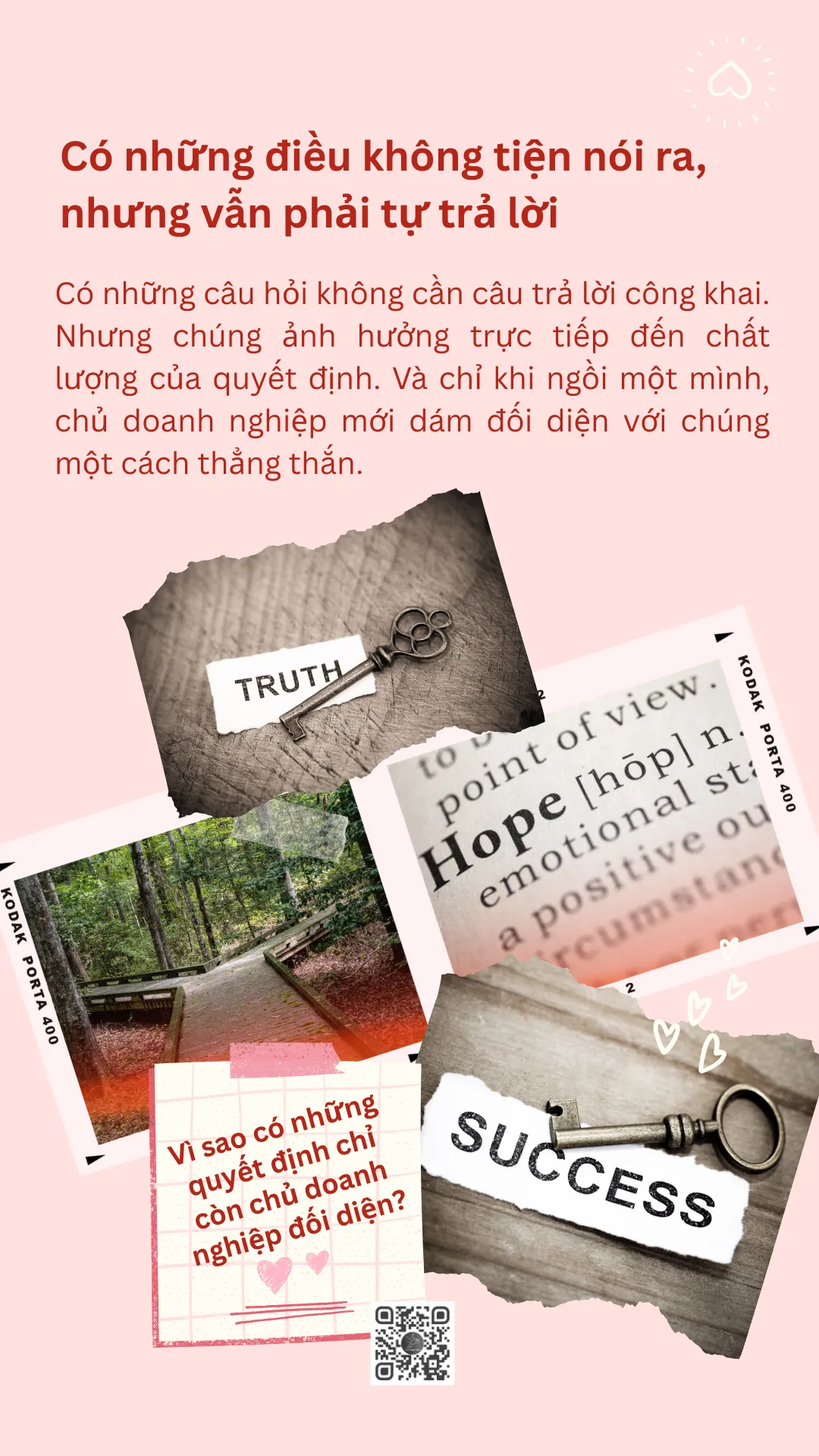
These questions don’t need public answers. But they directly affect the quality of decisions. And only when alone can a business owner face them honestly.
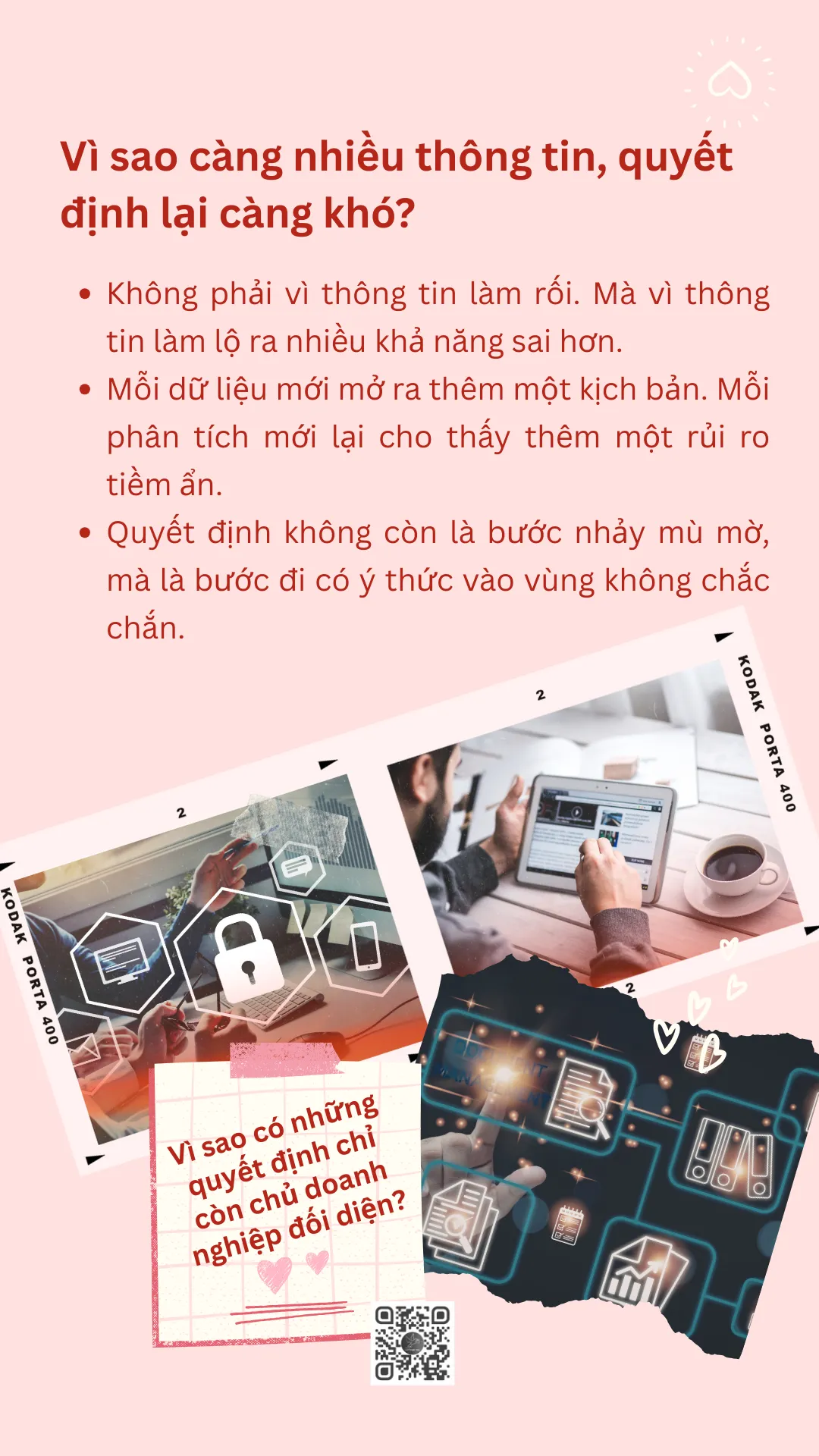
Why is it that the more information you have, the harder the decision becomes?
There’s a paradox that many business owners understand well: in the past, less information led to faster decisions. Now, with more information, decisions are slower.
It’s not because the information is confusing, but because it reveals more possibilities for error. Each new piece of data opens up a new scenario. Each new analysis reveals another potential risk. Decisions are no longer blind leaps, but conscious steps into uncertainty.
And once they’re aware of that, not everyone easily signs the agreement.
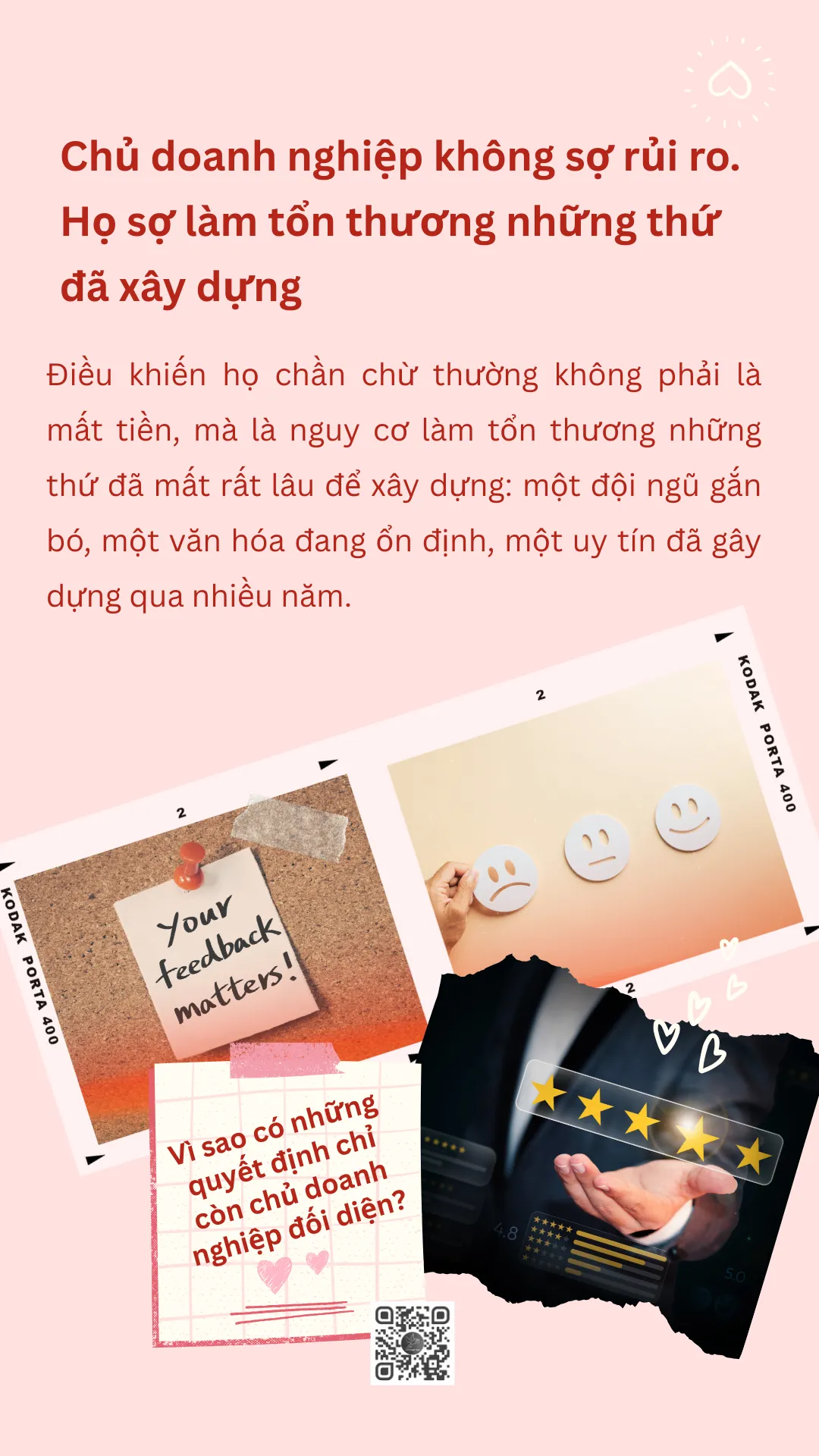
Business owners aren’t afraid of risk. They’re afraid of damaging what they’ve built.
Many people say business owners are afraid of risk. That’s not entirely true. If they were afraid of risk, they wouldn’t have chosen this path in the first place.
What often makes them hesitate isn’t the loss of money, but the risk of damaging what took a long time to build: a dedicated team, a stable culture, a reputation built over many years.
The decision at this point isn’t just a business problem, but a problem of preservation. And that problem rarely has a clear answer.
Some decisions don’t need further advice, they need to be processed.
At this stage, additional advice doesn’t always make things easier for the business owner. Sometimes, it can even make the decision heavier. Because each piece of advice opens up a different possibility, a different path.
What the business owner needs at this point isn’t necessarily a new answer, but space to process their own decision. To understand what they are sacrificing, and whether they are truly ready for that sacrifice.
Once that is clear, the decision usually comes naturally, without needing anyone to push it.

What remains in the end?
There are decisions that cannot be made with fanfare. No more meetings. No more questions. Ultimately, it all comes back to a very personal moment, when the business owner sits down with themselves.
The decision at that point is no longer a matter of whether it’s smart or not. It’s a matter of honesty with one’s endurance, with responsibility, and with what one is willing to take with them after signing that signature.

And perhaps the least talked-about part of the journey to self-mastery is the loneliness not of lacking companionship, but of being unable to delegate the final decision-making power to anyone else.