What If You Do Nothing? is a series based on real-world experiences. Some details in this article have been adjusted to ensure business confidentiality.
In business, there are projects where, looking at the data, trends, and preparation, there seems to be no reason for failure. But reality reveals a paradox: some businesses don’t fail because of wrong decisions, but because they fail to act in time. The story below is a typical example, where a “1 investment, 4 returns” model failed to get past the starting line, not because of a lack of vision, but because of a lack of ability to translate that vision into action at the right time.
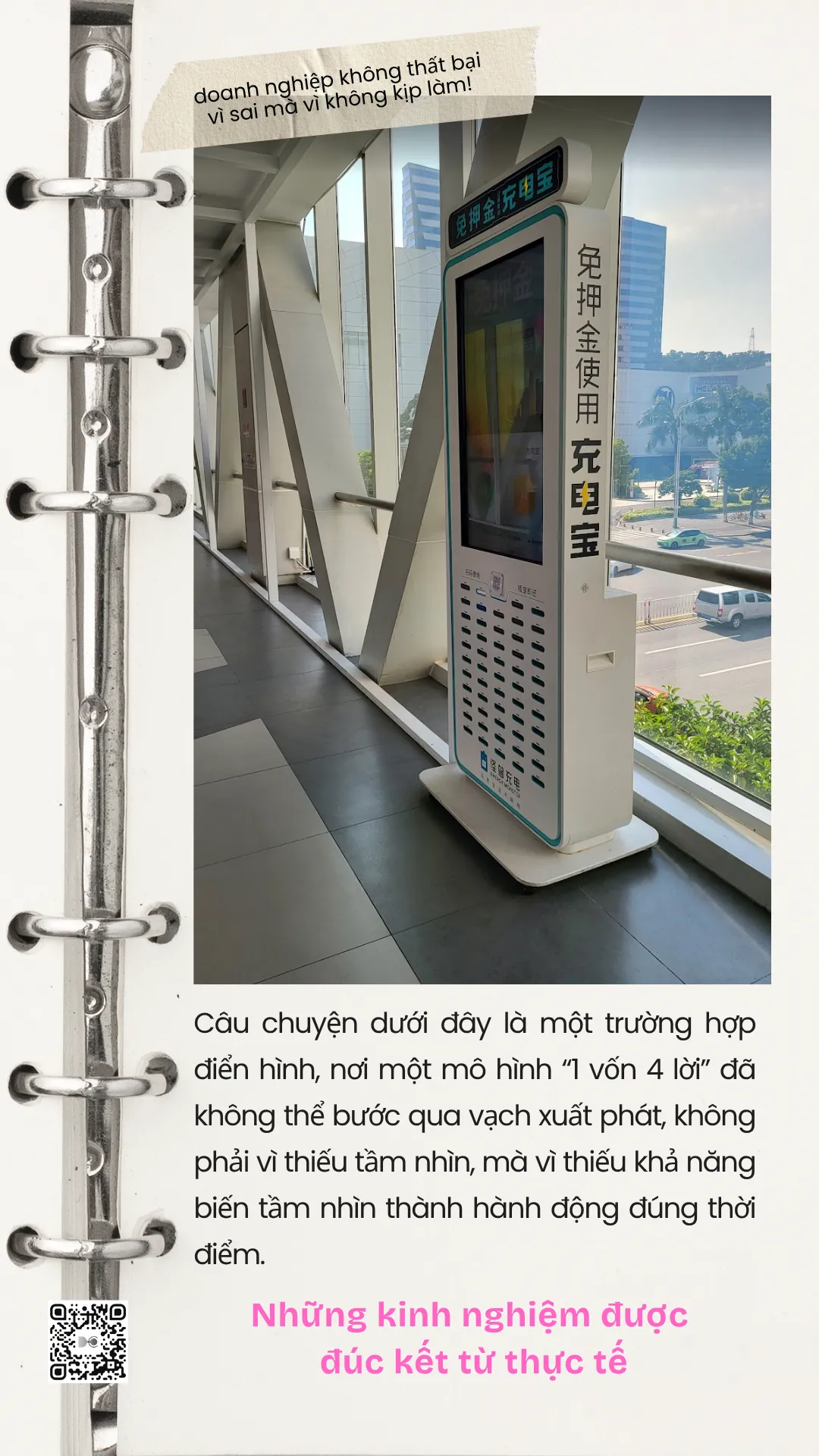
What if you do nothing when a proven market opportunity arises?
The story begins with a business that has a solid foundation in the outdoor advertising field, having worked with many major brands and experienced in implementing large-scale projects. Beyond operational capabilities, the leader is also someone who constantly updates himself on new models from the international market, especially trends that have been proven in rapidly developing markets like China.
During a market research study, the company realized that the shared power bank model, accessible via mobile applications, had become an integral part of life in China. Users could easily rent batteries at any location and return them elsewhere, at a low cost, with simple operation and wide coverage. From small shops to shopping malls, from sidewalks to crowded areas, charging stations have emerged as a common, almost indispensable infrastructure.
The important thing is not that this model is “new,” but that it has “proven effective.” This is not an experimental idea, but a successfully operating ecosystem. When bringing it to Vietnam, the company didn’t start from scratch, but began with a model that already had a solution.

A nearly perfect business model in theory
From a product perspective, this is a solution to a very clear “pain point”: phones running out of battery in unexpected situations. But what makes the project even more attractive lies in its revenue structure.
Instead of relying on a single revenue source, this model opens up multiple layers of value simultaneously. Revenue comes not only from battery rentals, but also from advertising displayed on charging stations, in-app advertising, advertising on the battery itself, and especially from deposits from users when they use the service for the first time. In some scenarios, this cash flow can even be connected to the banking system, creating additional financial value.
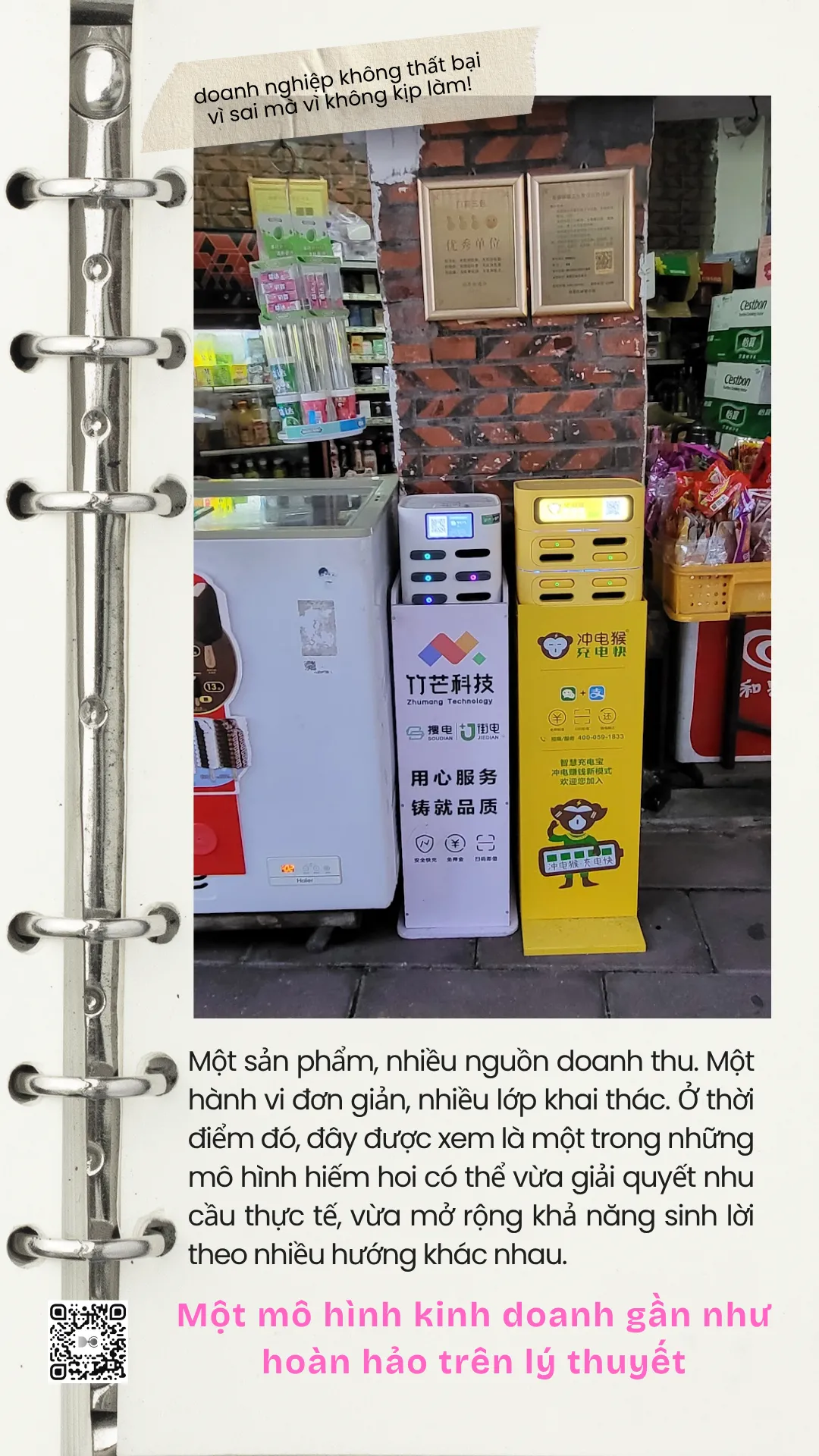
One product, multiple revenue streams. One simple action, multiple layers of exploitation. At the time, this was considered one of the rare models that could both address a real need and expand profitability in multiple directions.
Thorough Preparation from Strategy to Operation
The company didn’t approach this project as a small-scale experiment. From the outset, they recognized it as a serious undertaking and invested systematically.
Industry experts were brought in to build the operational foundation. Large, even international, agencies were hired to plan brand strategy, communications, and application development. The financial plan was also designed not only to ensure operation but also to be ready for attracting foreign investment.
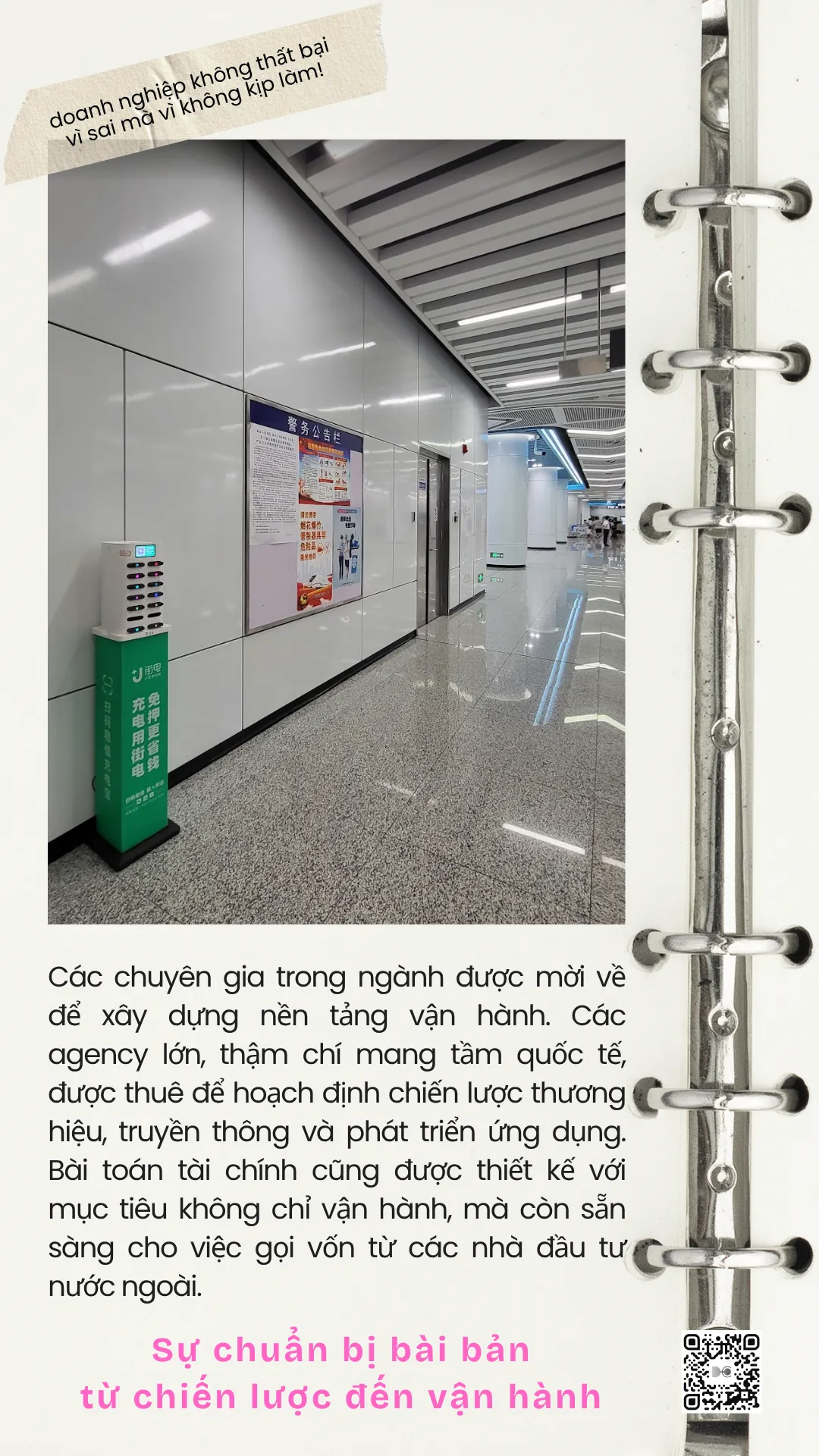
The product was manufactured. The application was perfected. The charging station system was ready for deployment. User research yielded very positive results: the majority of target customers appreciated the convenience and were willing to use it at a reasonable cost. At that point, many signs indicated this was a “win-win” project.
When the bottleneck isn’t the idea, but the implementation capability
However, the problem begins to emerge in a seemingly familiar but crucial factor: cash flow.
The cost of building an application isn’t the biggest obstacle. The real barrier lies in the cost of acquiring users. In the fiercely competitive landscape of technology platforms, “buying behavior” becomes a huge investment. Even large businesses have to spend hundreds of thousands of dollars to acquire a new user.

For a startup, underestimating costs leads to a significant shortfall in the financial plan. When funding doesn’t arrive on time, the entire system begins to grind to a halt. The strategy is complete but cannot be implemented. The product is finished but cannot be operational. The application exists but has no users.
In business, there are times when being “one step behind” means losing all advantage.
The market is changing faster than any business can predict.
If it were only a financial issue, the project might still have a chance. But the more unpredictable factor lies in the speed of market change.
At the time the project was conceived, payment behavior in Vietnam was still heavily reliant on cash. Digital payment methods were not yet widespread, and bank transfers were inconvenient. This made a model dependent on applications and electronic payments difficult to implement.
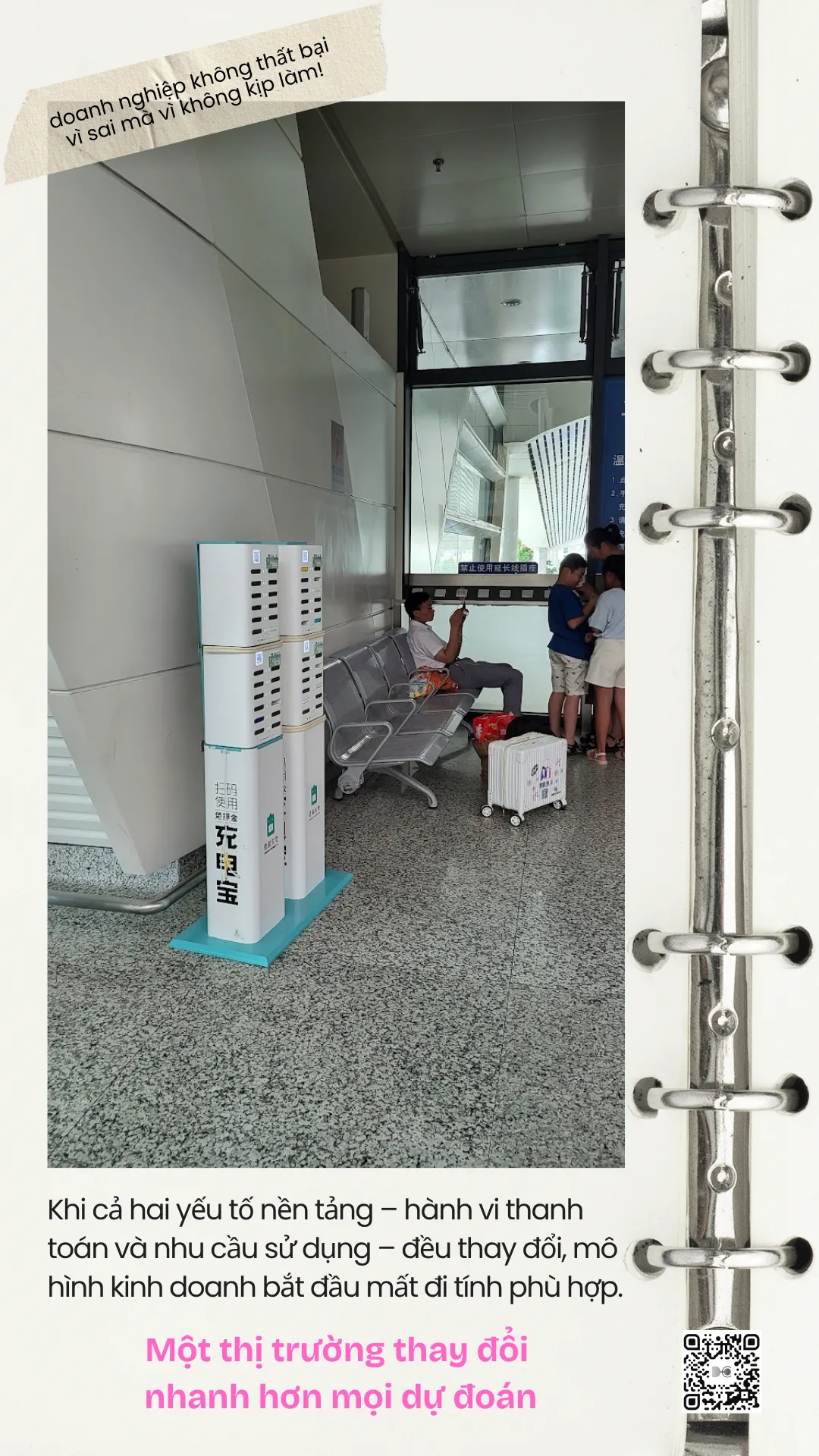
However, in a short period of time, the market changed in ways few could have predicted. Banking infrastructure developed rapidly, transfers became easier, and cashless payments gradually became commonplace. Users no longer needed an intermediary app to conduct basic transactions.
Simultaneously, mobile phone technology also advanced rapidly. Battery life improved significantly, making the need for portable power banks less urgent than before. A once very clear “pain point” gradually faded away.
When both fundamental elements – payment behavior and usage needs – change, the business model begins to lose its relevance.
When opportunities aren’t lost, but their value diminishes.
Throughout the fundraising process, the company made numerous efforts to approach investors, including those in foreign markets. However, the inability to secure a stable cash flow, coupled with financial pressure from previous expenditures, prevented the process from achieving the expected results.
It’s noteworthy that the company wasn’t blind to new avenues. Converting the charging stations to serve other needs, such as electric vehicle charging, had been considered. But when resources ran out, these options remained just ideas.

Three years have passed, the product is still in storage, the app has no users, and the market has moved on to a different phase. The opportunity doesn’t disappear immediately, but its value diminishes over time, until at some point it’s no longer significant enough to constitute an opportunity.
Lesson: If you do nothing, you are losing your advantage.
This story presents an important perspective: in business, “doing nothing” is not just about standing still, but also about not acting quickly enough, not preparing sufficient resources, and not adapting promptly to changing circumstances.
There are three levels to seizing an opportunity. First, recognizing the opportunity. Second, starting to implement it. And third, and the most difficult, is maintaining the opportunity throughout its operation. Many businesses may do well in the first two steps, but fail at the final step because they lack the resilience to sustain it in the long run.
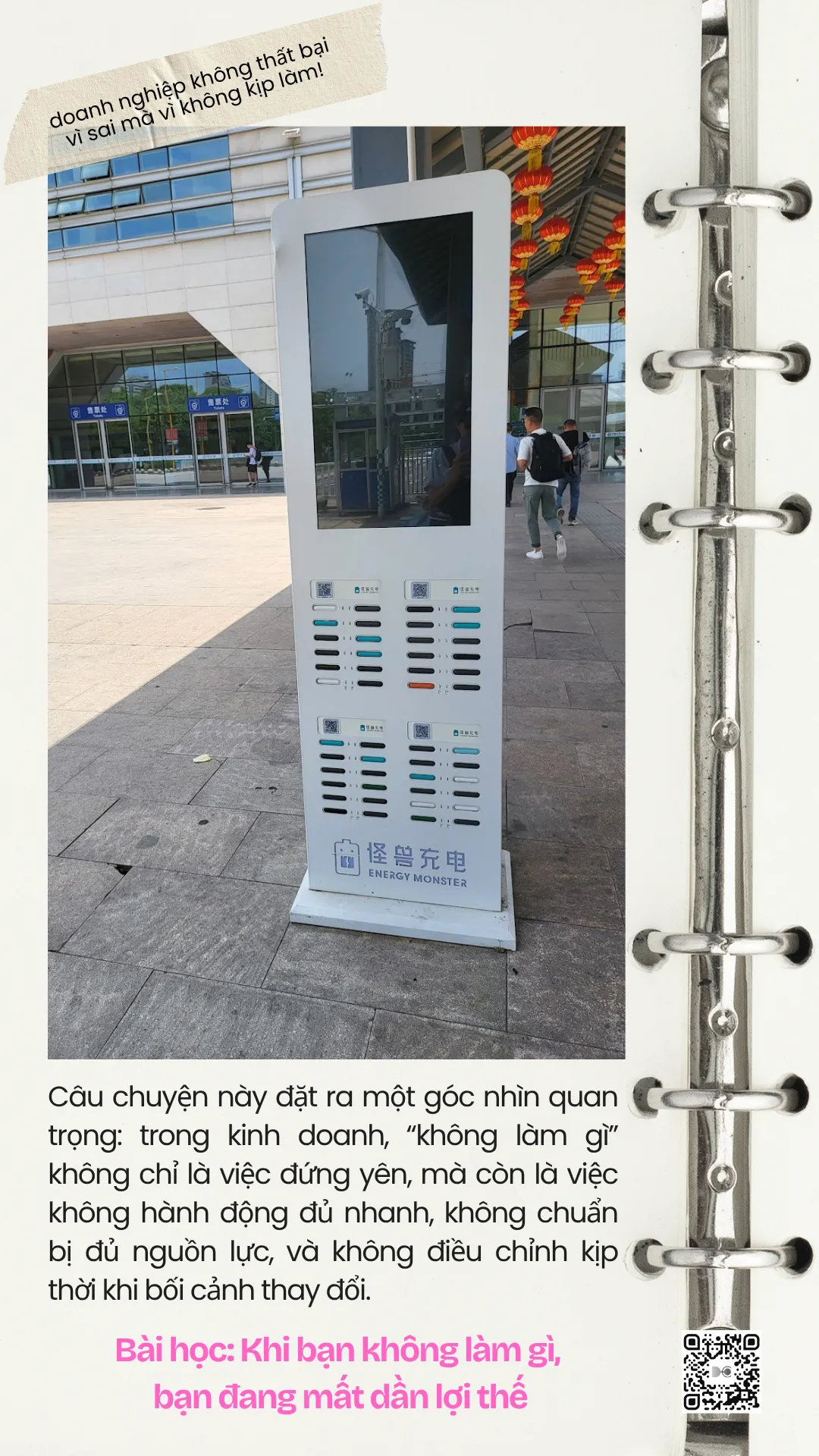
In this case, the business did not lack vision, preparation, or determination. But the gap between planning and execution, between projection and reality, prevented a potential model from becoming a truly operational business.
“If…”
Business doesn’t have much room for “ifs.” If there had been enough capital. If we had launched sooner. If the market hadn’t changed so rapidly. All those assumptions become meaningless once the time has passed.
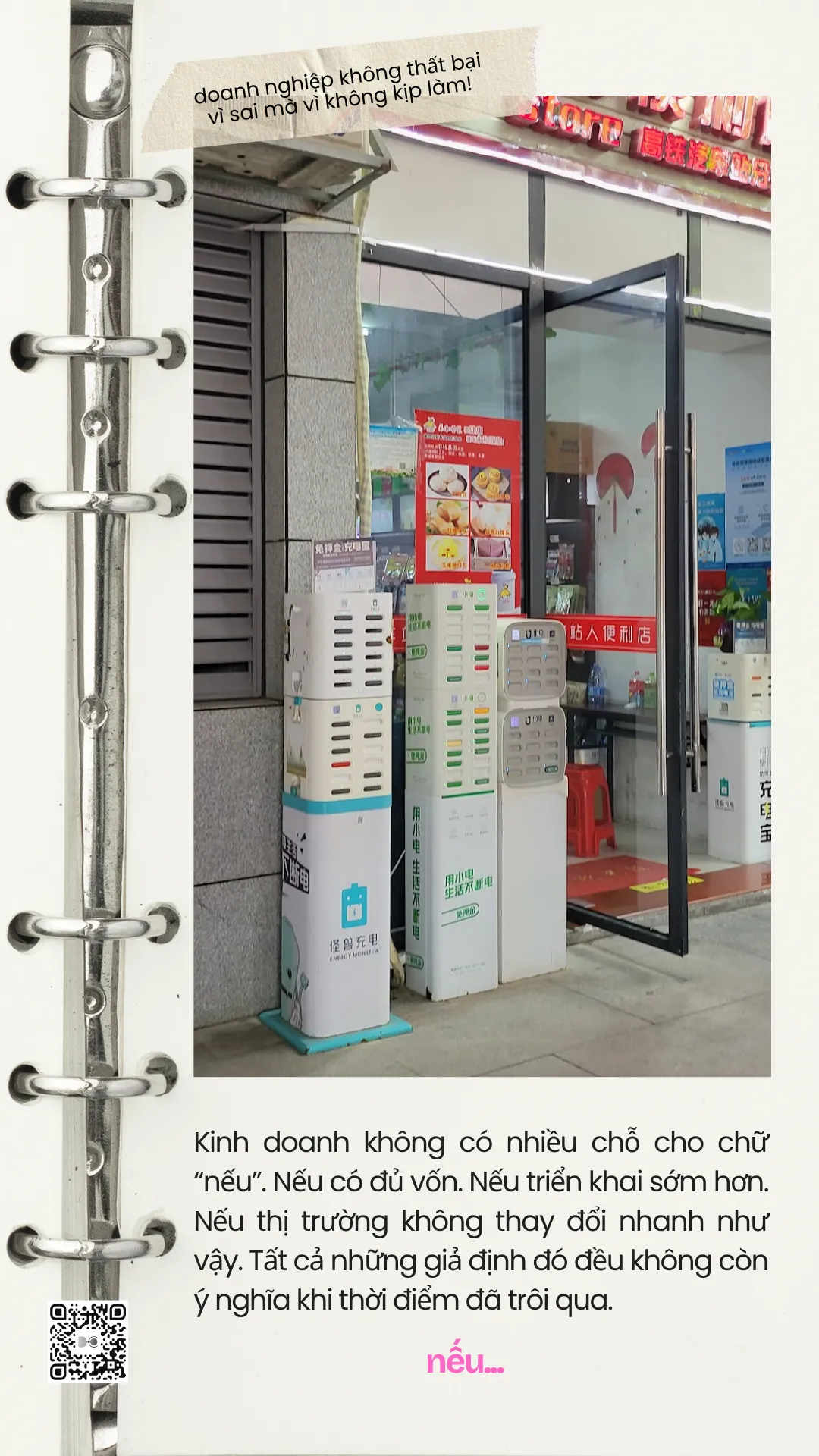
What remains is a clear lesson: opportunity doesn’t belong only to those who see it, but to those who are quick enough, strong enough, and flexible enough to make it a reality.
And sometimes, failure doesn’t come from doing something wrong.
It comes from not doing the right thing in time – at the right time.