Never before have businesses had so much information as they do today.
With just a few clicks, AI can provide market reports, industry analysis, competitor benchmarks, trend forecasts, and even strategic suggestions.
But never before have businesses made decisions in such a state of uncertainty.
Because there is too much information – but a lack of something more important: the logic of decision-making within their own specific context.
In a world where everyone has access to information, what helps businesses avoid making the same – and equally wrong – decisions?
With AI having all the data, why do businesses still fail?
AI doesn’t lack data.
AI doesn’t lack the ability to process data either.
The problem is: businesses don’t fail because they lack information.
They fail because they don’t understand what that information means to them – and what the cost is of following it.
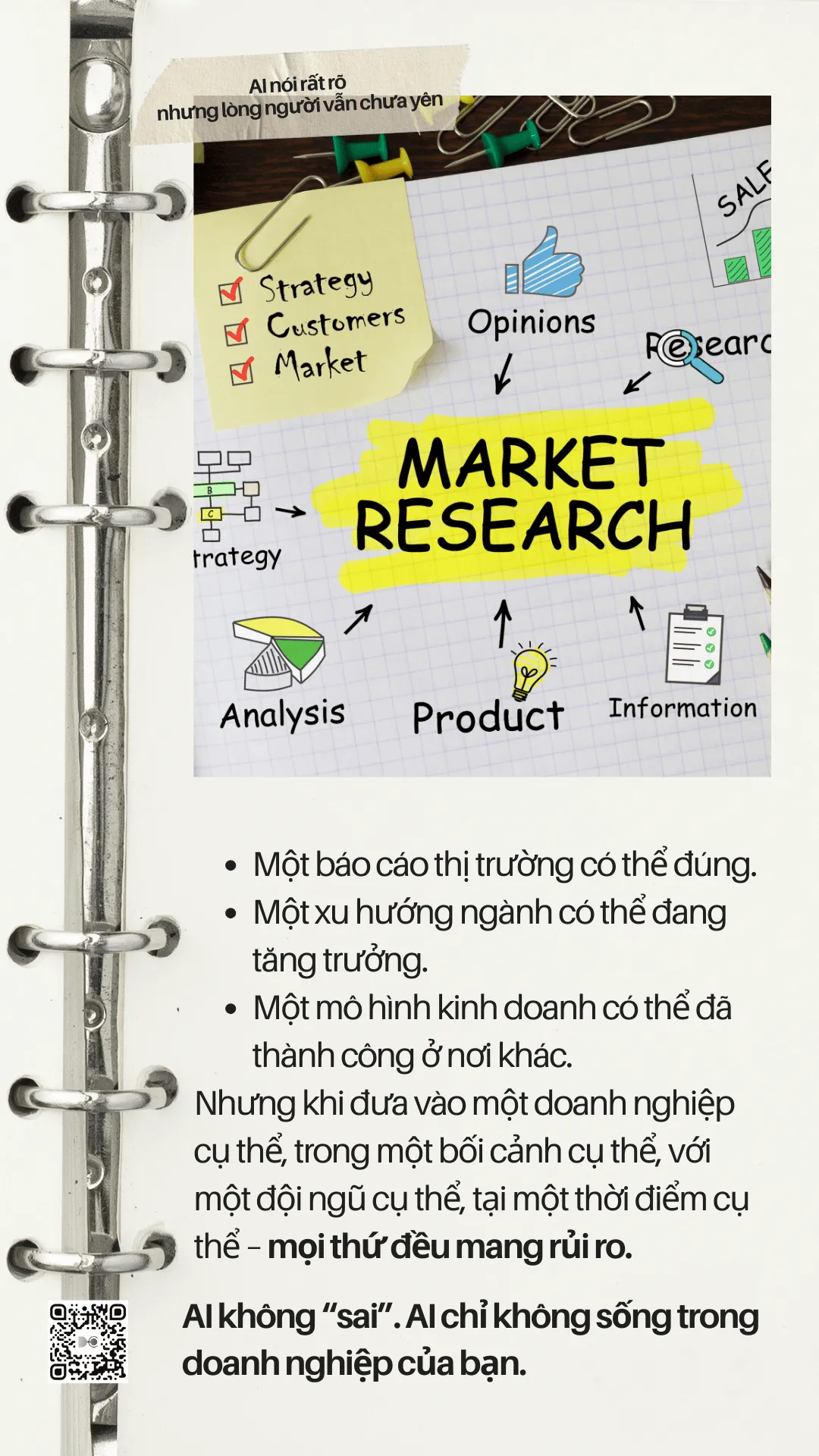
A market report might be right.
An industry trend might be growing.
A business model might have worked elsewhere.
But when applied to a specific business, in a specific context, with a specific team, at a specific time – everything carries risk.
AI isn’t “wrong.”
AI just doesn’t live in your business.
Information is a commodity. Logic is an asset.
Today, information has become a common commodity.
- Investors have information
- Competitors have information
- Middle management has information
- AI has more information than everyone else
So what makes the difference? Not the data itself. But how that data is strung together into decision-making logic.
That logic includes:
- Priority
- Trade-offs
- Identifying hidden risks
- Understanding one’s own limitations
- Knowing when to move forward and when to stop
That is intangible assets. And intangible assets are not created from pure data.

AI cannot create intangible assets – because it is not accountable for decisions.
AI can answer:
- If the market grows X%
- If costs decrease Y%
- If this model is implemented correctly
But AI does not bear the consequences if:
- Personnel fail to keep up
- The corporate culture is unsuitable
- The business owner lacks the foresight to go the distance
- Wrong decisions erode internal trust

The risk isn’t in the data – it’s between the data.
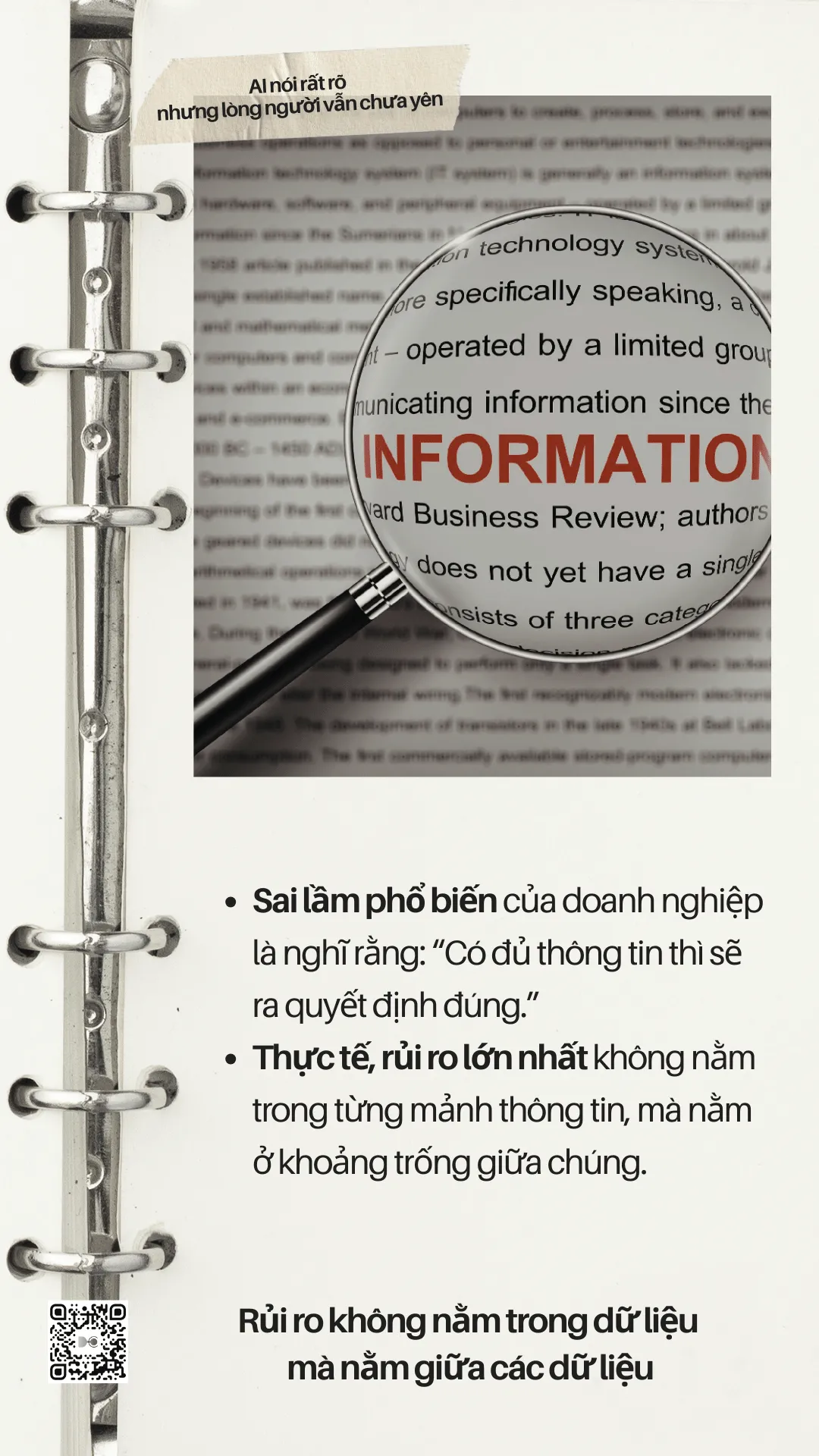
A common mistake businesses make is thinking, “Having enough information guarantees the right decisions.”
In reality, the biggest risk isn’t in each piece of information, but in the gaps between them.
For example:
- Revenue is increasing, but cash flow is strained.
- The market is expanding, but the team is too small.
- The strategy is right, but the implementers don’t believe in it.
- The business model is good, but the owner has run out of energy.
AI sees each piece of data as logical. But humans need to see the discrepancies between them.
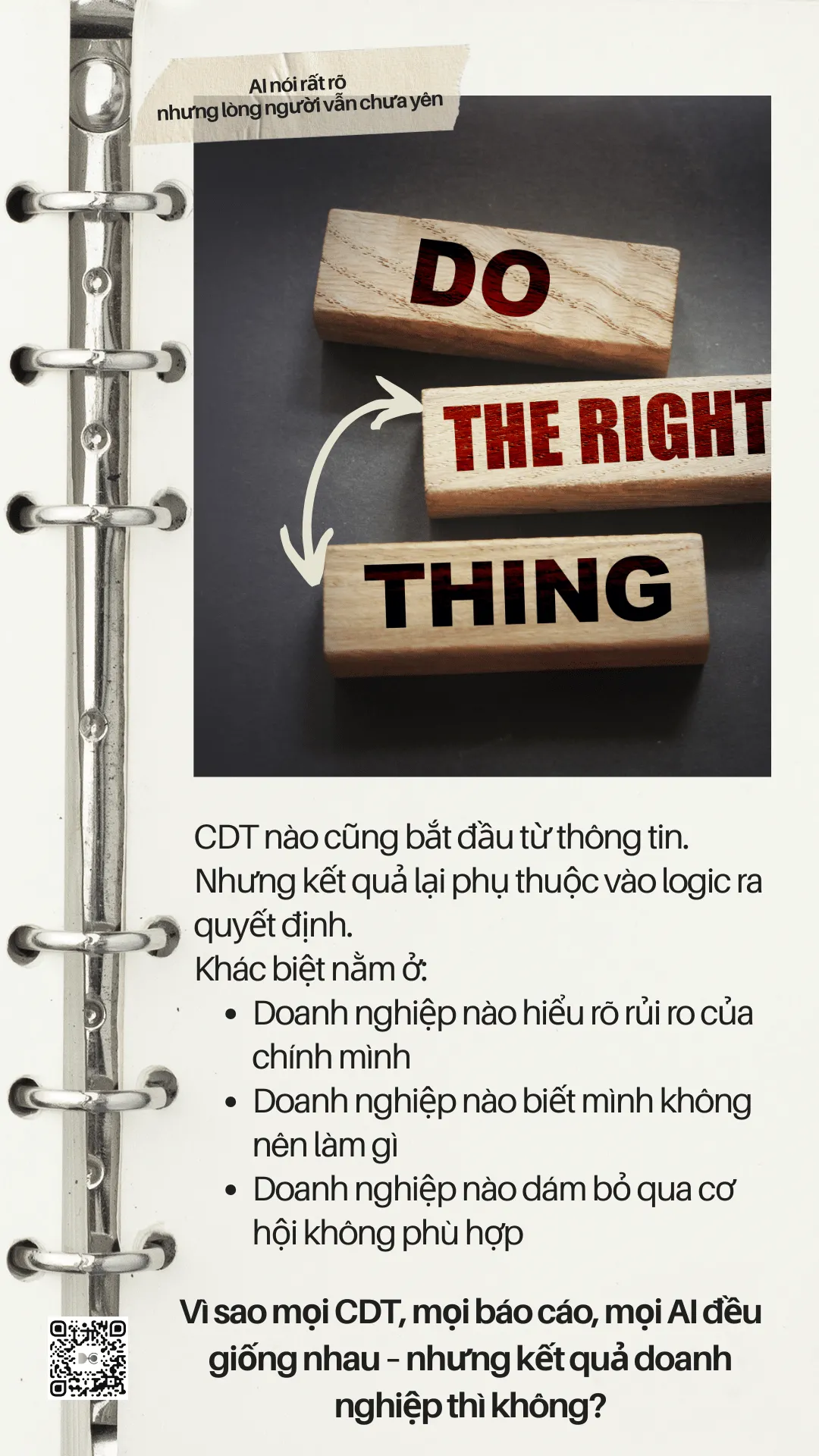
Why are all CDTs, reports, and AIs the same – but the business results are different?
Because every CDT starts with information. But the results depend on the logic of the decision-making process.
Two businesses might:
- Use the same report
- Listen to the same trends
- Apply the same AI tool
Nhưng:
- Một doanh nghiệp sống sót
- Một doanh nghiệp đổ vỡ
The difference lies in:
- Which businesses truly understand their own risks?
- Which businesses know what they shouldn’t do?
- Which businesses dare to ignore unsuitable opportunities?
How does Mind Connector view the market in the age of AI?
Mind Connector doesn’t see AI as a competitor.
Nor does it see AI as a savior.
AI is a tool for processing information.
Mind Connector works at the logical decision-making level.
From Mind Connector’s perspective, it’s not about listing, providing, or summarizing information or risks, but rather a process:
- Ask challenging questions
- Dismantle implicit assumptions
- Clarify power dynamics
- Point out risks that “no one wants to talk about”
Mind Connector, or any consultant for that matter, doesn’t make decisions for businesses; we help businesses see the cost of each decision clearly.
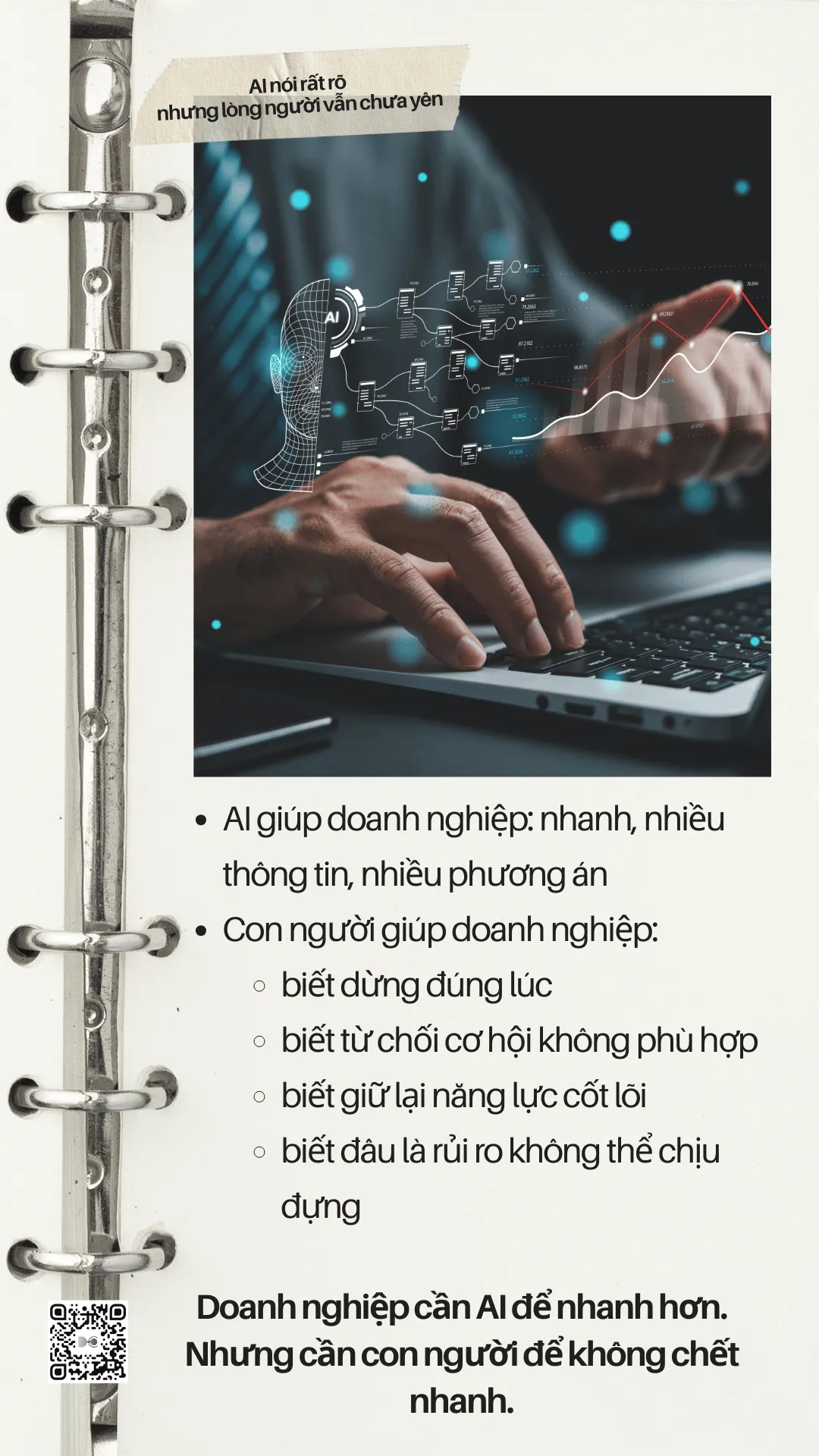
Businesses need AI to move faster. But they need people to avoid dying quickly.
AI helps businesses:
- Fast
- Intensive
- Multiple Options
People help businesses:
- Knowing when to stop
- Knowing how to refuse unsuitable opportunities
- Knowing how to retain core competencies
- Knowing what risks are unbearable
So what?
In a world where everyone has access to information, competitive advantage doesn’t lie in knowing more.
It lies in:
- Understand what you are trading off,
- accept the risks,
- and avoid taking risks you cannot afford to lose.
AI can process data. But intangible assets – logic, character, decision-making ability – are created only by humans.
And that’s why DMR – Decision Making Risk – a tool for assessing risk before making a decision, still needs human intervention.
Not to fight against technology, but to prevent businesses from being overwhelmed by the sheer amount of information they already possess.