NBKLG? | Changing tastes don’t come from a mass “turnaround.” It starts with a small group—often younger customers—with different choices, new priorities, and consumption patterns. Initially, businesses might overlook this group because they don’t generate significant revenue. But they are the earliest indicators of the market’s future. If you do nothing, if you don’t act, you’re not just losing a segment. You’re losing the customer base that will dictate the game for the next 3-5 years.

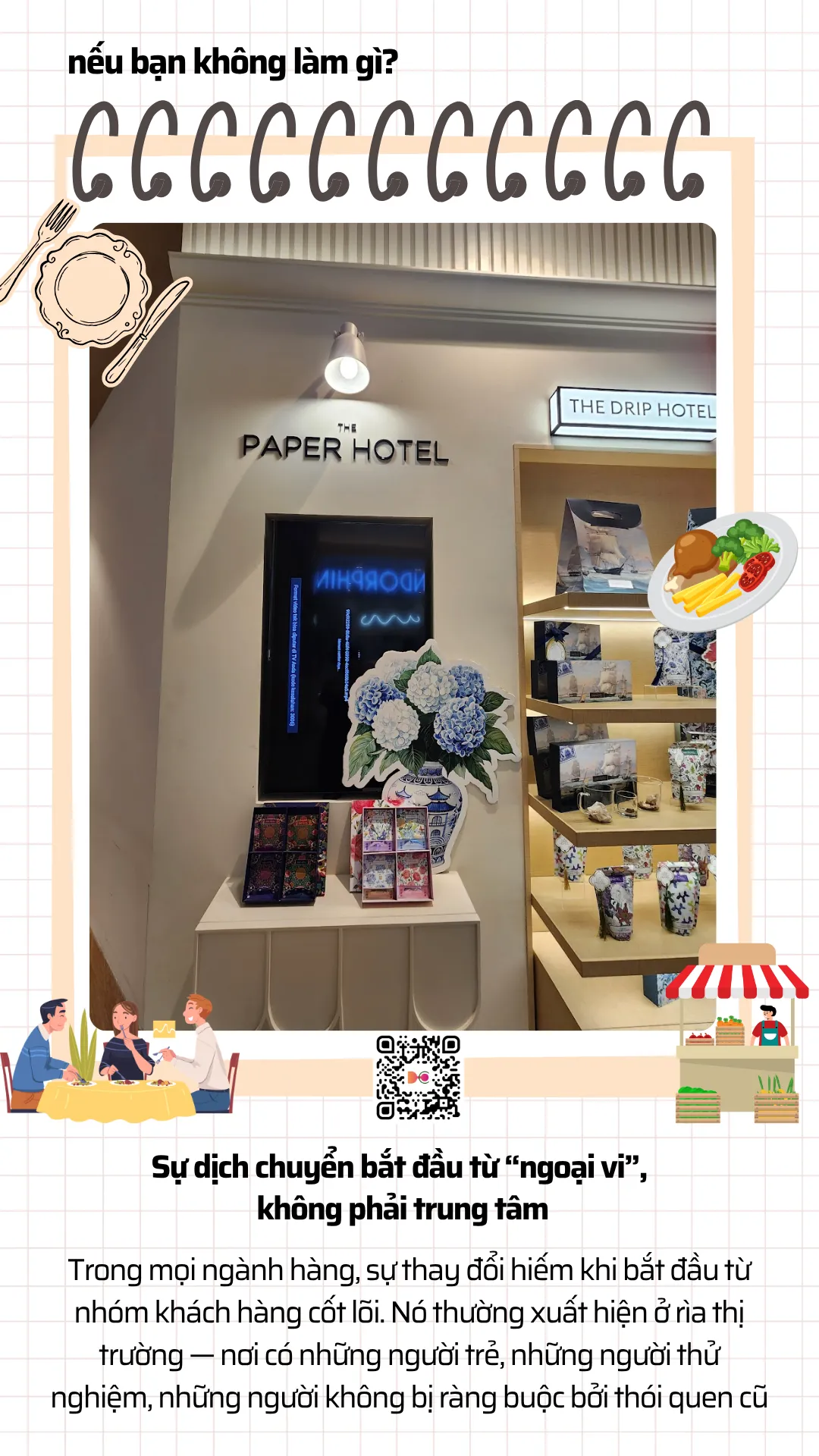
The shift begins on the “periphery,” not the center.
In every industry, change rarely begins with the core customer base. It usually emerges at the edge of the market—where young people, experimenters, and those unbound by old habits reside.
They:
- Trying new brands faster
- Less loyal to traditional choices
- More interested in experience, story, and emotional value
In the early stages, they didn’t spend much. They didn’t create revenue pressure. But they created something more important: a trend.
And a trend, if not recognized in time, will become the new standard.
Common Mistake: “My core customer base hasn’t changed”
Many businesses, upon seeing the shift in the younger customer base, react in the same way: “My core customer base is fine.”
This is true—but only in the present.
Loyal, long-term customers tend to have high inertia. They don’t change immediately. But they are also not the group that will determine future growth.
The issue isn’t whether current customers are changing.
The issue is: who are the new customers choosing?
If a business isn’t among the choices of this new customer group, it will face a gap in the future—as the old customer base gradually leaves or reduces their spending.

A classic case study: Nokia and the missed opportunity to capture a generation of users
One classic example of failing to keep up with trends is the story of Nokia.
At its peak, Nokia dominated the phone market with durable products, good battery life, and suitability for basic needs. But when user preferences began to shift towards smartphones—where experience, apps, and ecosystems became more important—Nokia reacted slowly.
In the early stages, smartphones didn’t have a large market share. Mainstream users were still using traditional phones. Nokia had every reason to believe it was doing just fine.
But the younger generation—those willing to try new things—switched to other platforms. And as this trend spread, Nokia couldn’t adapt in time.
The mistake wasn’t that they didn’t see the change. The mistake was that they didn’t act when the change was still small.

What if you do nothing? When tastes change: Product is no longer the only factor
An important point to understand is: as tastes shift, so do customer selection criteria.
Previously, customers might have been interested in:
- Product quality
- Price
- Durability
But with the new generation of customers, they are starting to have more concerns:
- User experience
- Brand story
- Personal values (sustainability, individuality, distinctiveness)
- Social-friendly
This leaves many businesses in a situation where their products are still good, but they are no longer “the choice.”
Not because they are inferior. But because they no longer fit the way customers see the world.

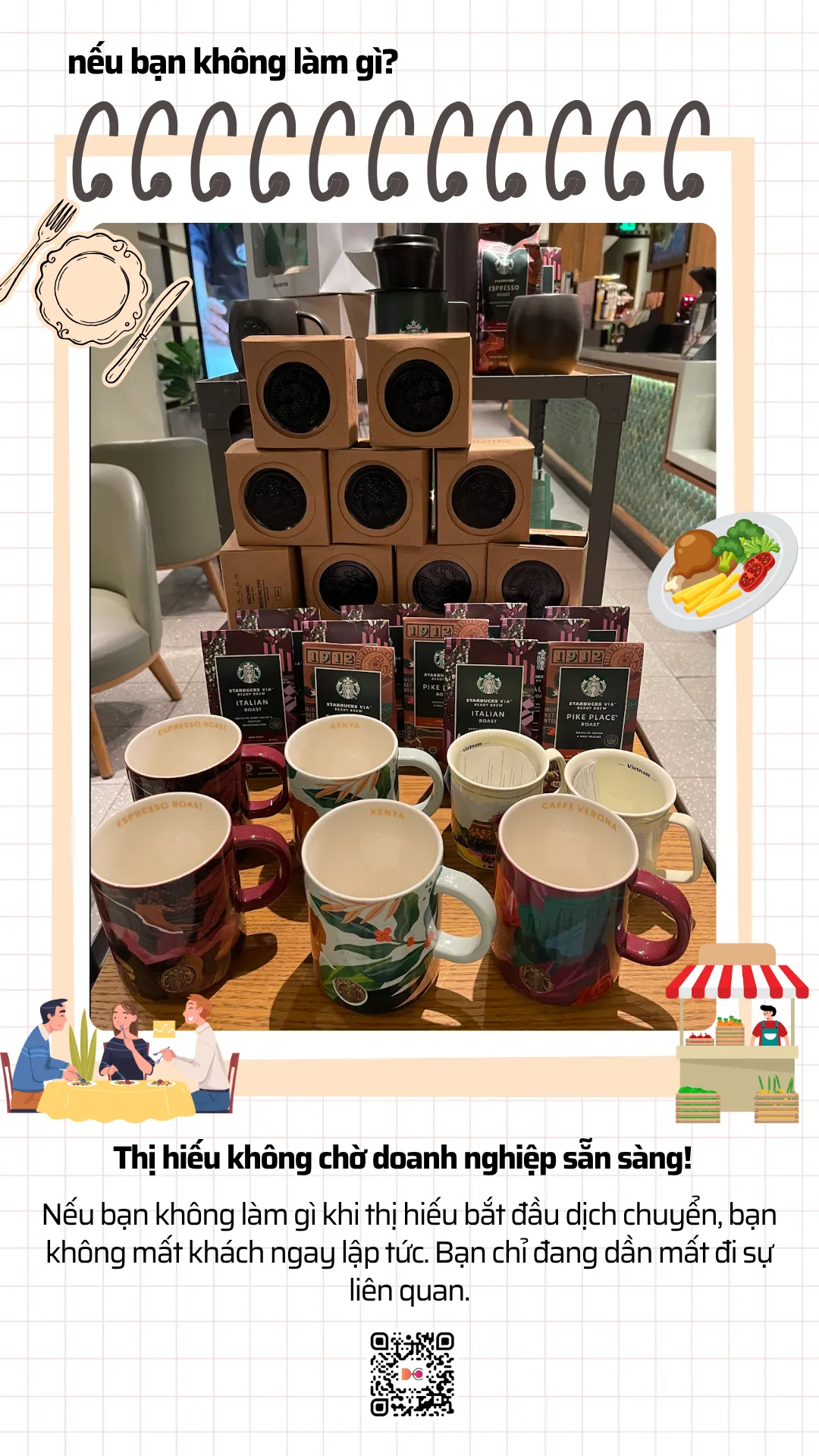
A Case Study: Starbucks and Redefining the Experience
The coffee industry is a clear example of shifting tastes.
Previously, coffee was a product. Customers cared about taste, price, and convenience. But for the younger generation, coffee has become an experience.
Starbucks isn’t the brand with the best coffee by traditional standards. But they understand that young customers don’t just buy coffee. They buy:
- Space
- Feeling
- The ability to “check in”
- And a lifestyle
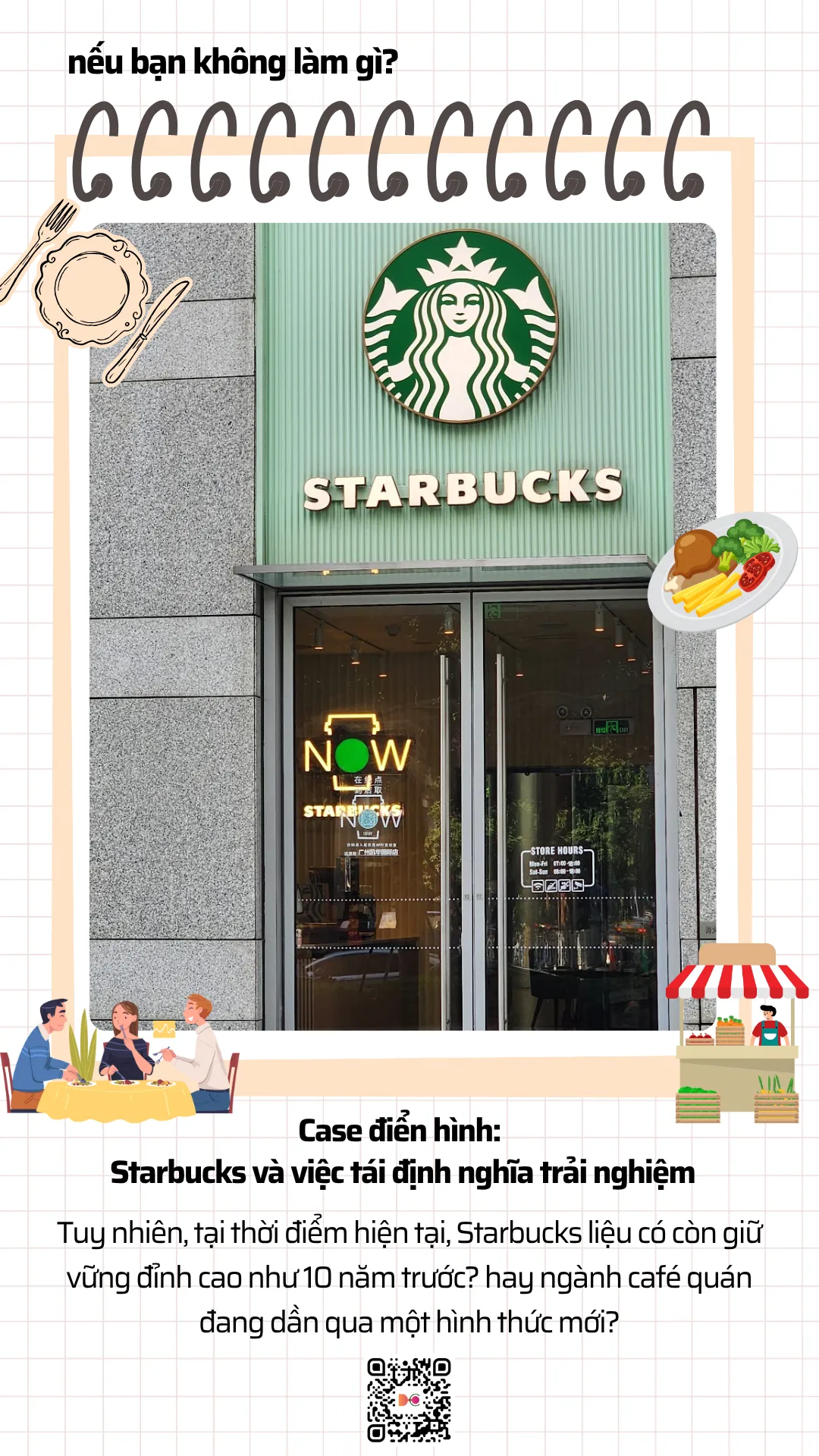
This allows Starbucks to sell not just a product, but an experience that aligns with new tastes.
Meanwhile, many traditional coffee shops still focus on quality and price, but fail to change the experience—and are gradually losing their younger customer base.
However, at this point in time, can Starbucks maintain the peak it held 10 years ago? Or is the coffee shop industry gradually transitioning to a new form?
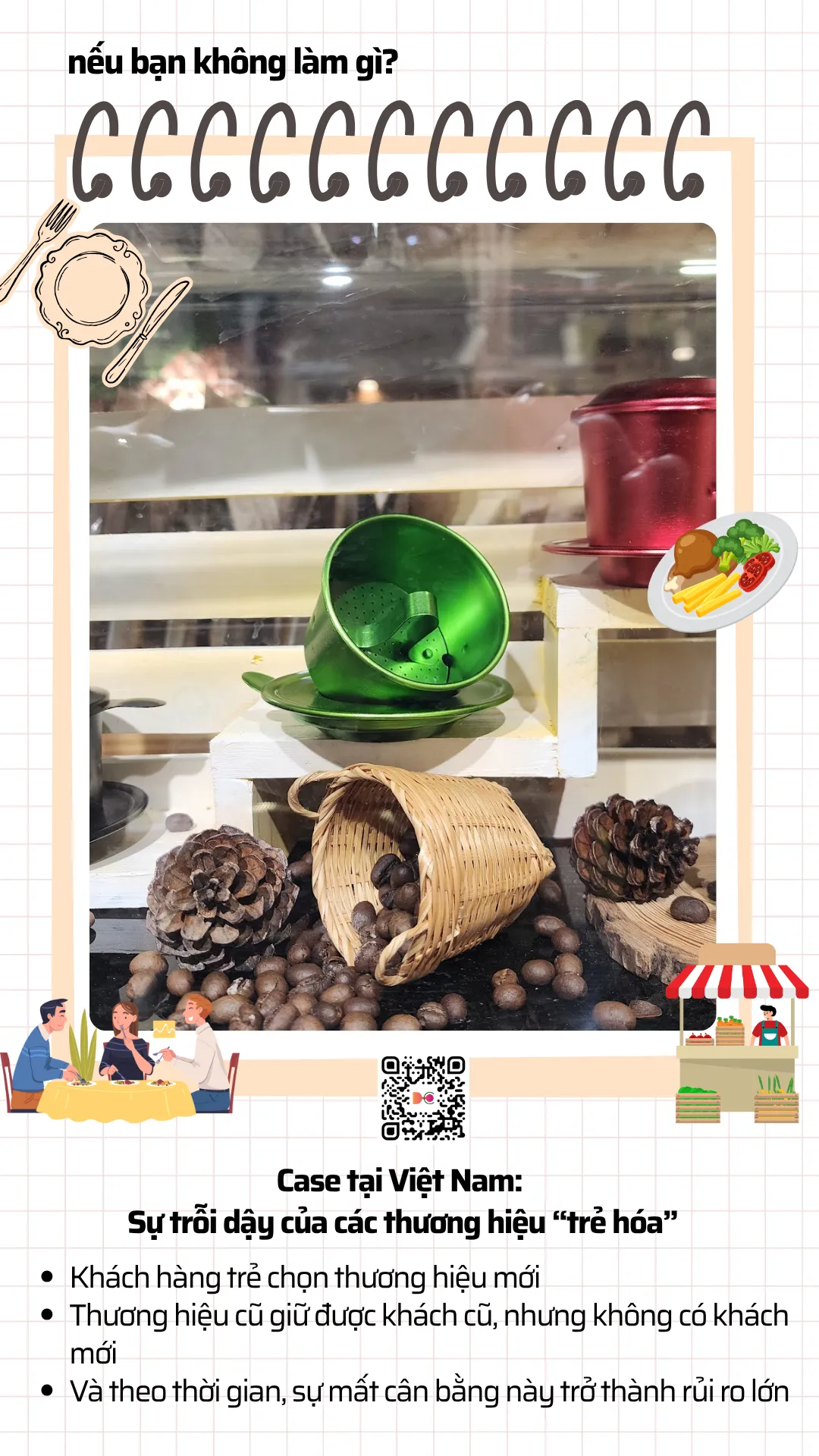
Case in Vietnam: The Rise of “Younger Brands”
In Vietnam, this trend is clearly visible in the F&B and retail industries.
New Brands:
- Modern space design
- Relaxing and trending media content
- Flexible and rapidly changing products
Meanwhile, many long-established brands:
- Maintain the old operating methods
- Minimally change the image
- Communicate with customers in a traditional way
The results are:
- Younger customers choose new brands.
- Older brands retain old customers, but don’t attract new ones.
And over time, this imbalance becomes a major risk.
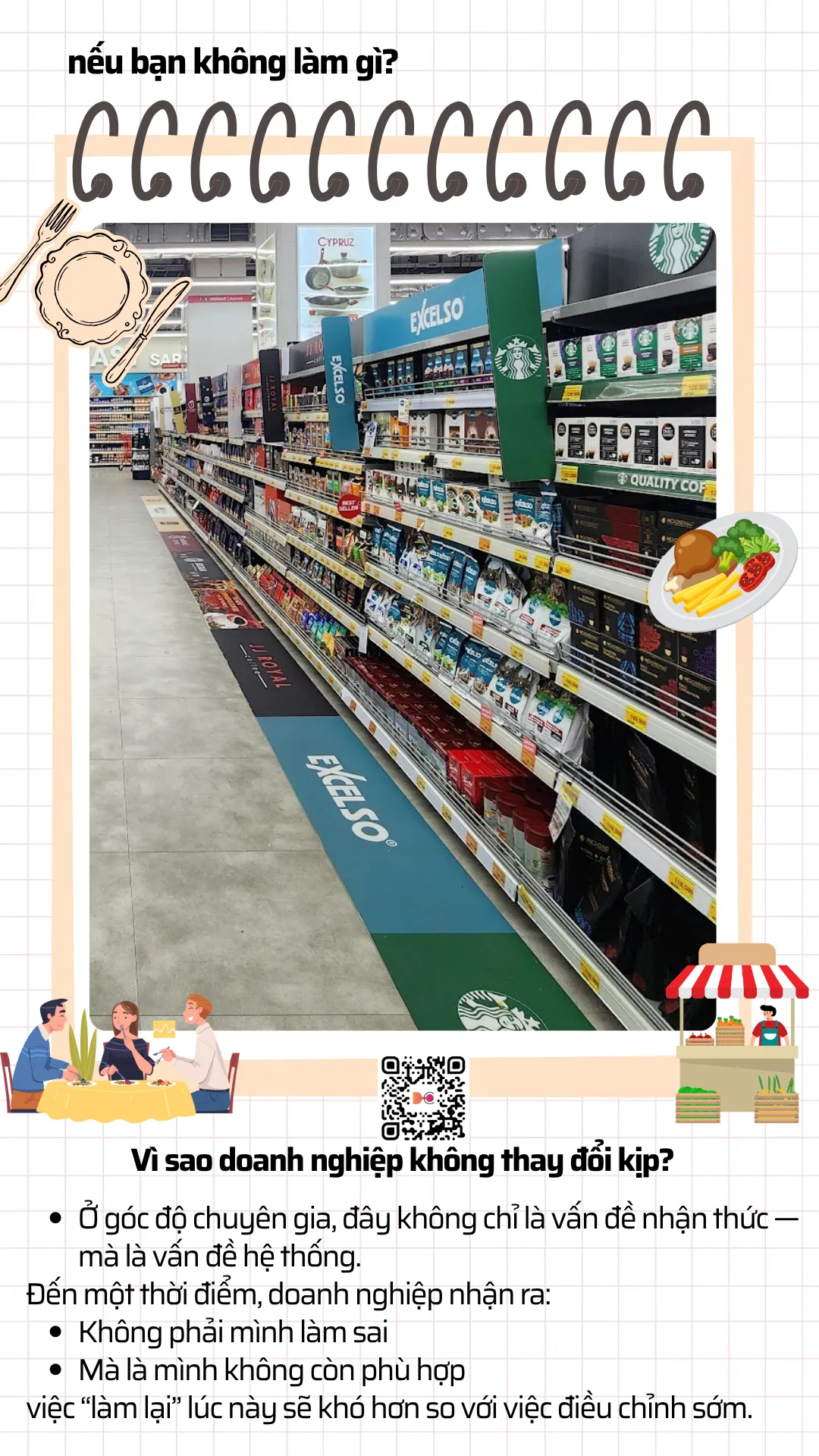
Why aren’t businesses adapting quickly enough?
From an expert’s perspective, this isn’t just a matter of awareness—it’s a systemic problem.
Businesses often:
- Making decisions based on past data
- Optimizing for the current customer base
- And being hesitant to change for fear of impacting short-term revenue.
Furthermore, adapting to new tastes is not simple. It may require:
- Product changes
- Brand changes
- Changes in communication methods
And these changes are not always easy to implement.
If you do nothing, what will happen?
Initially:
- Revenue remains stable
- Returning customers continue to come
But gradually:
- No new customers emerge
- Brand image becomes outdated
- Lost relevance in the market
At some point, businesses realize:
- It’s not that they did something wrong
- But that they are no longer suitable
And “starting over” at this point will be much more difficult than making adjustments.m.
What to do: Don’t chase — understand and select.
Adapting to changing tastes doesn’t mean following every trend.
Businesses need:
- Understand your future target customer group.
- Identify what elements to retain and what elements to change.
- And experiment step by step, instead of changing everything at once.
Most importantly:
- Don’t ignore the small signals
- Don’t underestimate the younger customer segment
- And don’t delay adaptation

Market trends don’t wait for businesses to be ready!
The market doesn’t change according to a business’s schedule.
Customer tastes don’t stop to wait for you to adjust.
If you do nothing when tastes start to shift, you won’t lose customers immediately. You’re just gradually losing relevance.
And in a market with ever-increasing choices, losing relevance is a bigger risk than being uncompetitive.
Because when customers no longer see themselves in your brand, they will find themselves elsewhere.
And then, you don’t just lose one customer.
You lose an entire generation.