What If You Do nothing? is a series based on real-life experiences. Some details in this article have been adjusted to ensure the confidentiality of businesses.
There are businesses that don’t fail. They still have orders, still have revenue, and still survive year after year. But if you look closer, that’s not growth, but a state of “stagnant movement.” The story below is a typical example in the false eyelash manufacturing industry, where a business is capable of producing products for demanding markets, but cannot achieve success with its own brand. And the reason lies not in the market, nor in the product, but in what the business failed to do.

What if you do nothing? When production capacity is no longer an issue
This company has been operating in the false eyelash industry for over 5 years, with a solid foundation. They have orders from various markets, from China and the Middle East to demanding countries like Japan and South Korea. This not only reflects their production capacity but also shows that their product quality has reached a level that can meet international standards.
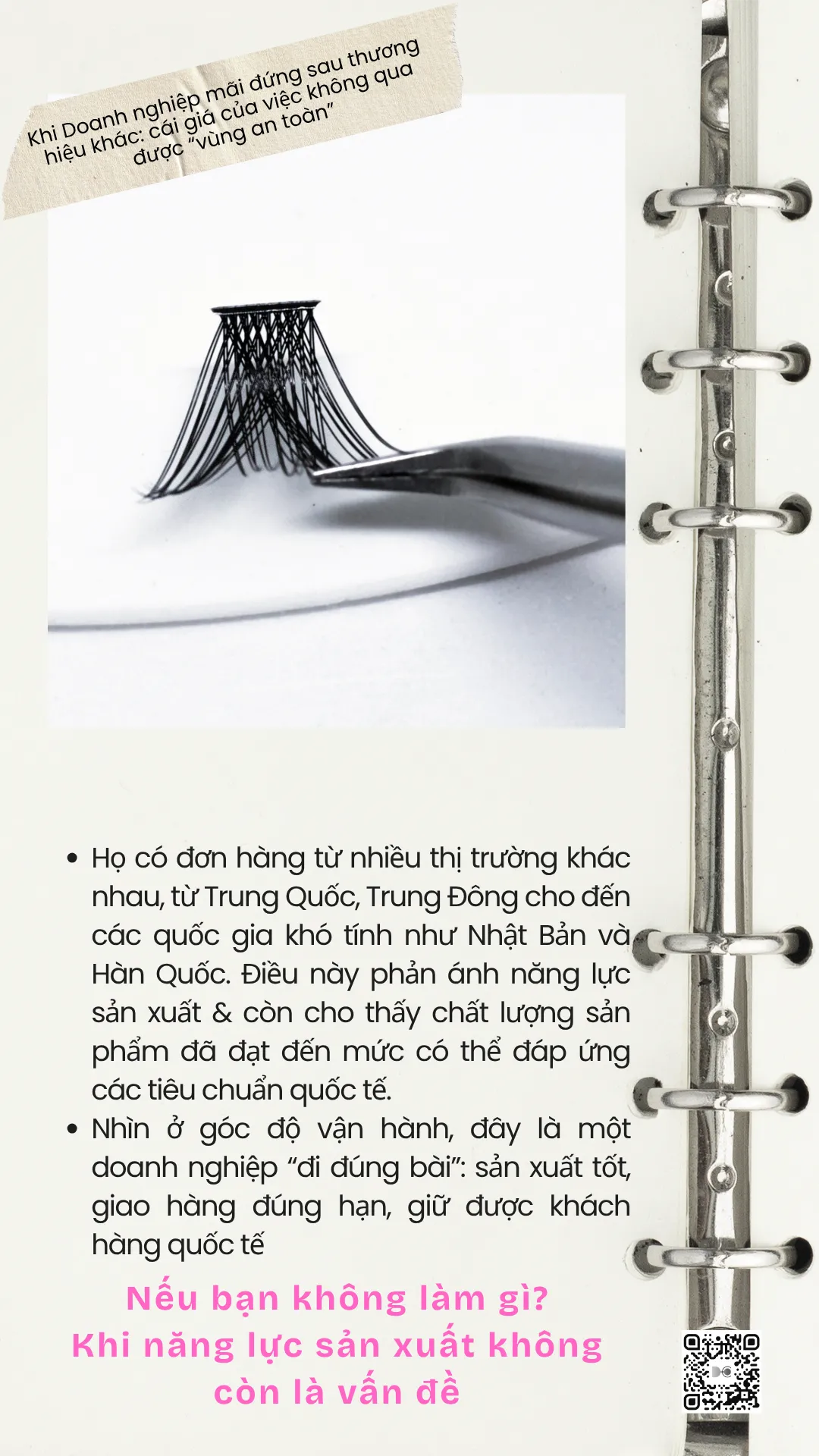
Furthermore, the business owner possesses exceptional optimization skills. From sourcing raw materials to improving machinery, everything is carefully calculated to reduce costs and enhance quality. In the OEM model, this is a significant advantage, helping the business maintain stable profit margins and compete with numerous other suppliers.
From an operational perspective, this is a business that’s “on the right track”: good production, on-time delivery, and retaining international customers. But it is precisely here that a limitation begins to emerge.
When the true value lies not in the product, but in the name
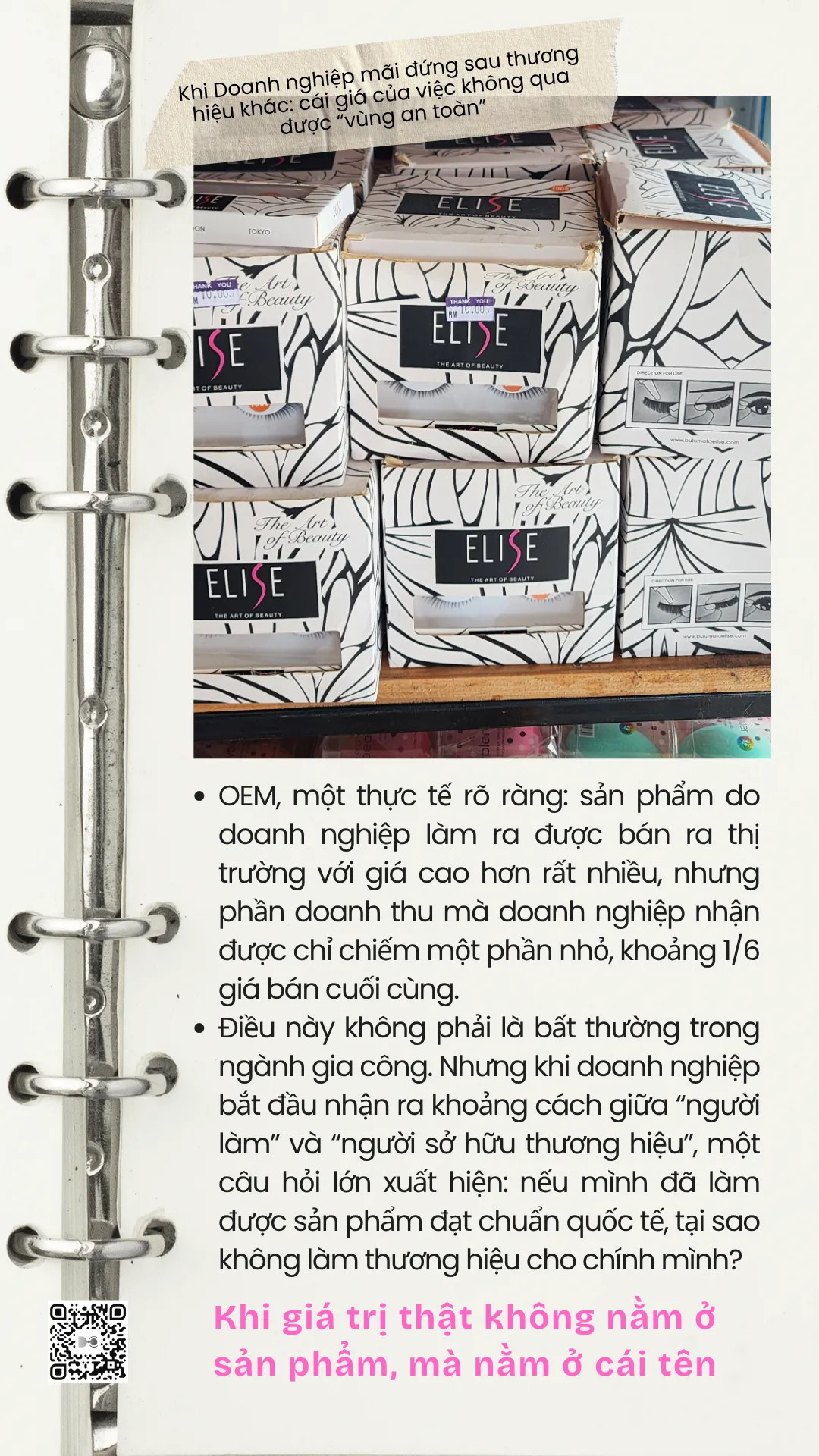
After years of OEM manufacturing, a reality has become increasingly clear: products made by businesses are sold on the market at much higher prices, but the revenue the business receives is only a small fraction, about 1/6 of the final selling price.
This is not unusual in the outsourcing industry. But when businesses begin to realize the gap between “the manufacturer” and “the brand owner,” a big question arises: if they have already produced a product that meets international standards, why not build their own brand?
This realization culminated in a very specific experience. A major foreign client was in Vietnam, ready to meet and work. However, when offered the opportunity to travel a relatively short distance to the production facility, they declined, despite all arrangements being made.
It wasn’t a matter of geographical distance. It was a matter of “perceived value.” When a business lacks a strong brand and a sufficiently professional image, it’s not a top priority in the client’s time.
That very moment led to a decision: we must build our own brand.
Determination is there, but action is insufficient.
After a turning point in awareness, businesses began to approach brand building in a more systematic way. Positioning and strategic planning steps were implemented. However, upon closer examination, a crucial gap began to emerge: businesses didn’t truly understand their customers.
In the OEM model, customers are clearly defined: wholesale partners placing large orders. But when transitioning to building a private label, especially targeting B2C, the question is no longer so simple. Customers are not just “buyers,” but a specific profile with their own behaviors, habits, spending levels, and expectations.
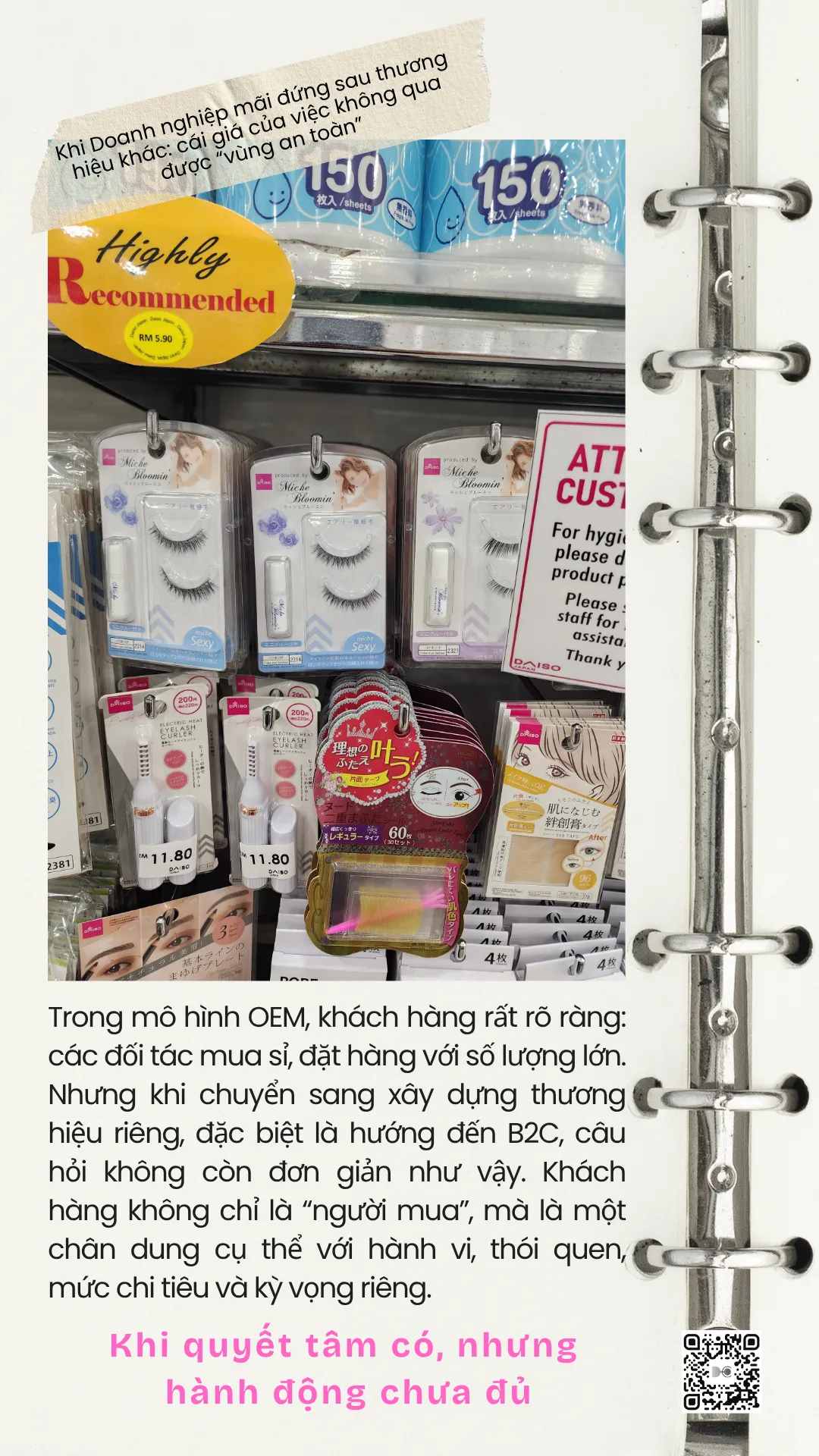
Here, the business hasn’t answered fundamental questions: who are the customers, why do they buy, where are they located, how much are they willing to spend, and what factors persuade them? When the customer profile is unclear, the entire system behind it – from product, packaging, communication to sales channels – lacks the foundation for implementation.
Furthermore, despite having begun the branding process, the business still carries the old mindset: expecting to sell large orders like in the B2B model. This is a crucial misalignment.
B2B and B2C may offer the same product, but they belong to two different worlds. B2B sells trust through competence and relationships. B2C sells emotion through experience and image. When these two approaches are not clearly separated, businesses fall into a state of “doing things halfway”: no longer a pure OEM, but not yet a true brand.
When Cost Becomes a Psychological Barrier for Businesses
One of the most crucial steps in transitioning to B2C is building brand identity and packaging. This isn’t just about aesthetics; it’s a tool for a product to “stand out” in the market, especially in the beauty industry – where purchasing decisions are heavily influenced by image and perception.
The business approached and even liked the proposed design options. However, when it came to the final decision, they stopped. The reason wasn’t a lack of perceived value, but rather a feeling of “excessive cost” and “reduced profit.”
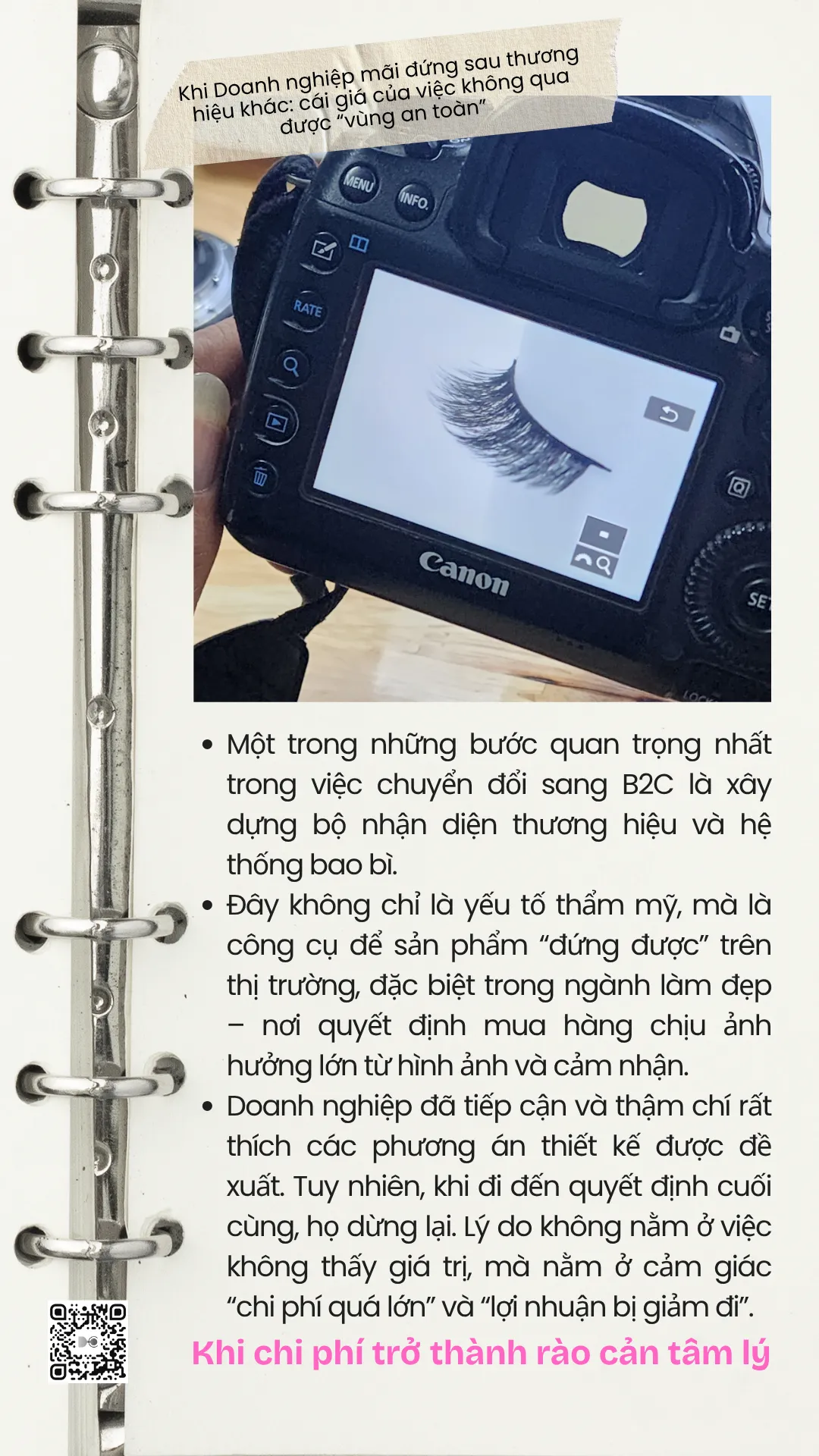
This is a very common pitfall for businesses transitioning from outsourcing to branding. In the OEM model, costs are tightly controlled and directly tied to production. But in the branding model, there are expenses that don’t generate immediate revenue, but are the foundation for long-term growth.
When businesses view branding costs as a “loss” rather than an “investment,” they tend to stop right before the transition.
A familiar state for OEM businesses: not bad, but not going far either.
Years later, this business’s journey hasn’t changed much. They still have orders, maintain operations, and sell retail at a moderate level. From the outside, this isn’t a failure story.
But if placed in the initial context – when the business had the capacity to move to a different position – then this is a “pause.”
They haven’t lost what they had. But they haven’t achieved what they once envisioned either.
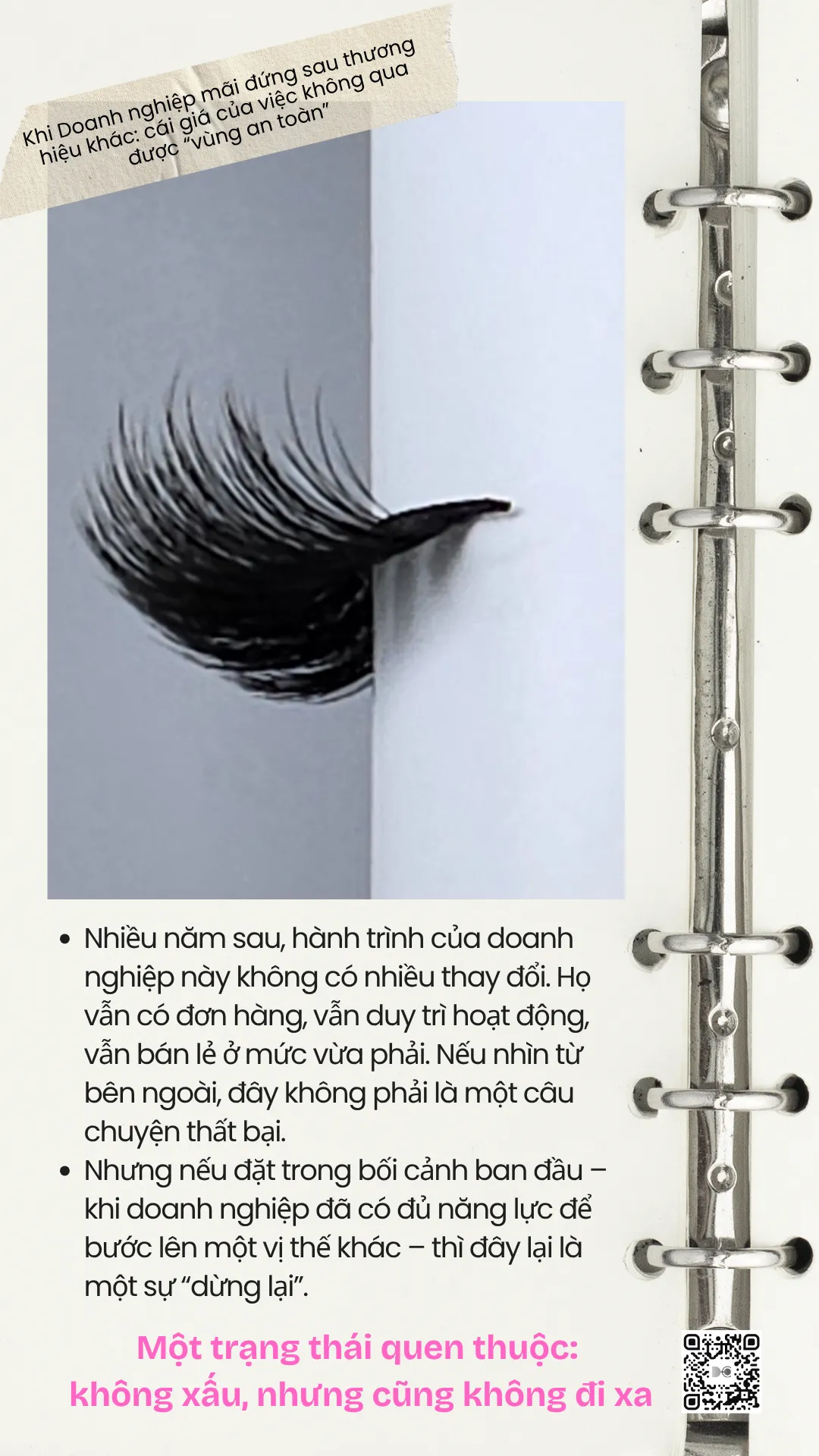
Entertaining international clients as an independent brand, controlling the final selling price, building unique value in the market – all of these are still ahead.
Lesson: It’s not that they didn’t know, but that they didn’t see it through.
The key takeaway from this story is that the businesses weren’t lacking in awareness. They understood the problem, saw the opportunity, and even started to act. But the difference lies in their failure to see it through to the end.
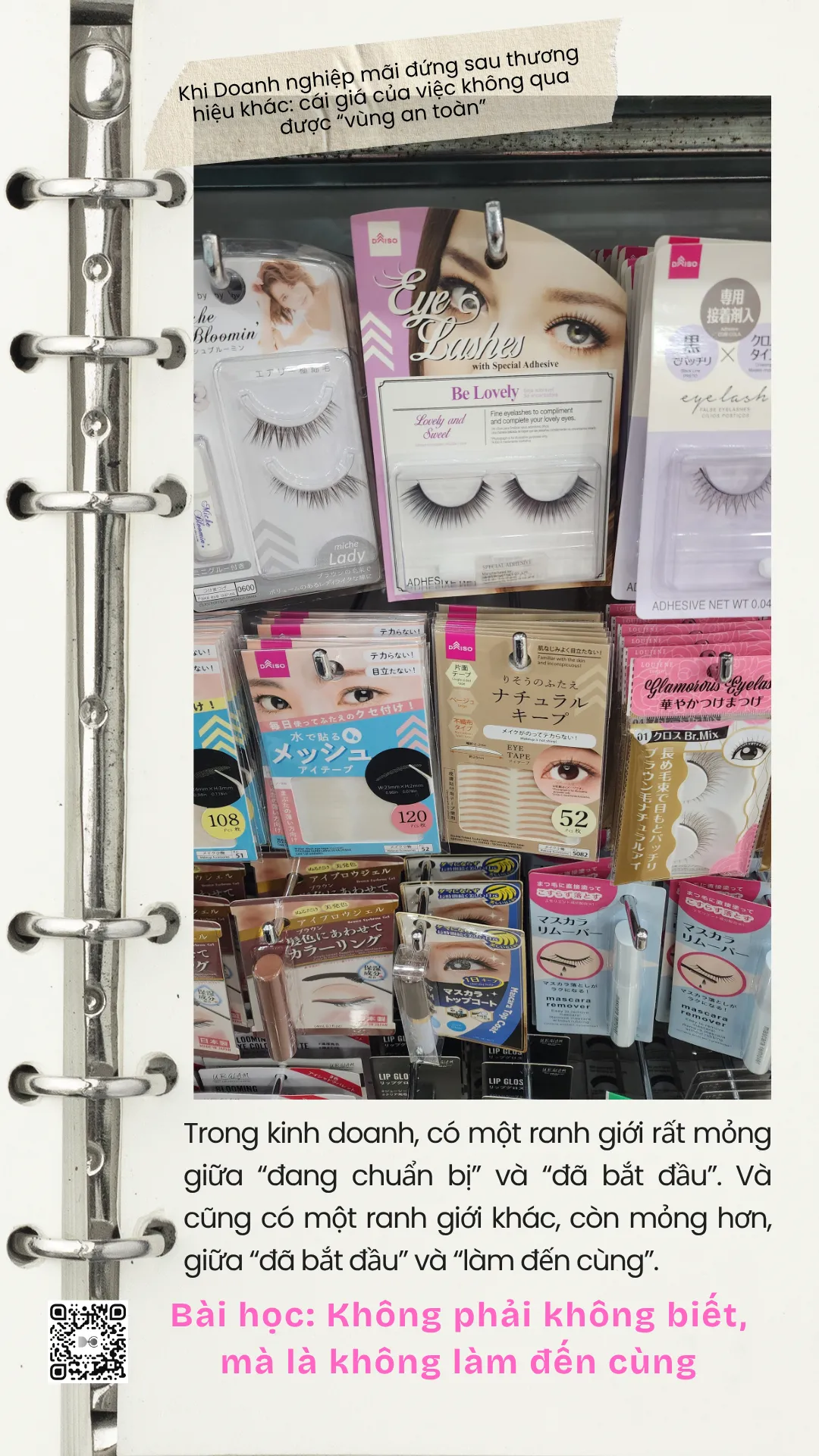
In business, there’s a very thin line between “preparing” and “starting.” And there’s another, even thinner line, between “starting” and “seeing it through.”
Many businesses stop somewhere between those two lines. They don’t go back to square one, but they also don’t go far enough to change their position.
In conclusion,
Shifting from OEM to brand building is not simply a strategic decision, but a complete shift in mindset: from how we view customers, how we price, how we invest, to how we accept risk.
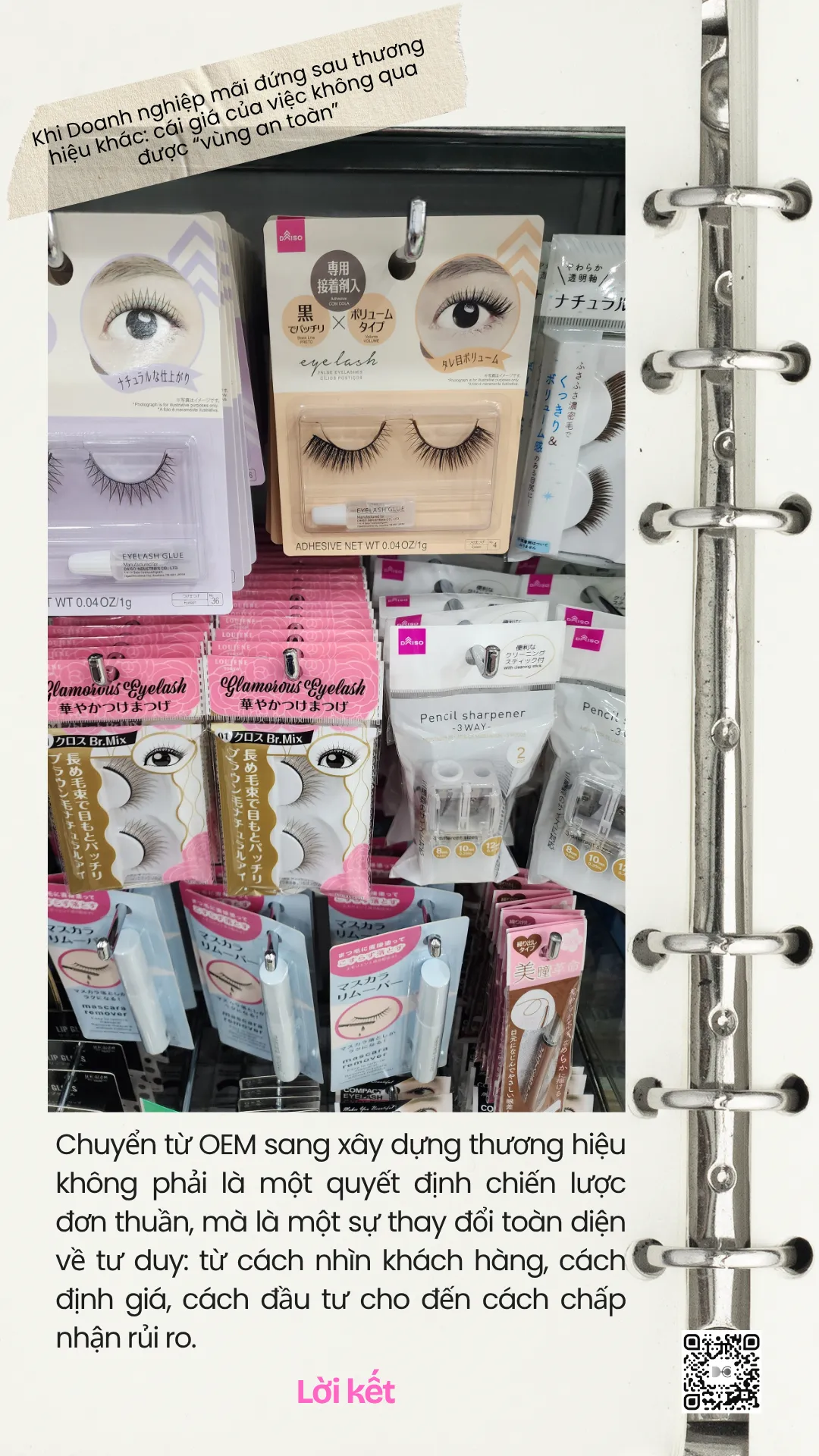
In this story, the business had the foundation, the capabilities, and the opportunity. But what they lacked wasn’t knowledge, but decisive action.
And that’s a familiar yet difficult lesson to put into practice: knowing something doesn’t automatically mean you’ll do it, and starting doesn’t guarantee success.
Sometimes, what holds a business back isn’t the market, but the very comfort zone they’re unwilling to step out of.