DMR – Decision Making Risk – is the process of assessing risks that arise during a company’s decision-making process. In marketing, when a campaign doesn’t achieve the expected results, the first question often revolves around the idea. Was the idea creative enough? Was the message compelling enough? Was the imagery distinct enough from the competition?
But for seasoned strategists, there’s a rarely stated truth: many campaigns fail not because of weak ideas. In fact, many campaigns with good ideas and well-executed execution still don’t generate commensurate business results.

The reason lies elsewhere: the business chose the wrong “battleground” from the start.
A marketing campaign can only succeed when it’s part of a sound strategic decision. If that decision involves significant risks – in terms of the market, the product, or the operating system – then even the best marketing will struggle to produce sustainable results. This is also why Mind Connector developed DMR – Decision Making Risk, a tool that helps businesses assess the risks of strategic decisions before implementation.
When Marketing Has to Handle Problems That Aren’t Directly Under Marketing
In many businesses, marketing is often the most visible department in the market. Advertising campaigns, communication activities, product launches… all are easily recognized by the public and management.
Therefore, when business results fall short of expectations, marketing is often the first to be questioned.
However, in practice, marketing is only one part of a company’s decision-making system.
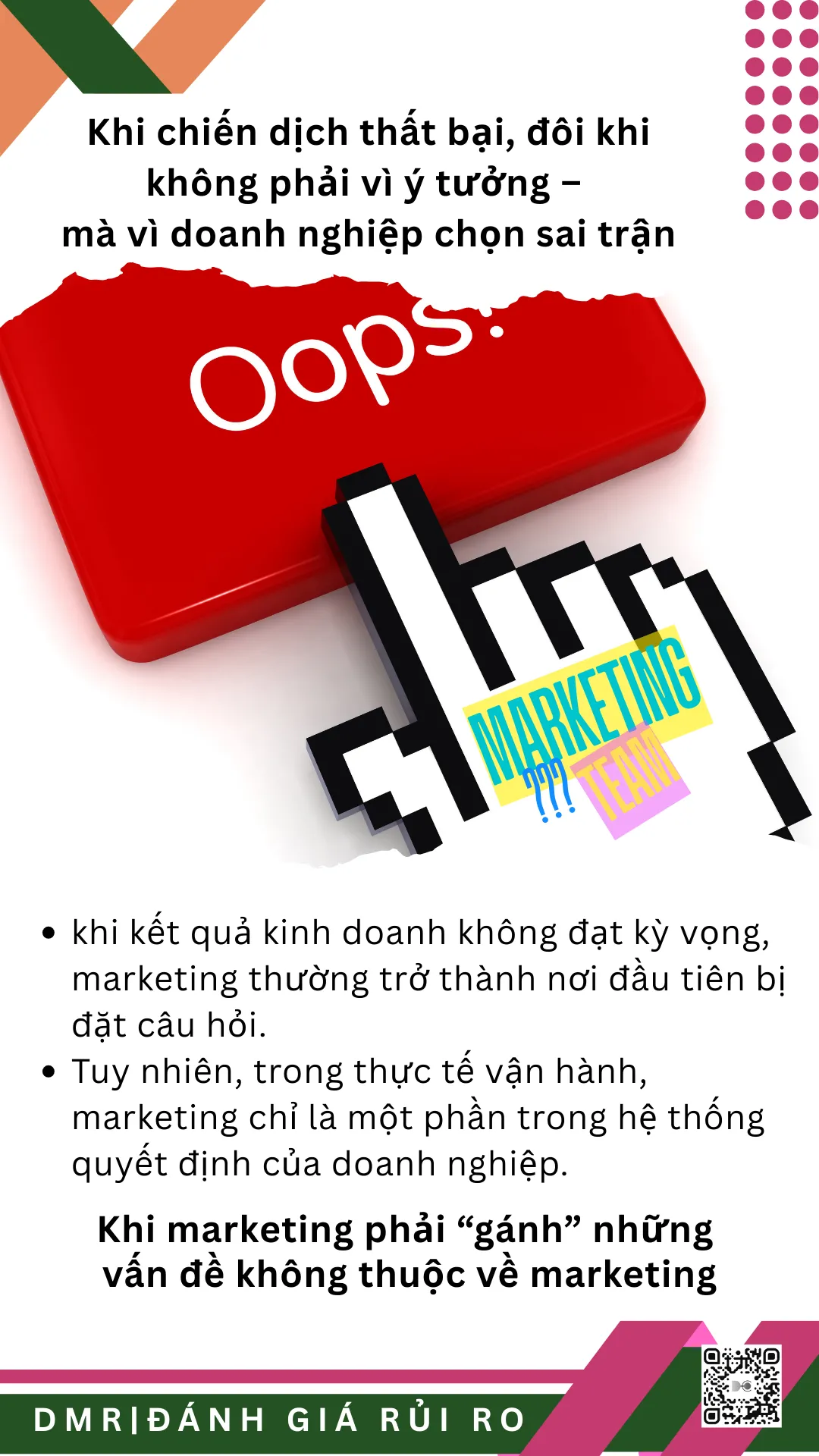
A marketing campaign can be very well executed, but the final outcome still depends on many other factors:
- Is the product truly a good fit for the market?
- Is the price appropriate for consumer behavior?
- Is the distribution system wide enough to meet demand?
- Is the customer experience good enough to retain buyers??
If any of these elements are not in place, the marketing campaign may generate attention, but it will be difficult to translate that into real growth.
In that case, the problem isn’t with the idea. The problem lies with the strategic decisions behind the campaign.
DMR | A good campaign cannot save a wrong decision
In many marketing projects, agencies often receive a very clear brief from the business:
- Launching a new product
- Increasing brand awareness
- Boosting sales during a specific period
- Repositioning the brand
The agency will focus on developing communication strategies, generating ideas, selecting channels, and implementing campaigns.

But there’s a fairly common practice: agencies often get involved in a project after the strategic decision has already been made.
For example:
- The company decides to launch a new product.
- The company decides to raise prices.
- The company decides to expand its market..
The agency’s sole responsibility is to ensure the campaign’s success.
However, if the initial decision involves significant risk, marketing can become a very costly endeavor that doesn’t yield the expected results.
DMR | When the Market Isn’t Ready
One of the common reasons a campaign fails is that the market isn’t truly ready for the decision.
For example, a business launches a new product with many technological improvements and invests heavily in marketing to introduce it.

A campaign might attract attention, generating significant interaction and discussion on social media. But if consumers don’t feel a clear need, they might be interested but not ready to buy.
In this case, the marketing campaign might be considered “very good” in terms of communication, but sales might not meet expectations.
The reason isn’t the idea.
The reason lies in the timing of the product launch decision.
When Marketing Outpaces Operations
Another risk often arises when a marketing campaign creates demand that exceeds the system’s capacity to meet it.
A successful campaign might lead to rapid product sales initially. However, if the distribution system isn’t wide enough, or the supply chain isn’t ready, customers may struggle to find and purchase the product.
The consumer experience then becomes incomplete.

A large-scale campaign can generate attention, but if the operational system fails to keep pace, the end result can erode customer trust.
This demonstrates that marketing cannot be separated from the overall operational structure of a business.
When a campaign is assigned an unrealistic goal
In some cases, marketing campaigns are assigned very ambitious goals while the business foundation is not strong enough.
For example:
- Rapid sales growth in a new market
- Building a strong brand in a very short time
- Completely changing consumer perceptions
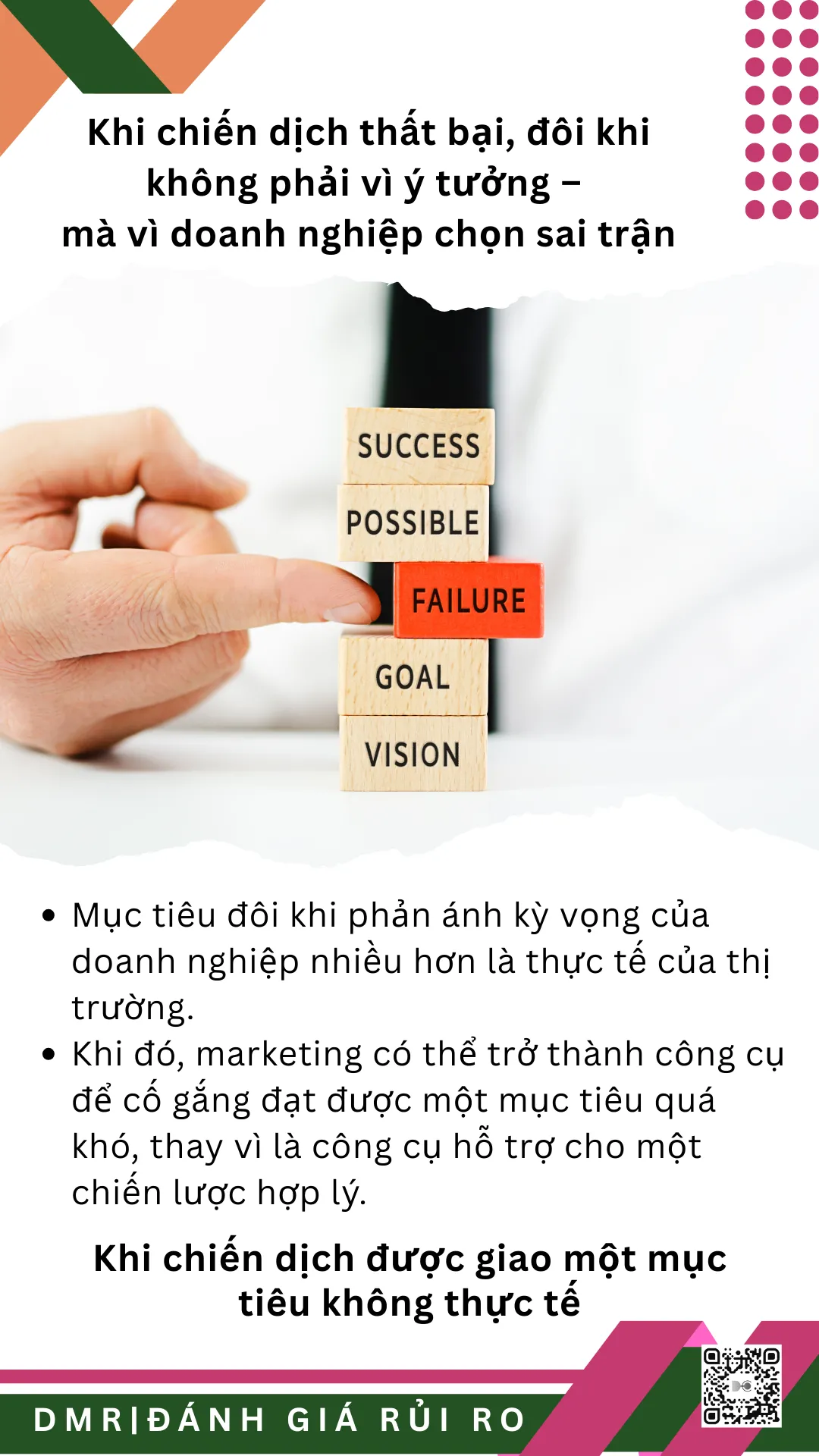
These goals sometimes reflect the company’s expectations more than the reality of the market.
In such cases, marketing can become a tool to try to achieve an overly ambitious goal, rather than a tool to support a sound strategy.
DMR – Decision Making Risk Assessment Before Campaign Starts
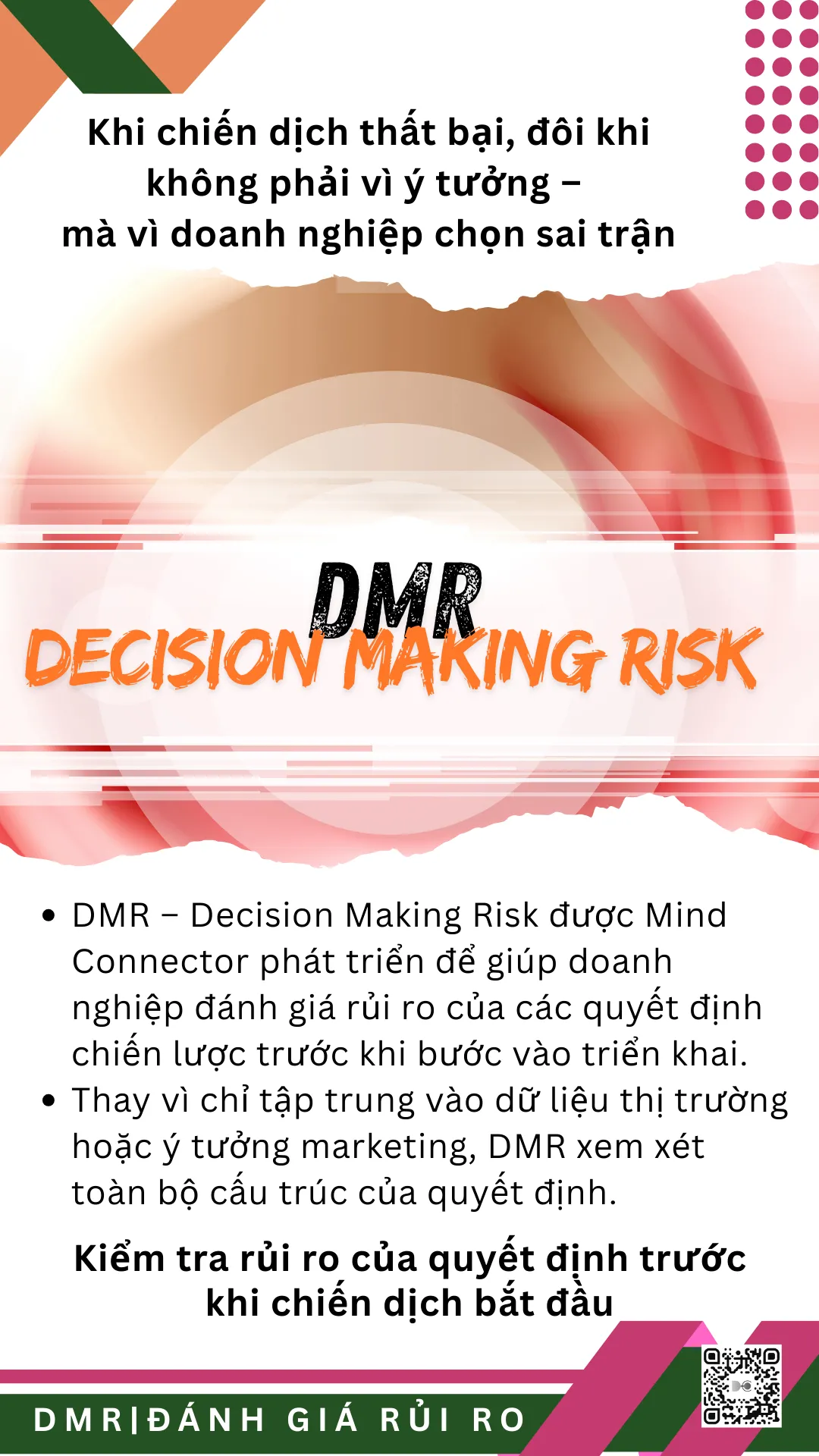
DMR – Decision Making Risk, developed by Mind Connector, helps businesses assess the risks of strategic decisions before implementation.
Instead of focusing solely on market data or marketing ideas, DMR examines the entire structure of the decision.
What assumptions were made on this decision?
Is the market ready?
Does the business system have sufficient operational capacity?
If the campaign is successful, can the business meet the increased demand?
These questions help the business identify potential risks that could affect the campaign’s effectiveness.
Businesses can conduct self-assessments before deployment – DMR
One of the advantages of DMR is that businesses can start with a quick assessment.
Through Mind Connector’s website system, businesses can conduct an initial risk assessment of strategic decisions.

This test helps businesses:
- Review key assumptions
- Identify underlying risk factors
- Consider the organization’s readiness
If the decision involves large projects or high-investment projects, Mind Connector’s experts will be involved to conduct in-depth DMR (Detailed Data Management).
Choosing the right battle is more important than a perfect campaign.
In marketing, a creative campaign can help a brand stand out. But a campaign only truly delivers value when it’s placed within a sound strategic decision-making framework.
A good idea can make a campaign memorable.
But a correct decision is what makes a campaign generate business results.

Therefore, before even thinking about messaging, imagery, or media budget, businesses need to answer a more crucial question: Is this the right battle to enter?
DMR is designed to help businesses check that – before the campaign begins, and before significant resources are invested.
In an increasingly competitive market, sometimes the advantage isn’t in having the most creative campaign. The advantage lies in choosing the right battle from the start.