There’s a phrase experts have heard a lot in recent years:
“Everything is online now.”
“AI writes strategies better than humans.”
“No need for extensive research anymore, it’s a waste of time, everything is online, or you can just type a command and AI will return thousands of results.”
This statement isn’t wrong. And it’s precisely this “availability” that leads many businesses astray without them realizing it.
When information becomes too readily available, research is mistakenly perceived as superfluous.
From an expert’s perspective, a clear shift in how businesses view research and analysis is evident. Previously, research was seen as a mandatory foundation, as without it, one wouldn’t know the way forward. Now, with all data readily available, research is seen as an unnecessary intermediate step.
Businesses might ask themselves: if AI has already compiled the information for them, why bother with further analysis? If the AI strategy sounds so coherent, why bother digging deeper?
The problem lies in the fact that businesses are confusing having information with understanding the context. These two things look similar, but are fundamentally very different.
AI writes very well. But that roundness lacks substance.
AI often writes strategies that are concise, logical, and “beautiful.” Every part is balanced. Every argument is supported by evidence. Looking at it, it’s hard to find fault.
But it is precisely this roundness that makes experts wary.
An overly perfect strategy often lacks a trace of reality. It doesn’t show hesitation, trade-offs, or areas where imperfections must be accepted. Meanwhile, every business decision must navigate through such gray areas.
A strategy doesn’t fail because it lacks logic. It fails because no one is capable of executing it to the end.

From an implementation perspective, the question isn’t “right or good,” but “is it feasible?”
Experts, when looking at a strategy, don’t first ask “is it feasible?”, but rather: “Who will do this?” and “How far can they go?”
A strategy might be perfectly sound on paper, but when applied to a specific business with specific people, it immediately raises very real-world questions.
Does this team have the capacity to adapt?
Is the leader willing to handle the pressure of not seeing immediate results?
Does the current culture accept new approaches?
If it means sacrificing some short-term revenue, can the business handle it?
These questions aren’t included in any prompt. But they determine whether the strategy will survive.

Something that’s too perfect often fails to perform its role effectively.
In reality, long-term strategies aren’t usually the most perfect ones, but rather those that best suit the company’s capacity to adapt.
Experts often find that “slightly worse” strategies are executed better because they leave room for people to maneuver, adjust, and take responsibility. Conversely, overly smooth strategies often leave teams unsure where to begin and hesitant to change for fear of deviating from the “original design.”
AI isn’t wrong in creating an ideal picture. But that picture lacks the necessary imperfections of reality.
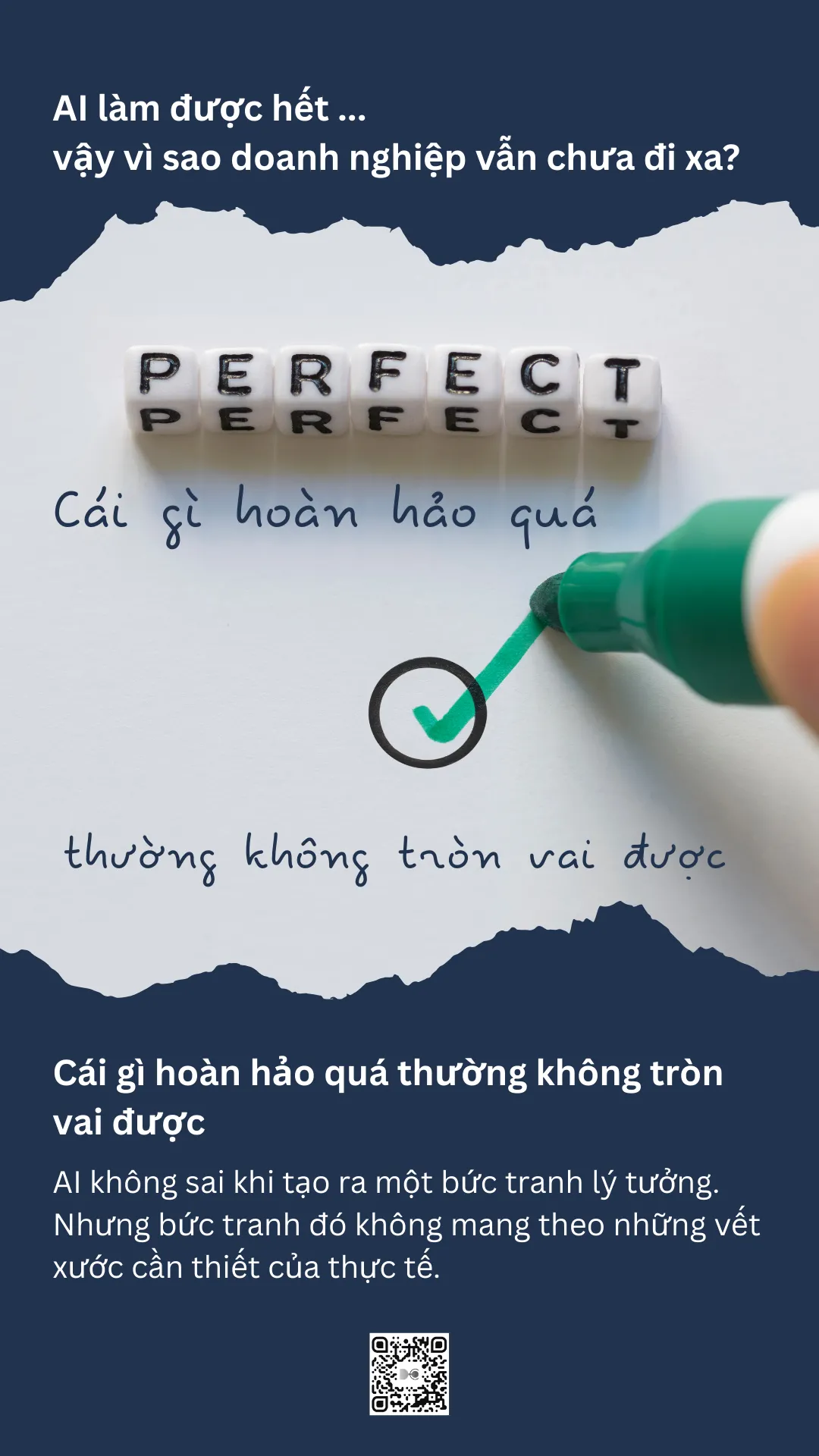
Why do businesses become more hesitant about decisions as they use AI?
Paradoxically, the more businesses rely on AI, the less effort goes into decision-making. On the contrary, it often becomes more difficult.
The reason isn’t that AI is disruptive, but rather that it presents too many seemingly valid options. When every option seems plausible, decision-makers begin to fear missing out on a better solution.
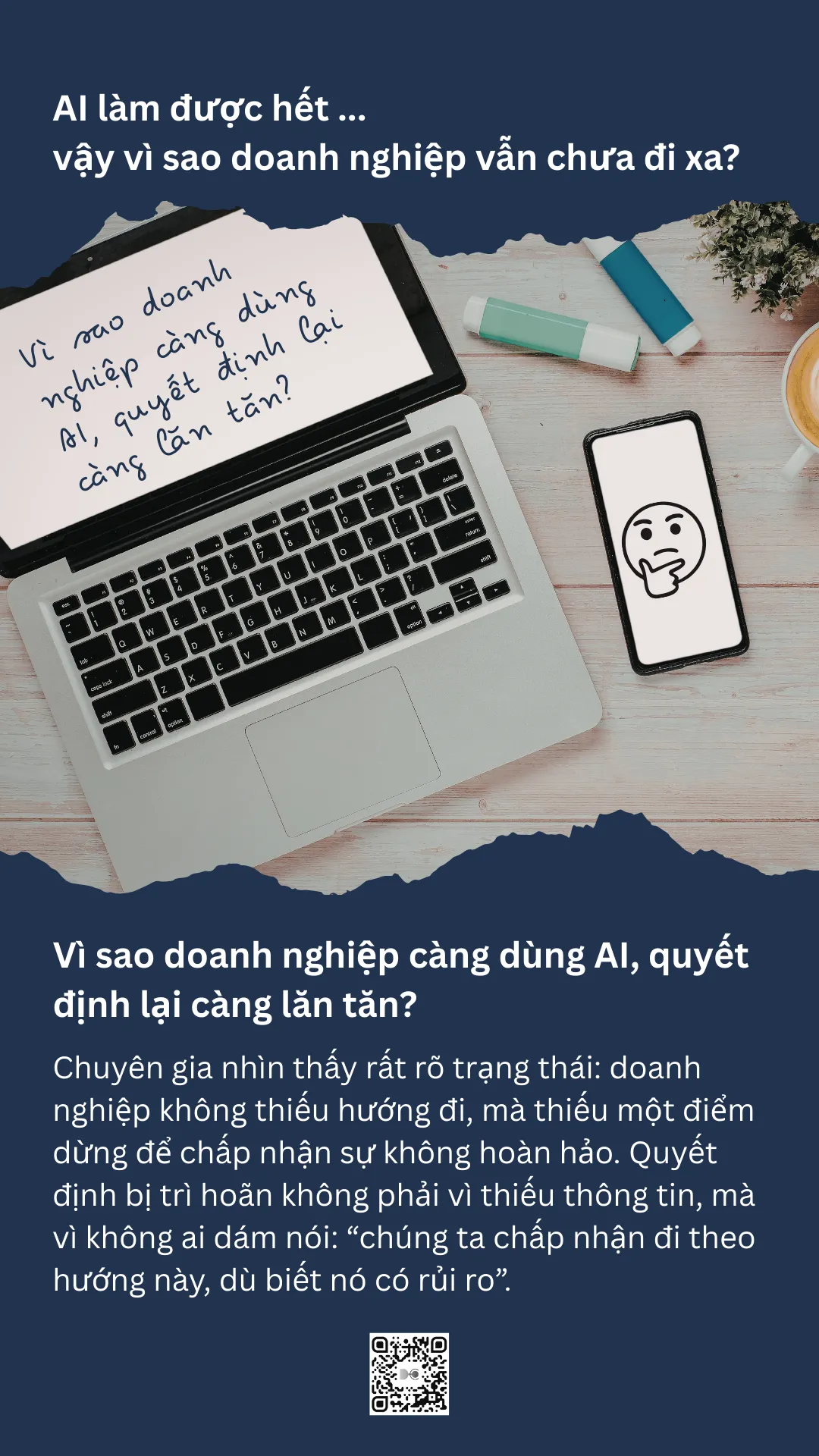
Experts clearly see this situation: businesses don’t lack direction, but rather a point of acceptance of imperfection. Decisions are delayed not because of a lack of information, but because no one dares to say, “we accept this direction, even knowing it’s risky.”
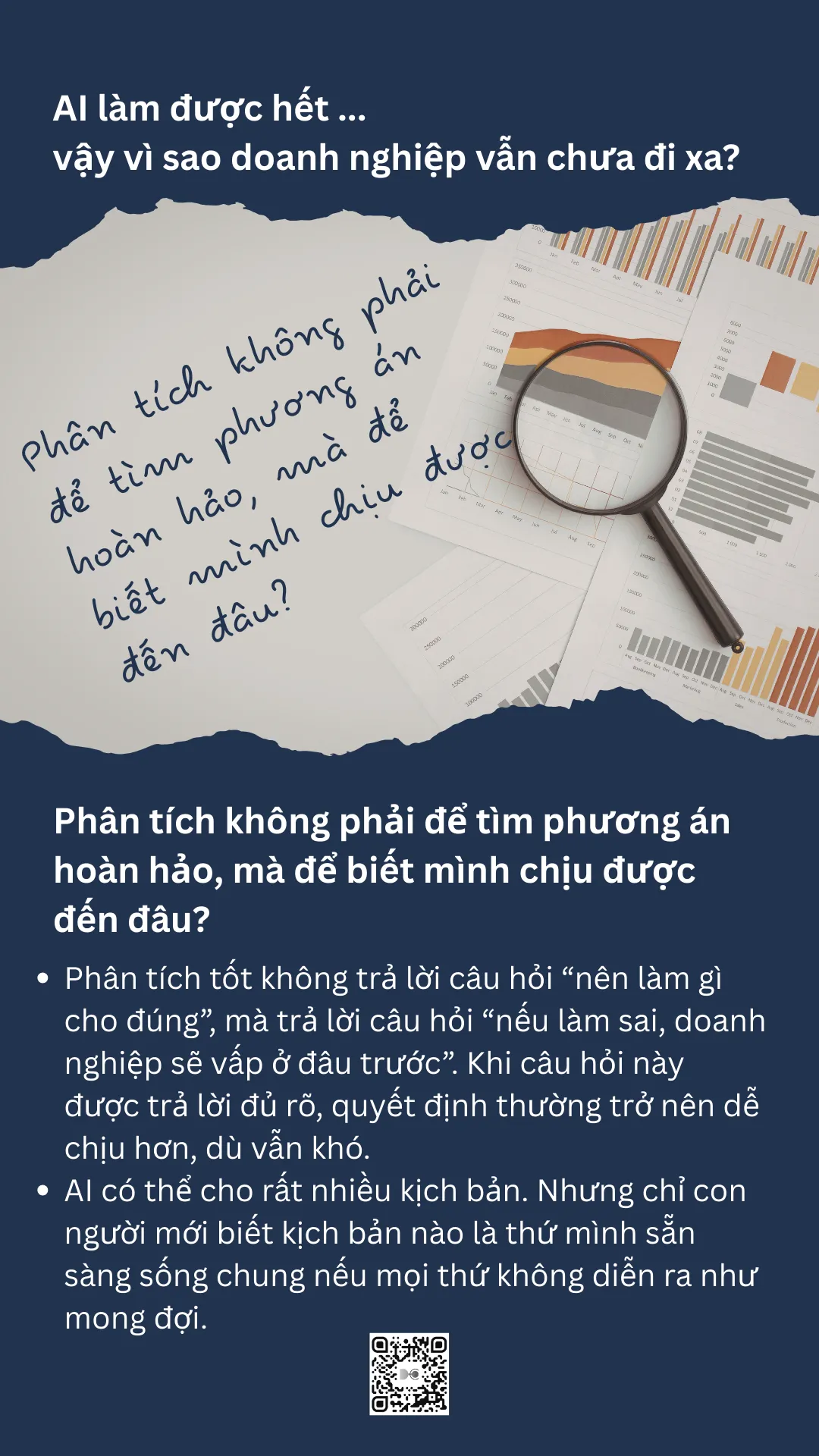
Analysis isn’t about finding the perfect solution, but about understanding your limits.
From an expert’s perspective, the true role of analysis isn’t to make decisions absolutely certain. It’s about helping businesses understand their limitations.
Good analysis doesn’t answer the question “what should be done right?”, but rather “where will the business stumble first if it makes a mistake?” When this question is answered clearly enough, the decision usually becomes easier, though still difficult.
AI can provide many scenarios. But only humans know which scenario they’re prepared to live with if things don’t go as expected.
Experts Don’t Compete with AI in Synthesis Skills
From a professional perspective, comparing AI to experts in analytical skills or strategy writing is a flawed comparison. AI is certainly faster, broader, and tireless.
But experts don’t exist to synthesize information. They exist to ask difficult questions that the data can’t answer on its own, and to help businesses see the connection between strategy and the people who will execute it.
A strategy only truly has meaning when it’s connected to specific people, in a specific context, with very real constraints. And that’s the part that no tool can replace..

What’s the most important point?
“Everything is online” is true.
“AI can do everything” isn’t wrong either.
But business decisions aren’t measured by how good the plan is, but by how well it can be implemented in the real life of the business.
Something that’s too perfect often fails.
Something that’s just right, with some flaws and trade-offs, often goes further.

And that’s why, even in the age of AI’s greatest power, the role of humans in decision-making doesn’t disappear. It just shifts – from seeking information to accepting imperfection and taking responsibility for our choices.