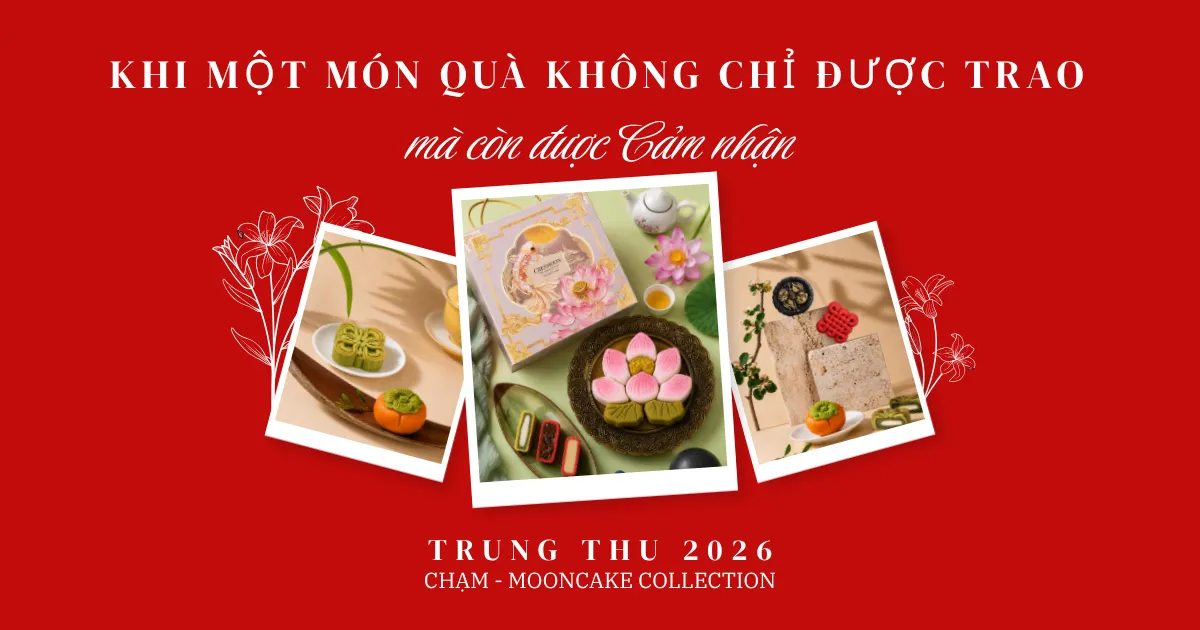
For years, handmade gifts have been told through a familiar motif: struggling villages, hardworking artisans, stories of preserving tradition in modern times. Those stories aren’t wrong. But if it stops there, handcrafted gifts are inadvertently placed within a frame of “pity” rather than “respect.” In reality, handcrafted gifts don’t need to be bought out of compassion. They deserve to be chosen for their value. The value of skill. The value of time. The value of identity. And when placed in the right context, handcrafted gifts don’t tell stories of poverty – they tell stories of class and the depth of character of the giver.
When Handmade Gifts Are Misunderstood
The gift market once had a period of “prioritizing handmade goods” in a rather emotional way. Much was said about “supporting traditional crafts,” “helping the community,” and “preserving traditional trades.”
But in a business environment, that kind of storytelling is sometimes insufficient.
Businesses cannot choose a gift set simply out of sympathy. They must consider the image, status, and message they are sending.
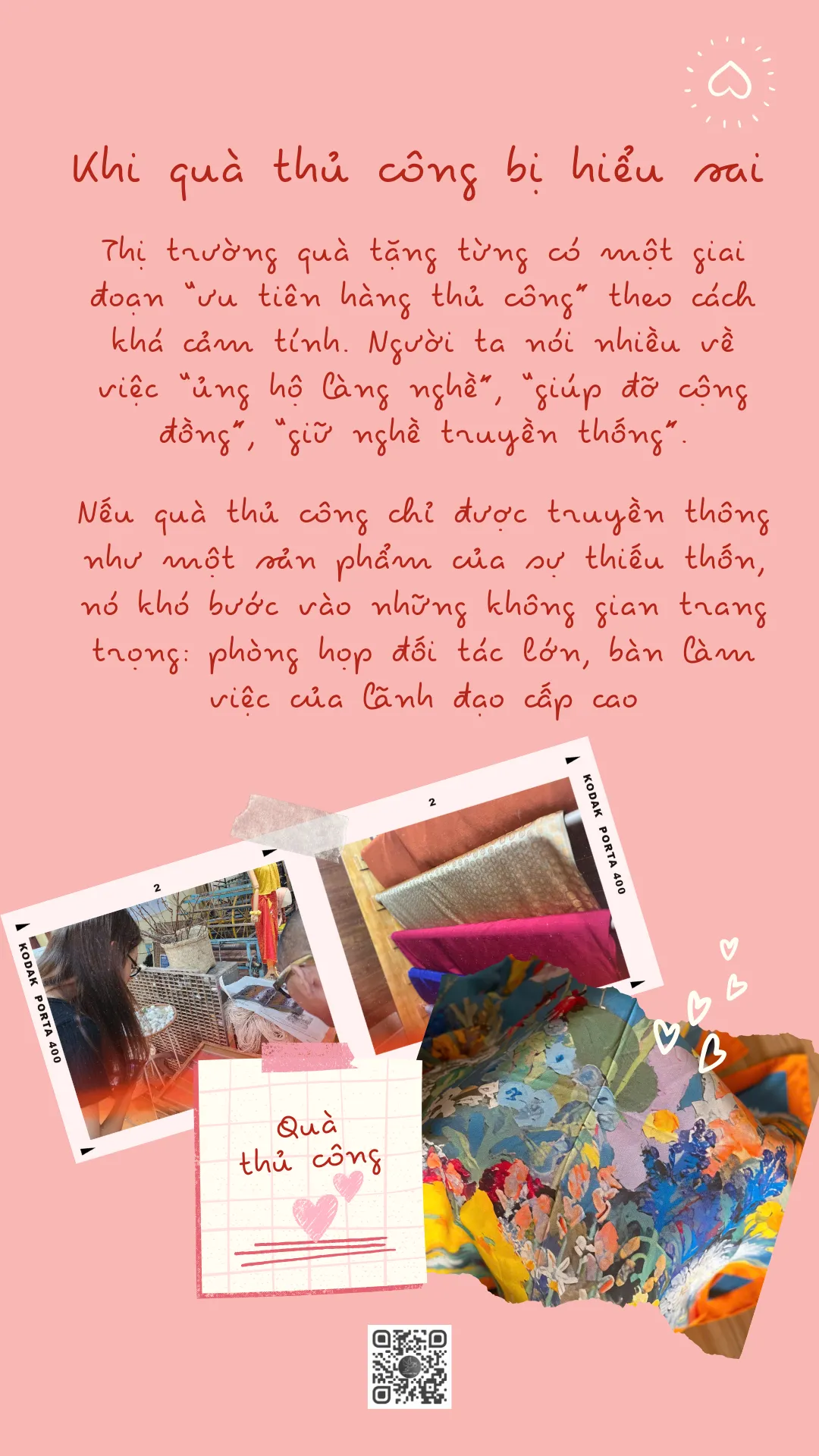
If handcrafted gifts are only marketed as products of scarcity, they will struggle to enter formal settings: large partner meeting rooms, the desks of senior executives, or strategic recognition events like the Mid-Autumn Festival or Lunar New Year.
The problem isn’t with the handcrafted product itself.
The problem lies in how we tell the story.
Craftsmanship is an investment of time – and time is a luxury.
In the age of mass production, speed is paramount. Industrial products can be produced in thousands of units in a few hours.
In contrast, a handcrafted product requires time.
The craftsman’s time.
The process’s time.
The time spent on meticulous work.
It is precisely this “slowness” that creates value.
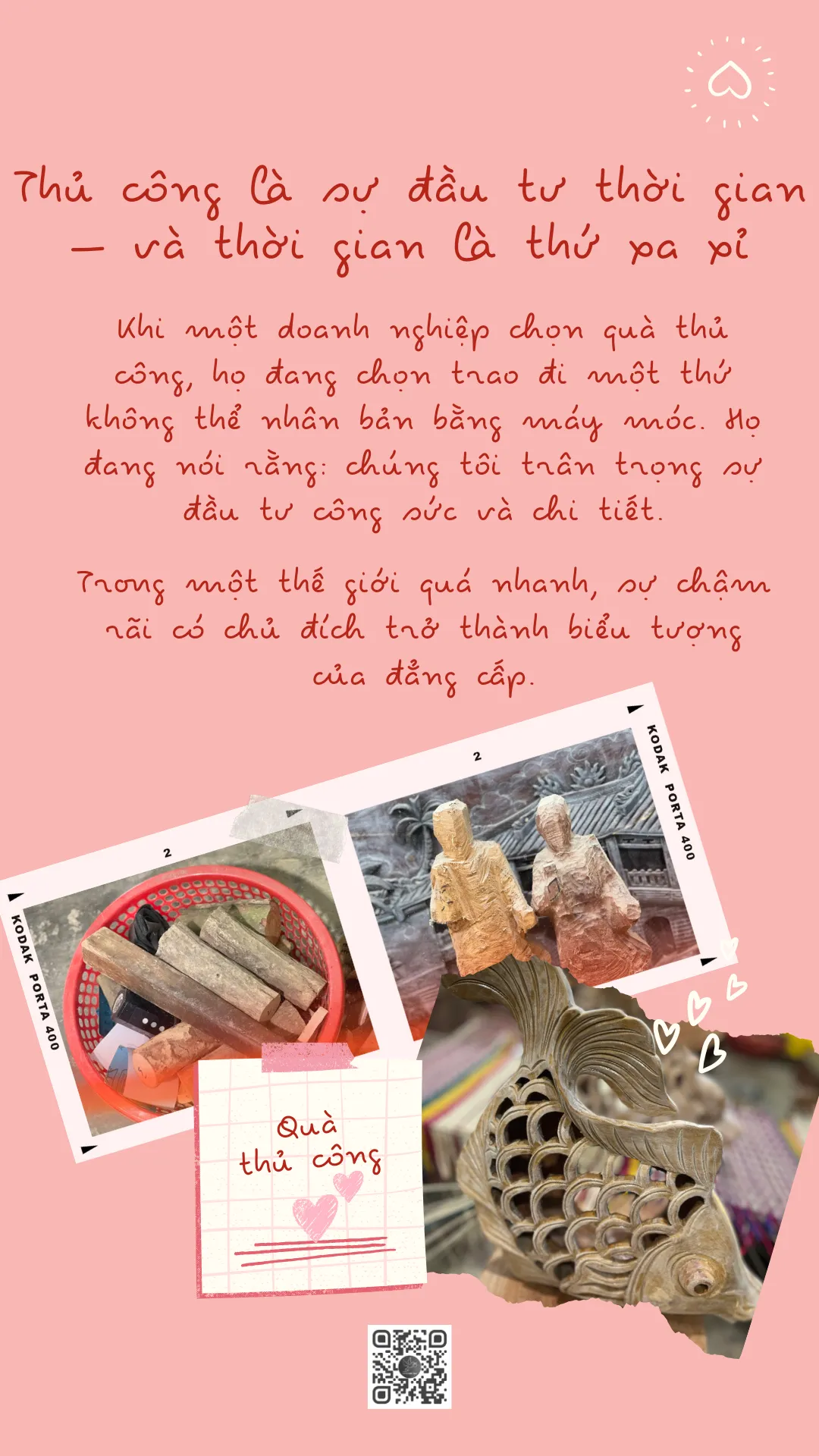
When a business chooses handcrafted gifts, they are giving something that cannot be replicated by machines. They are saying: we value the effort and attention to detail invested.
In a world that moves too fast, deliberate slowness becomes a symbol of class.
Value lies in skill, not in circumstances.
A skilled artisan is not defined by how difficult their work is. They are defined by skill and sophistication.
A hand-woven scarf is not valuable because the weaver is poor. It is valuable because each thread is processed with years of experience.
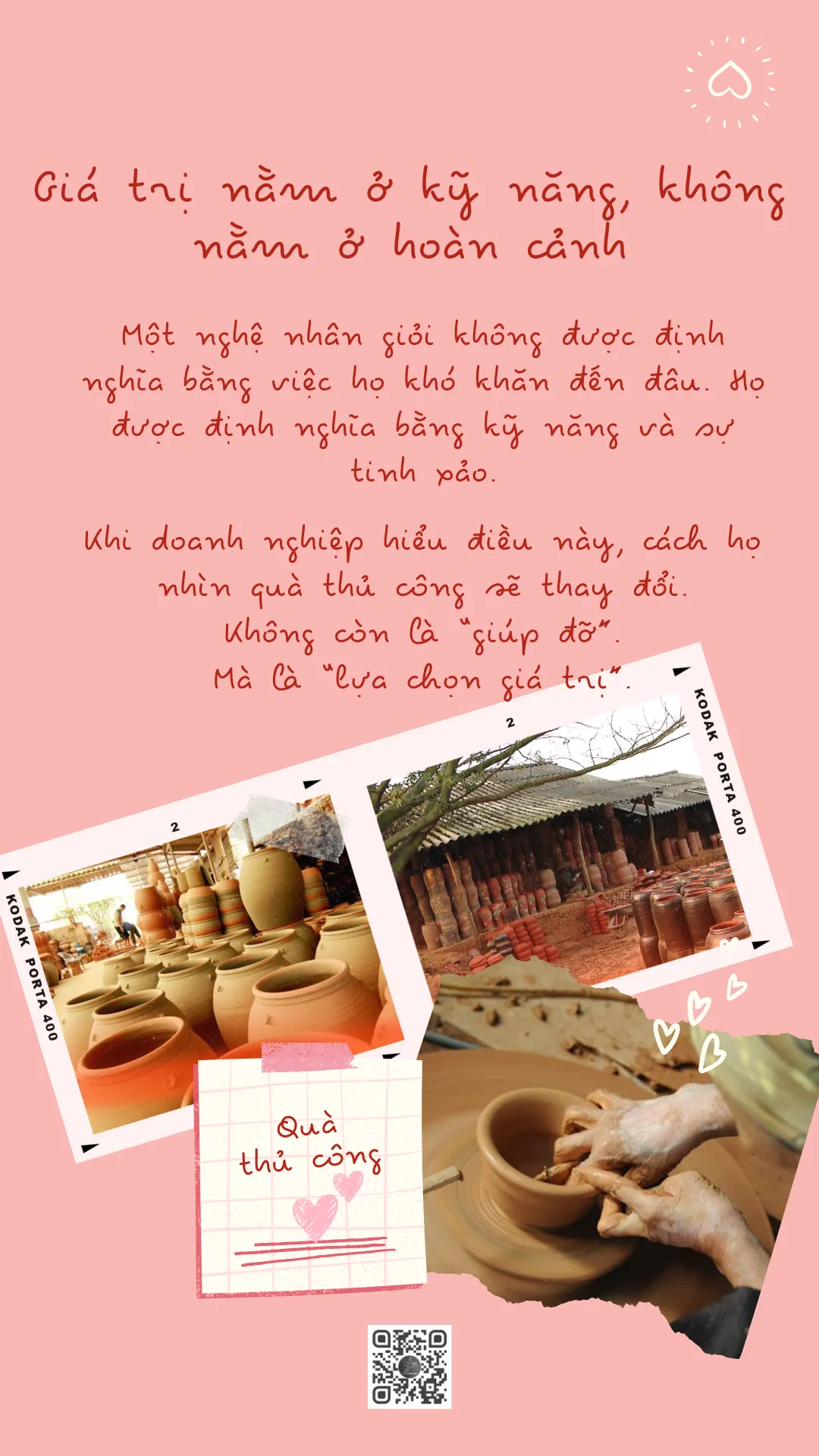
A bronze product from a traditional craft village is not respected because of its story of scarcity. It is valued for the exquisite casting, carving, and surface treatment techniques.
When businesses understand this, their perception of handcrafted gifts will change.
It will no longer be about “helping.”
But about “choosing value.”
Handcrafted Gifts and the Story of Identity
In brand strategy, identity is the most difficult element to replicate.
Industrial products may look the same across suppliers. But handcrafted products carry the imprint of the people and the land.
Every line, every pattern contains a piece of culture.
When a business gives handcrafted gifts, they are not just giving an item. They are giving a piece of a story.
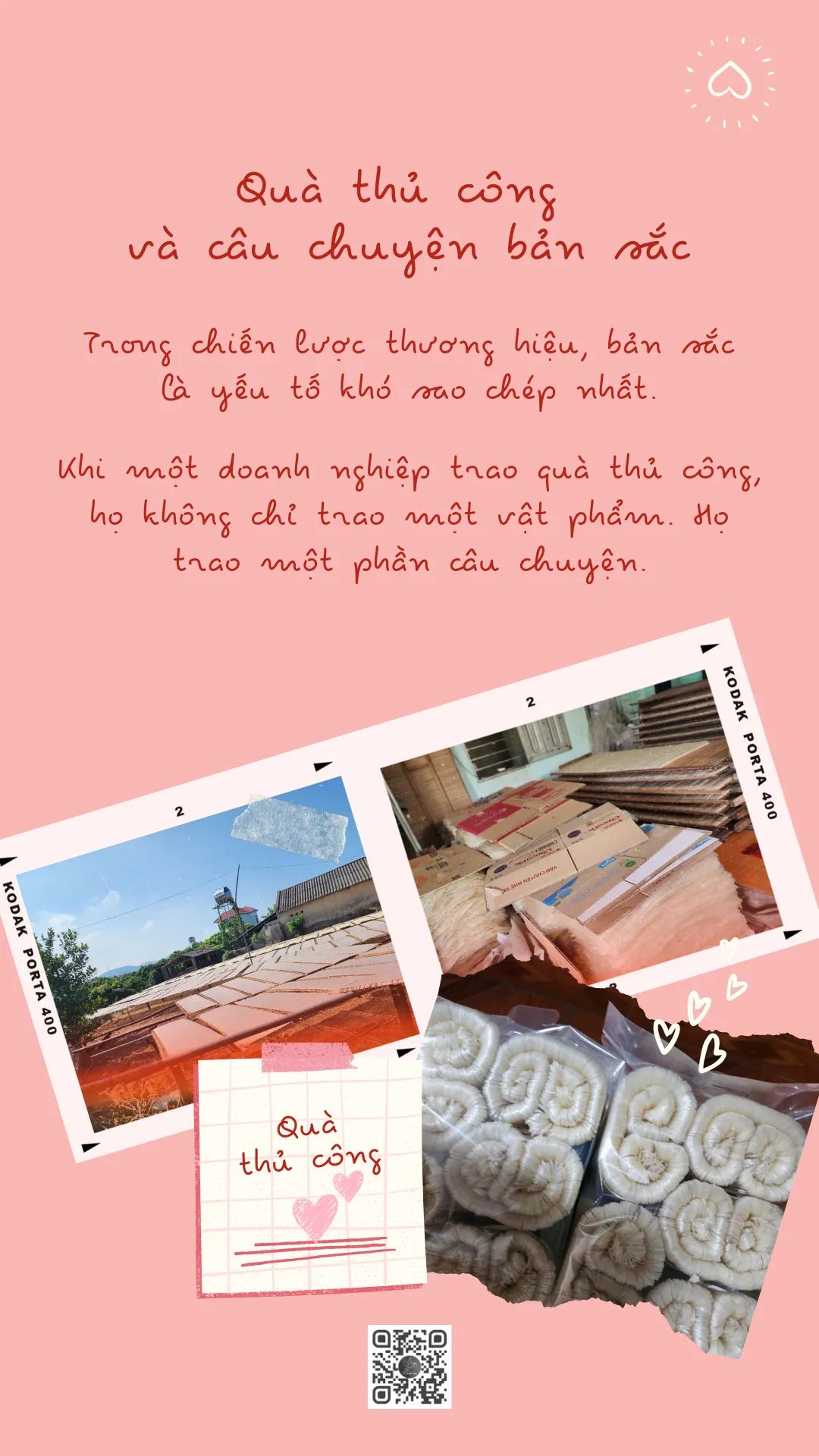
This is especially significant in a context where businesses are increasingly seeking differentiation.
A mass-produced gift set may be beautiful. But a carefully selected, handcrafted gift set will offer a much more unique and personalized feel.
From “Prioritizing Vietnam” to “Prioritizing Value”
Handmade gifts are often associated with domestic products. But the choice of handcrafted items shouldn’t be limited by geography.
What matters isn’t where the product comes from.
What matters is what value it represents.
If the product demonstrates sophistication, investment, and careful selection – it deserves to be included in the gift ecosystem.
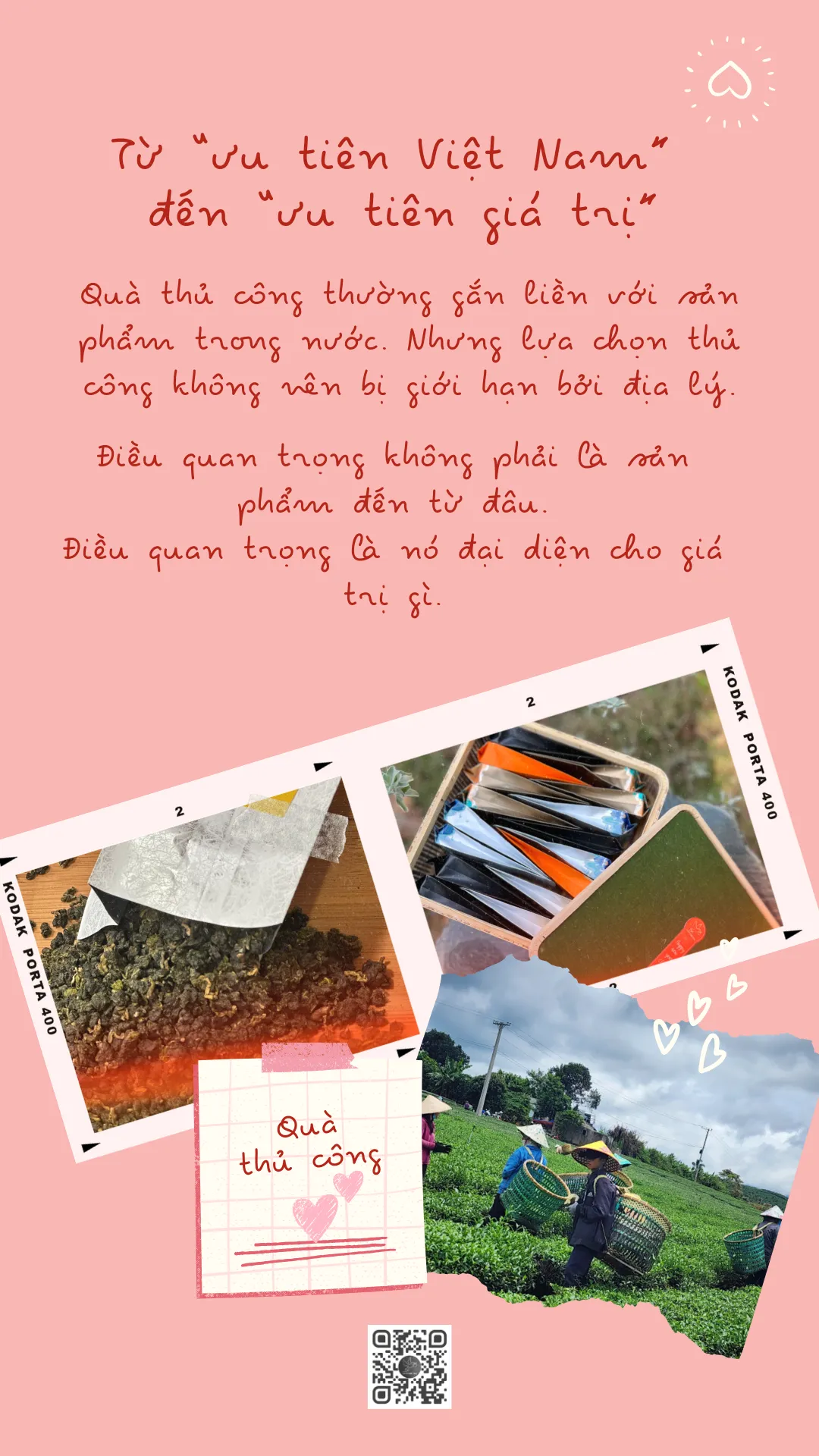
However, given Vietnam’s numerous traditional craft villages with rich histories, properly exploiting the value of domestic handicrafts offers a clear advantage: cultural depth.
But that depth needs to be expressed through the language of value, not through the language of scarcity.
What do businesses offer when choosing handcrafted gifts?
In corporate gifts, recipients often judge the giver by the gift itself.
A mass-produced, industrial gift set might convey a sense of safety and reliability.
A carefully selected, handcrafted gift set can demonstrate sophistication and refinement.

When businesses choose handcrafted gifts, they are sending subtle messages:
We value uniqueness.
We invest in detail.
We don’t follow the crowd.
These are qualities that any brand wants to be recognized for.
Conditions for Handmade Gifts to Be Truly Valuable
Not every handmade product is suitable as a strategic gift.
Value is only recognized when:
The quality meets high standards.
The design aligns with the brand positioning.
The packaging and presentation are sophisticated enough to fit into a corporate environment.
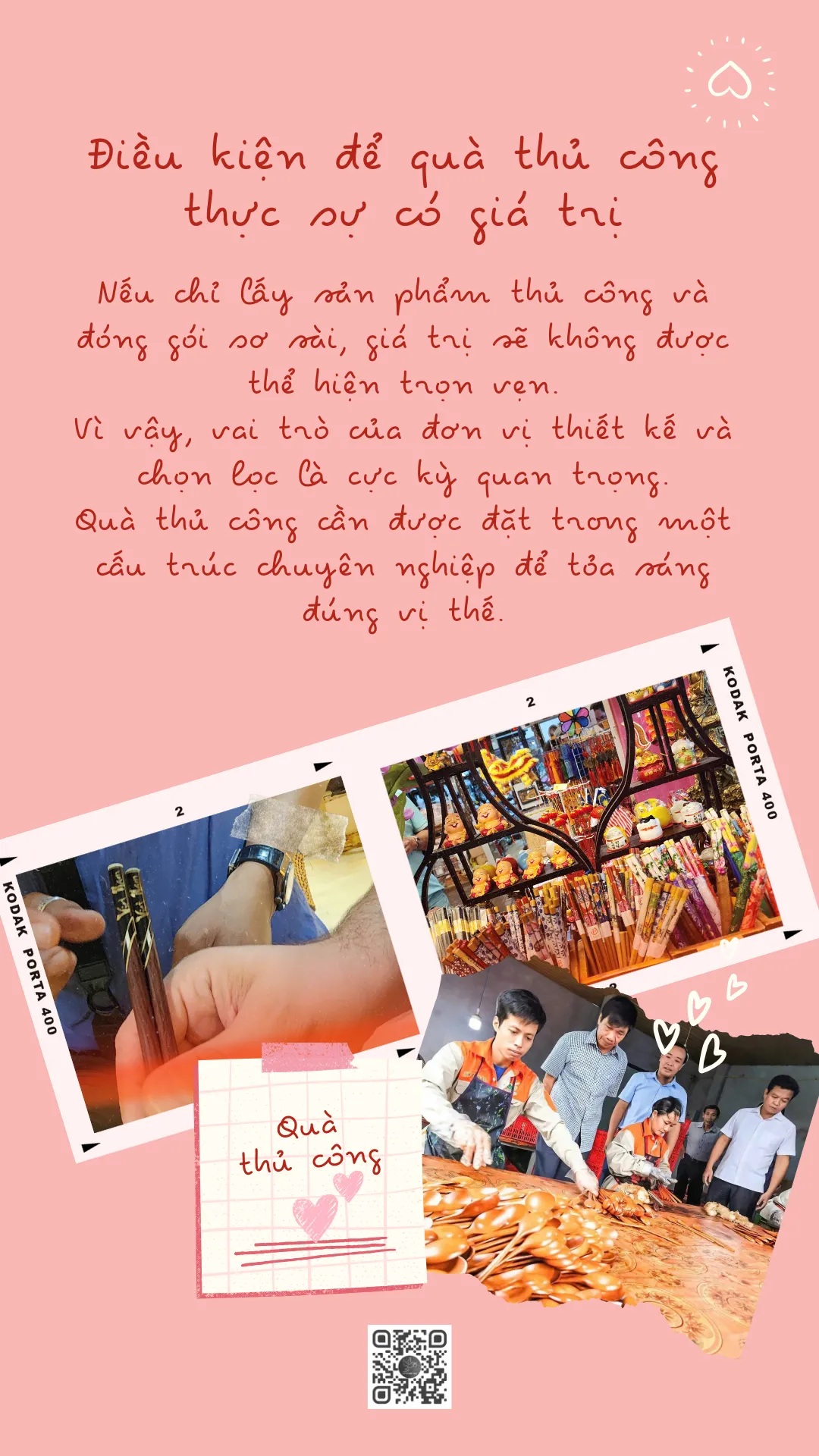
If you only take handcrafted products and package them carelessly, their value will not be fully expressed.
Therefore, the role of the design and selection unit is extremely important.
Handcrafted gifts need to be placed in a professional setting to truly shine.
When Handmade Gifts Enter the Strategic Gift Ecosystem
In the gift ecosystem, each product group has its own role.
Mid-Autumn Festival can be a season of creativity.
Lunar New Year can be a season of recognition.
Health-focused gifts demonstrate long-term care.
Handmade gifts offer depth and identity.
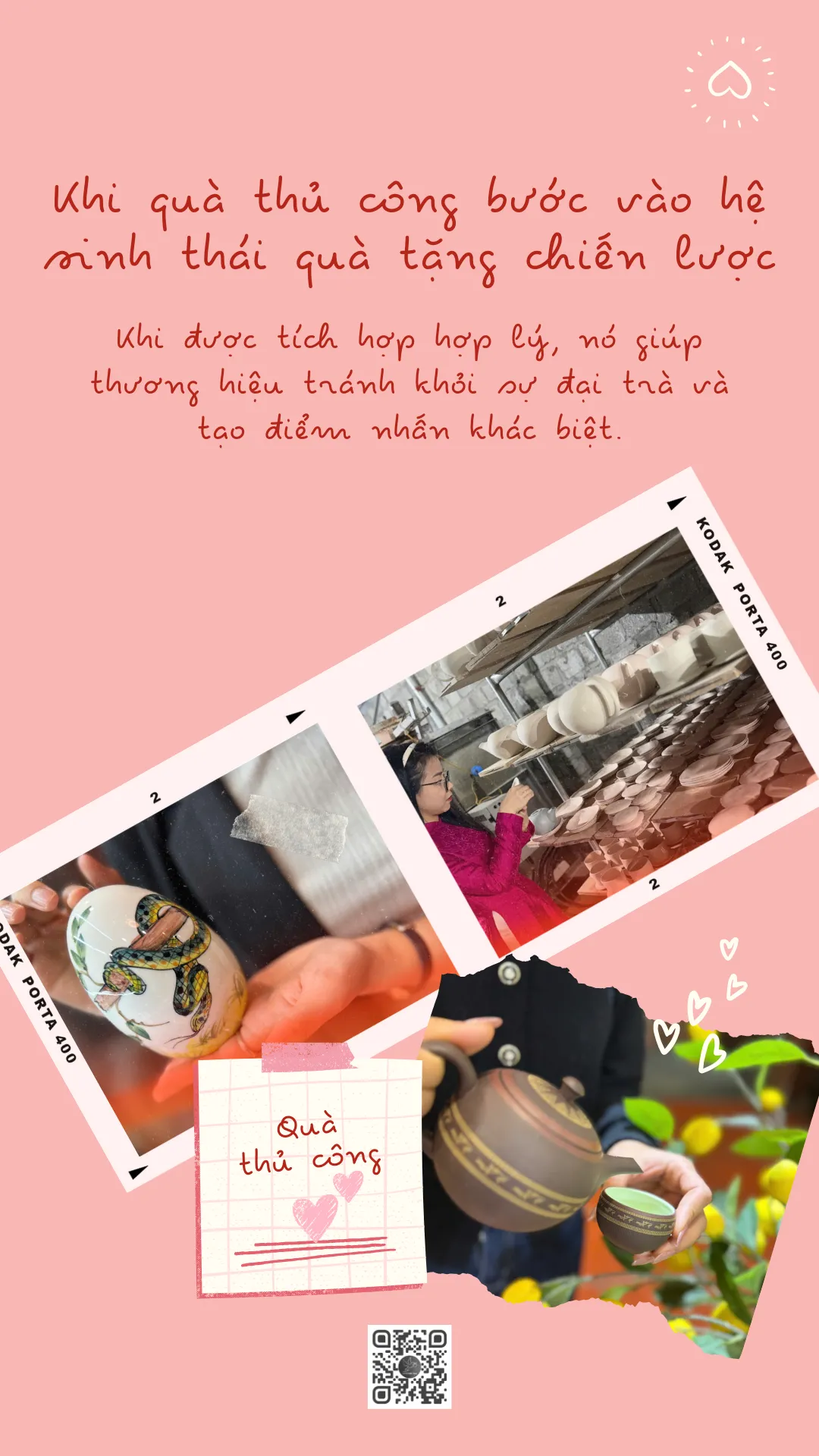
When properly integrated, it helps brands avoid generic designs and create a distinctive selling point.
Especially for discerning businesses – those who don’t want their gift sets to look like dozens of others – the handcrafted element becomes a competitive advantage.
Change the way you tell the story to change the perspective.
If we continue to tell the story of handcrafted gifts through tales of poverty, we inadvertently devalue them.
If we tell the story through tales of skill, time, and craftsmanship, we elevate them to their true worth.
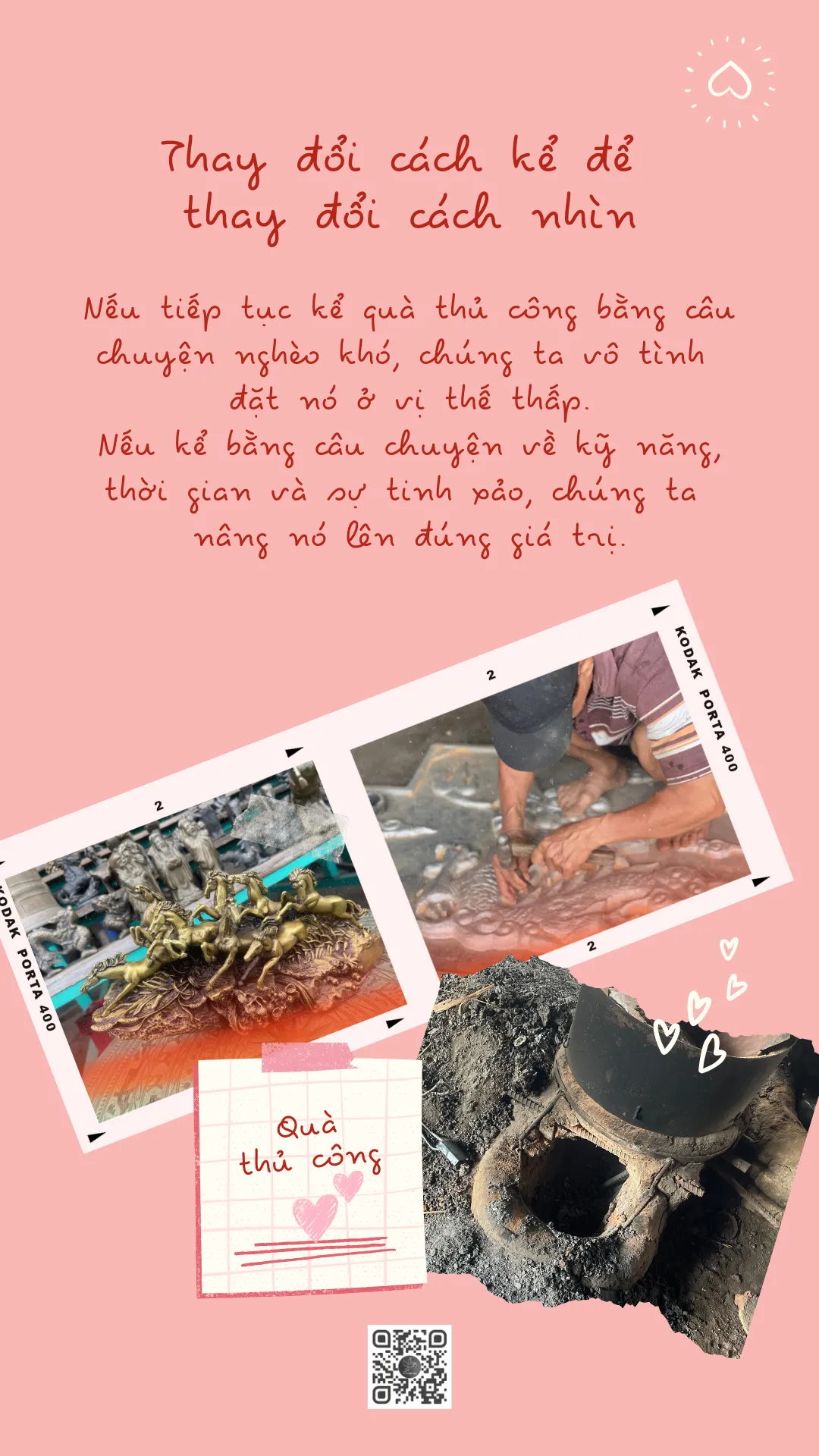
The change isn’t in the product.
It’s in the perspective.
Modern businesses don’t need a story that evokes sympathy. They need a story that inspires respect.
And handcrafted gifts can absolutely fulfill that – when carefully selected and told in the right way.
In conclusion:
Handmade gifts are not meant to evoke pity.
They are not meant to fulfill social responsibility in a formal way.
They are symbols of effort invested, of skills accumulated over time, of an unreplicable identity.
When placed in the right context, handmade gifts become a subtle statement:

We value authenticity.
We don’t mass-produce.
We understand that the most sustainable thing isn’t fast production – but doing it right.
And in a market where everything can become similar so quickly, it’s the values created by hand – and told with respect – that linger longest in the recipient’s mind.